E-Paper



Tenure of watershed deal nears end: Yamuna sharing talks to start next year
According to the 1994 agreement, there shall be an interim seasonal allocation of the “annual utilisable flow” of Yamuna

 Prefer HTon Google


The fight between Delhi and Haryana over water, played out on several platforms, including the Supreme Court, is set to intensify next year with the end of the 30-year agreement between five Yamuna basin states in 1994 that resulted in the creation of the Upper Yamuna River Board. The agreement will now have to be renegotiated.
Delhi depends primarily on its neighbours for its water supply (to the tune of 86.5%, actually) and its share of Yamuna water is a function of the 1994 water-sharing agreement signed between the chief ministers of five north Indian riparian states. Three decades later, with water shortages visible across north India, experts say that achieving a fresh consensus will be difficult. There are also demands to reform the Upper Yamuna River Board, which governs the river from its origin till the Okhla barrage in Delhi.
At the peak of the water crisis, standing besides the dry Yamuna river at Wazirabad barrage, Delhi water minister Atishi said that the annual water shortage crisis faced by the Capital can be solved only by higher water allocation under the renegotiation of water-sharing agreement. She argued that the population of Delhi has grown manifold and people have migrated to Delhi seeking better life and employment opportunities. To be sure, Delhi’s population in 1994 was 10 million. It is now estimated to be over 21 million, according to projections by the National Commission on Population.
But the other signatories have also seen a commensurate rise. For instance, Haryana’s Gurugram was a village in the early 1990s. It is now a city with a population of over 2 million.
A senior Haryana government functionary said: “The review of water allocation issue is due next year. Hence, it is too early to comment on this matter. Delhi has every right to seek more share. Similarly, Haryana will also demand more. But the issue is how much water is available at source.”
According to the 1994 agreement, there shall be an interim seasonal allocation of the “annual utilisable flow” of Yamuna. For Delhi, the allocation in July-October is to be 0.580 billion cubic metres (bcm), in November-February it is to be 0.068bcm, and it is 0.076bcm for the March-June period. A bcm translates to around a 1,000 billion litres of water.
The agreement was signed by the chief ministers of Delhi, Haryana, Rajasthan, Himachal Pradesh and Uttar Pradesh (Uttrakhand was not still a separate state) on May 12, 1994. Clause 7(3) of the agreement states that allocation of available flows among the states will be regulated by a board. Accordingly, the central government constituted Upper Yamuna River Board (UYRB) on March 11, 1995 as a subordinate office of Ministry of Water Resources (MoWR) with its headquarters in RK Puram Sector-4.
In its mission statement, UYRB states that it aims at optimal utilisation of waters of Yamuna up to Okhla, maintaining the ecology of the river and supply of water to the basin state. Experts and stakeholders say that the performance of the board on each of these parameters should be examined when the renegotiation happens.
Despite the establishment of UYRB, disputes over water sharing among the member states have persisted. With a rise in population, increasingly frequent heat waves, haphazard urbanisation, the demand for water continues to rise, exacerbating the situation especially during May-June. Not only Delhi and Haryana, even the states such as Uttar Pradesh and Rajasthan have demanded a larger share to support their irrigation needs
Bhim Singh Rawat, a Yamuna activist, and member of the South Asia Network on Dams, Rivers and People (SANDRP) said that over the years UYRB has become a totally opaque organisation with a non-functional website and inadequate staffing. Worse, minutes of its meetings are no longer made public .
A senior Delhi government official said that the board has not been able to successfully mediate water-sharing allocation disputes between the member states with issues frequently landing in courts. “We have approached the Supreme Court during the summer months thrice in last few years. Ideally, the board should have been empowered enough to resolve these issues but it faces structural issues,” the official said.
The board has met 58 times during its existence – less than twice a year over the last three decades and the chief ministers’ committee has only met seven times.
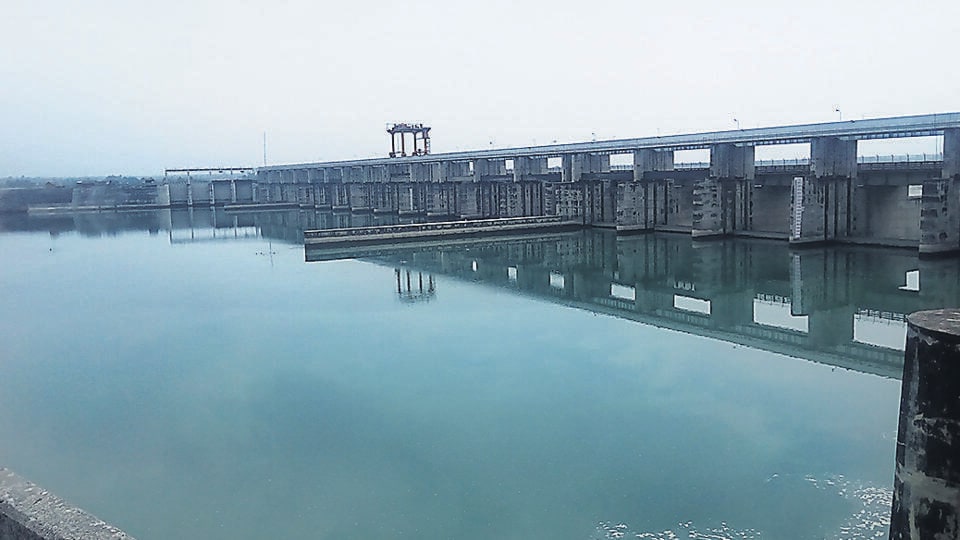
Hathinikund barrage acts the primary regulation point for release of the Yamuna water for Delhi. Delhi water minister Atishi has demanded that flow meters must be installed at the Hathnikund barrage to measure the flow of the water upgrading the archaic system being used now. “We cannot say for sure if the neighbouring state is indeed providing us with as much water as allocated to us. UYRB or Haryana should install flow meters at this critical point,” she said.
Rawat from SANDRP said that there has been unscientific allocation of water among the states as well for the river, almost killing the river. “Rajasthan is added as a basin state for Yamuna even though it has no direct connection to the river. Only 10 cumecs (or the flow of 10,000 litres per second) of water has been left for the river as ecological flow and even the National Institute of Hydrology has established that is insufficient and the river should have at least 25 cumecs (flow of 25,000 litres per second) water.” The release of water needs an independent monitoring, he added.
The board also faces human resource challenges. In 1999, the ministry of water resources approved creation of 58 permanent posts at UYRB but the ministry later – via two office memorandum on March 19, 2015 and November 3, 2017 – abolished 36 posts of board as they were lying vacant. As per another ministry order on October 27, 2020, the sanctioned strength of UYRB was only 22. Of these 22 sanctioned posts, 17 posts have further gone under the deemed abolished category.
Rawat said that the board is only functioning with five officers with a few other on deputation. “UYRB has become a formality and needs major overhaul,” he added.
UYRB did not comment despite repeated calls and e mails.
Diwan Singh, water expert and environmental activist who organised the Yamuna Satyagrah for rejuvenating the river and other water bodies in the city, says that the board needs to empowered to take tough decisions.
“Besides the water shortages, the river has suffered the most as the ecological flow is not present in the river channel. Delhi has on multiple occasions used the legal route to get additional water against its original 719 cusecs allocation which was raised to 1049 cusecs in 1996 to meet domestic needs and later for getting water from Punjab. Delhi is growing unsustainably and it should look at demand management rather than being greedy about more and more water,” he said.
Delhi’s repeated appeals to the Supreme Court for additional water are not new. In 1995, environmentalist Commodore Sureshwar Dhari Sinha filed a PIL the apex court Court of India under Article 32 of the Constitution seeking directions for maintenance of a consistent flow of water in the Yamuna River amid a drinking water shortage in Delhi.
Singh said that the allocation for Delhi reached 1,049 cusecs (around 30 cumecs) in 1996 after Delhi’s petition in Supreme Court. “In 2000, Delhi also got additional 125 cusecs water from Ravi Beas system (Bhakhra storage),” he added. However, he cautioned that prioritising Delhi’s demand over other states would not be judicious, adding that the renegotiation should also ask the states to use treated wastewater for non potable uses in much larger proportions.
Rawat agreed. “Delhi is increasing its dependence on river. It should think of modern alternatives of treated water, ground water recharge strategies and other ways,” he said. “In this tussle between the states, someone will have to also look at the rights of the river Yamuna.”