E-Paper



Top court under intense scrutiny on a daily basis, says Justice Kaul
Justice Kaul said even though the Supreme Court is rightly believed to be the custodian of fundamental rights and the defender of individual freedoms, however, it becomes difficult to dispassionately evaluate the positions taken up by the court, particularly through a social, historical, and comparative lens.

 Prefer HTon Google


The Supreme Court is under intense scrutiny on a daily basis, apex court judge justice Sanjay Kishan Kaul said on Saturday, while emphasizing that functioning of the top court has always been influenced by the dynamics of contemporary political forces, dominant economic realities and landmark social events.
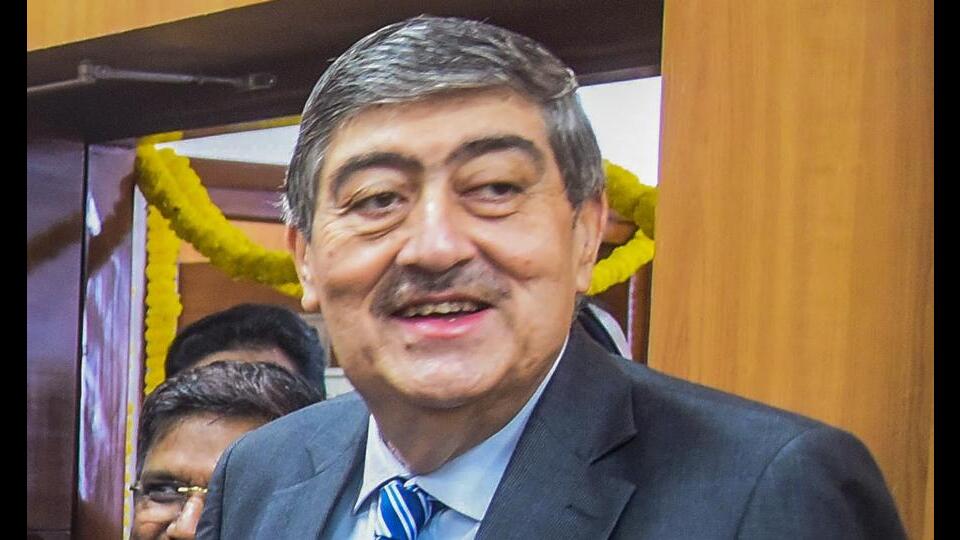
“The Supreme Court – as it must – faces an intense amount of scrutiny every day. It is rightly believed to be the custodian of fundamental rights and the defender of individual freedoms. However, in this humdrum, perhaps it becomes difficult to dispassionately evaluate the positions taken up by the Court, particularly through a social, historical, and comparative lens,” he saidwhile speaking on topic “The Role of the Judiciary in a Changing World” .
Also read | Centre clears 5 judges after prod from Supreme Court
Justice Kaul said even though the Supreme Court is rightly believed to be the custodian of fundamental rights and the defender of individual freedoms, however, it becomes difficult to dispassionately evaluate the positions taken up by the court, particularly through a social, historical, and comparative lens.
The Supreme Court, like any other social entity, cannot be immune from the process of globalization and multiculturalism that are rapidly reconstituting the world as we know it, he said, adding, since the nature of the challenge is global, our response cannot afford to be local.
“Judicial institutions, much like every other social entity, cannot claim to be immune from this process, or remain as mute spectators. Domestic laws are increasingly affected by happenings in other parts of the world…Progressive judicial decisions in other countries can have a resonating effect in other jurisdictions, forcing an examination of one’s own rules and methods. On the flipside, there are issues of transnational importance that can simultaneously invoke the attention of multiple jurisdictions – such as cybersecurity, global warming, and terrorism”.
The judge said that ever since the top court shifted to its building in 1958, before operating from the Parliament in 1950, the SC has naturally found itself in the midst of India’s “intense political atmosphere”.
After Independence, the country was burgeoning with different aspirations, particularly with respect to the areas of economic development and social reform, he said,adding, they had re-orient themselves, sometimes radically, in the face of different challenges. One of the main concerns post-Independence was to play a “supporting role in the institution-building process, cautiously developing its own sphere of influence” he said.
“Later, during periods of economic instability, the court took a more active role in questions relating to the economic order; such as through its decision in the bank nationalization case. Post Emergency, came a period where the Supreme Court took up the task of administrative review in a more serious way, and started developing a rigorous due-process jurisprudence through cases, including Maneka Gandhi v. Union of India. Then came the advent of public interest litigation, which has become synonymous with rights-based litigation in India today,” he said.
Praising the Constitution, justice Kaul said that it granted the top judiciary, a “regnant and critical position in this process” – to act as the “apex arbitrator of disputes, being limited only by the boundaries it set upon itself, and the confines of the Constitution itself”.
He said that the Indian Supreme Court is part of a larger global fabric, i.e. an order underpinned by the rule of law.
“Rule of law stands as the antinomy of capriciousness, despotism, arbitrariness, and tyranny; and can thus be considered a truly international and intrinsic human value. As defenders of this ideal, courts all across the world converse in a shared language – of liberty, democracy, and equality,” justice Kaul asserted.