E-Paper



Volunteer groups remove 874kg of garbage from Central Ridge in Delhi
Residents have been writing to the Central Pollution Control Board since early 2020, asking for action against those found dumping and burning waste in the forest area. They also complained to the pollution control board about the problem of open defecation, but they say these issues are yet to be resolved.

 Prefer HTon Google


After two years of persistent complaining failed to yield any result, a group of over 50 citizens, part of a volunteer group called “There is No Earth B”, took it upon themselves to rid the Central Ridge of all waste and successfully cleared nearly 874 kilos of non-biodegradable waste from the forested areas near Karol Bagh last Saturday.
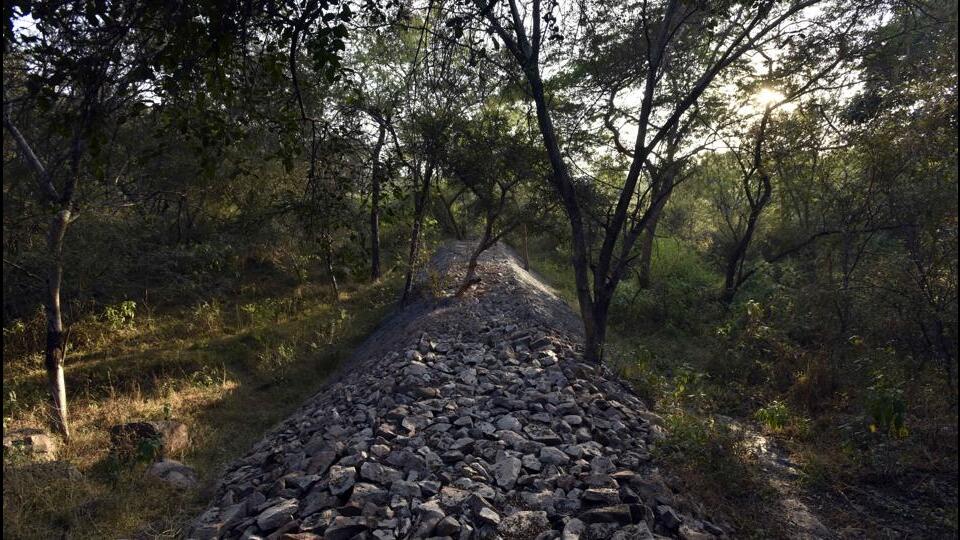
The group said its members have been conducting clean-up drives in ecologically sensitive locations of Delhi since 2018 and they have, until now, removed over 14 tonnes of non-biodegradable waste from the four locations of Sanjay Van, Jahanpanah City Forest, the Yamuna floodplains and the Central Ridge.
The drive in Central Ridge began towards the end of 2019, and it is currently being carried out in collaboration with the Robin Hood Army, a volunteer-based organisation involved in feeding the hungry, as well as volunteers of the Fridays For Future (Delhi) initiative.
Members of these three groups have been writing to the Central Pollution Control Board (CPCB) since early 2020, asking for action against those found dumping and burning waste in the forest area. They also complained to the pollution control board about the problem of open defecation, which is rampant in the Ridge, but they say these issues are yet to be resolved.
“The clean-up drive on Saturday was carried out by 56 volunteers from the three groups and we successfully removed 874 kilos of non-biodegradable waste, largely comprising plastic items and discarded household waste, clothes and metallic items. This shows just how much waste is being dumped in the area, which is not only harmful to the ecology, but also to the environment as a large portion of the waste is burnt, causing pollution,” said Dhrstadyumn, a 24-year-old volunteer from “There is No Earth B”.
He said a break in the Ridge wall, barely 60 metres from Gate Number 5 of the Karol Bagh Metro station could be the reason why the forests are slowly turning into a dumping ground — residents have easy access to the forests. “If the wall is repaired, that will make it all the more difficult for waste to enter the Ridge,” he said.
Ashima Bhatnagar, a volunteer with the Robin Hood Army, said the waste was lifted in just under two hours by the volunteers, who covered a total area of about a kilometre. “The plan is to go deeper, but we have recovered so much waste from such a small patch already and that shows the scale of the problem. Immediate action is required from the authorities to curb the menace,” she said.
A CPCB official when contacted said the complaints have been passed on to the South Delhi Municipal Corporation, and the civic body has been to told to lift the waste from the Ridge. However, parts of Karol Bagh fall under the North Delhi Municipal Corporation as well.
A senior north corporation official said aside from the jurisdictional issue, the civic body’s sanitation work is limited to colonies and inhabited areas; it is the forest department that should be responsible for cleaning forest areas. “We can lift the garbage if they collect it and request us to transport it, but the primary responsibility lies with the forest department. A part of the Central Ridge also falls under the New Delhi Municipal Council,” the official said, asking not to be named.
A forest official, when contacted, said the area will be inspected and if people are found dumping waste there, then action will be taken as per the Forest Conservation Act. “We will examine the area and take appropriate action,” the official said, asking not to be named.