E-Paper



Air quality deteriorates in Haryana as most cities report ‘very poor’ AQI
According to experts, emission from firecrackers and an increase in the share of smoke from stubble burning cases reported during the holidays could be a key factor for worsening air quality in most cities

 Prefer HTon Google


Despite the ban on firecrackers, air quality of most Haryana cities, especially those in the National Capital Region (NCR) deteriorated after Diwali on Monday night.
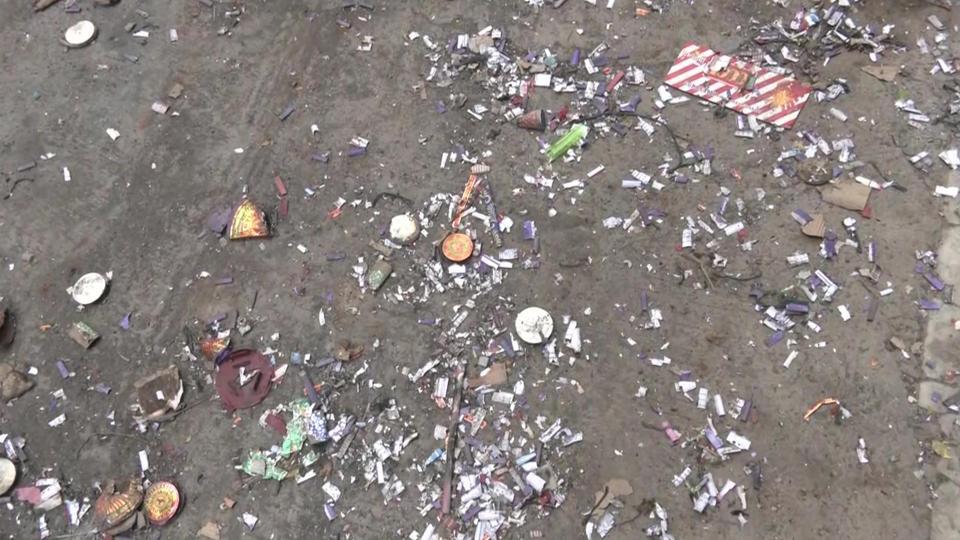
According to experts, emission from firecrackers and an increase in the share of smoke from stubble burning cases reported during the holidays could be a key factor for worsening air quality in most cities.
According to air quality reports by the Central Pollution Control Board (CPCB), air quality of five cities in Haryana namely Gurugram, Faridabad, Charkhi Dadri, Faridabad and Ballabhgarh was flashed as “Very Poor”, with the air quality index being recorded above 300 on Tuesday morning.
Also Read: Delhi likely to record cleanest air day post-Diwali in eight years
AQI between zero and 50 is considered good, 51 and 100 satisfactory, 101 and 200 moderate, 201 and 300 poor, 301 and 400 very poor, and 401 and 500 severe.
The air quality of 11 other cities including Karnal, Kurukshetra, Ambala, Sonipat, Bahadrugarh, Jind, Bhiwani, Hisar, Fatehabad and Manesar was categorised as ‘Poor’.
Air quality of Panchkula, Narnaul, Panipat and Sirsa was ‘Moderate’.
Meanwhile, the officials suggest that the sudden rise in incidents of farm fires is also a key factor behind the deteriorated air quality in the region, especially in industrial cities of the NCR as the state had witnessed 217 cases of farm fires on Sunday taking the total number of stubble burning cases to 1,110.
“Since the sowing of wheat is at peak and the state may witness more incidents in the days to come as the rains had already delayed the harvesting thus shortening the window for the sowing of wheat as harvesting is still going on in several districts especially in Fatehabad, Sirsa, Kaithal and Jind districts”, said an official from the state agriculture department pleading anonymity.