
 E-Paper



GMDA to revive ponds to prevent waterlogging in city
A senior GMDA official said the agency has begun identifying ponds and wetlands under the jurisdiction of various departments.

 Prefer HTon Google


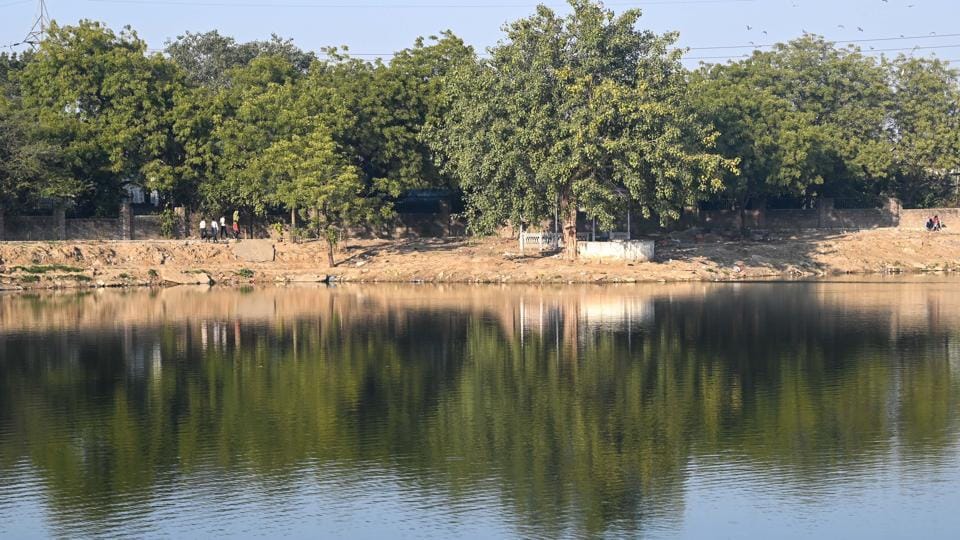
The Gurugram Metropolitan Development Authority (GMDA) is drawing up an ambitious plan to revive existing water bodies, particularly ponds, across the city to curb waterlogging during the monsoon and reduce rainwater flow into the Najafgarh drain, officials said on Friday.
Alongside, GMDA also plans to strengthen the city’s rainwater harvesting system, much of which is currently defunct.
GMDA officials, who asked not to be identified, said that following recent incidents of severe waterlogging in Gurugram and the overflowing of the Najafgarh drain, the Haryana government directed GMDA and other civic agencies to prepare a strategy to retain maximum rainwater by renovating ponds, digging up green belts, and utilising wetlands for storage and conservation.
A senior GMDA official said the agency has begun identifying ponds and wetlands under the jurisdiction of various departments. “The plan is to ensure that these water bodies are revived and their pondage increased so that maximum rainwater can be diverted and conserved,” the official said.
The exercise will be carried out with the Haryana Water Resources Authority, Municipal Corporation of Gurugram (MCG), and other government departments. Officials said the focus will be on protecting village ponds, rejuvenating listed water bodies, preserving natural low-lying areas, and exploring green belts that can be converted into water-holding structures.
According to a GMDA study in 2018, conducted on the directions of the National Green Tribunal (NGT), inventoried 644 water bodies in Gurugram district covering 1,142 acres. Of these, 124 “core” water bodies cover 206 acres, while 520 others spread across 935 acres.
“The area figures are estimated on the basis of the signs of water inundation on the ground and are subject to further verification from the revenue authorities. The 644 water bodies are owned by 20 different departments/bodies including, government, local bodies and private owners, and relate to various categories like abadi Deh, Civil Panchayat Deh, Shamlat Deh etc. Some Panchayat or MCG water bodies extend into adjoining private lands and hence have been categorised as such,” the report said.
GMDA officials said the revival project will be based on this inventory but also backed by a new survey which will assess the present condition of ponds. “We plan to identify water bodies located in the heart of the city and begin work there, before expanding to other areas,” the official said.
As per the Jal Shakti application of the union government, there are 49 water bodies in Badshahpur tehsil, 36 in Gurugram tehsil, 84 in Harsaru tehsil, 119 in Kadipur tehsil, 157 in Manesar tehsil, 211 in Pataudi tehsil, 259 in Sohna tehsil, and 77 in Wazirabad tehsil.
“The authority plans to develop water bodies in government land wherever it is possible on temporary basis. It has also been decided that ponds be developed in wetlands to conserve rain water,” the official said.


Stay updated with all the Breaking News and Latest News from Mumbai. Click here for comprehensive coverage of top Cities including Bengaluru, Delhi, Hyderabad, and more across India along with Stay informed on the latest happenings in World News.


