
 E-Paper



Gurugram activists allege ‘ghost plantations’ in compensatory afforestation
Inspections at multiple sites allegedly found no trace of saplings despite official records claiming thousands of trees planted.

 Prefer HTon Google


Environment activists in Gurugram have approached the National Green Tribunal alleging that thousands of trees claimed to have been planted by the Haryana forest department, Gurugram Metropolitan Development Authority and Municipal Corporation Gurugram as part of compensatory afforestation drives do not exist on the ground, raising allegations of “ghost compensatory plantations”. The activists further alleged that despite directions from the tribunal seeking reports on compensatory plantations, the agencies concerned have failed to submit the required records.
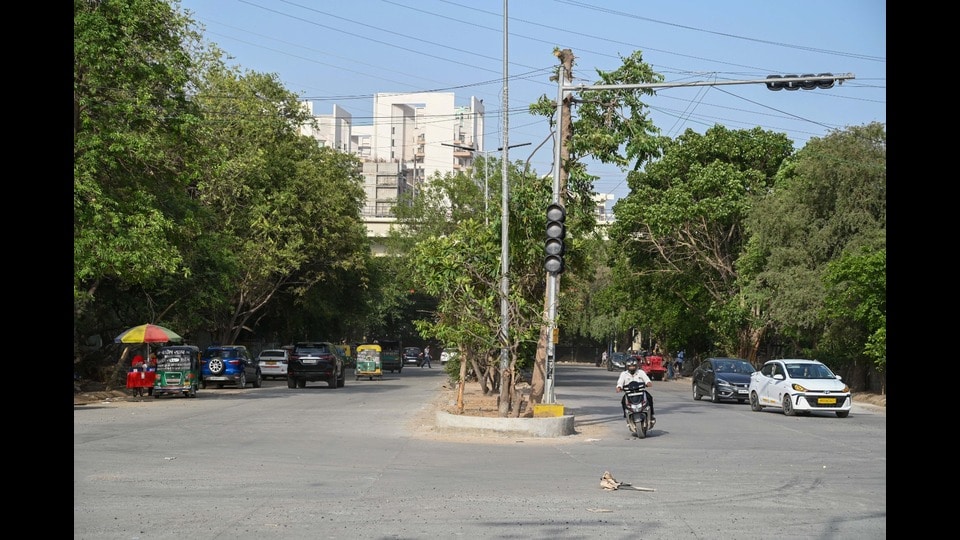
The detailed response, dated April 25 and seen by HT, was filed as part of an ongoing hearing in the alleged indiscriminate felling of trees across Gurugram and failure of authorities to ensure mandatory compensatory plantation after permissions for tree cutting were granted.
In it, the activists, led by Gurugram-based environmentalist Vaishali Rana, accused authorities of submitting incomplete and misleading records regarding compensatory afforestation undertaken after tree-felling permissions in Gurugram. Personal inspection carried out at several locations on April 21 this year where compensatory plantations were officially claimed to have been carried out revealed “no evidence” of plantation activity.
Unchecked tree felling was aggravating air pollution in Gurugram, which continues to rank among India’s most polluted cities, said the response.
“One of the biggest discrepancies highlighted in the petition relates to the central verge area of Sector 29, Gurugram. As per records submitted before the tribunal by the divisional forest officer (DFO), Gurugram, a total of 3,140 trees were shown as planted at the site under multiple plantation entries linked to HSVP (Haryana Shehri Vikas Pradhikara) and HUDA (Haryana Urban Development Authority) projects,” said Rana in the statement.
HT visited the Sector 29, Malibu Town and DLF Phase 4 club area sites on Monday and found no evidence of compensatory plantation at the locations. The sites were largely deserted, and not a single sapling was found planted at any of the spots.
Responding to the allegations, DFO Raj Kumar said the department had taken note of complaints regarding plantation discrepancies and had initiated verification exercises.
“We have formed teams of field officers and directed them to verify each plantation site and submit detailed reports. Under the new system, plantations will be geo-tagged with GPS locations and videographed so that no fraud or manipulation can take place,” he said, adding that strict action would be taken against any third-party agency or individuals found involved in reporting fraudulent plantation.
The issue came up before an NGT bench comprising Justice Arun Kumar Tyagi and expert members Dr. A. Senthil Vel and Dr. Afroz Ahmad on April 27, 2026. During the hearing, the tribunal observed that the status report filed by the DFO Gurugram was “materially deficient” because details regarding plantation areas and survival rates of saplings had not been provided.
The bench noted that with advancements in technology, compensatory plantations could be geo-tagged, video recorded and scientifically monitored, while survival rates and plantation areas should also be documented.
The tribunal directed the DFO, Gurugram, to remain personally present before the court during the next hearing for further clarification in the matter.
The case has now been listed for further hearing before the National Green Tribunal on August 11.
In its observations, the tribunal noted the need for stricter monitoring of compensatory plantations through technology-based mechanisms. “With the advancement of technology, all the compensatory plantations can be geo-tagged, video recorded, saplings planted can be assigned numbers, their survival rate can be recorded and area of plantation is to be mentioned. Further care and maintenance of the saplings planted has to be monitored by evolving appropriate mechanism and reports have to be filed in this regard as well,” the order dated April 27 stated.
The rejoinder specifically referred to several entries in the forest department’s affidavit where plantation claims ranging from 130 to 980 saplings were shown for different permissions issued to HSVP and HUDA. The applicants stated that no corresponding plantation undertaken during 2025 was found at the location during their visits.
The applicants further alleged similar discrepancies in Malibu Town and DLF Phase IV.
According to the rejoinder, the forest department’s report claimed that 90 compensatory trees had been planted at Malibu Town Park and Malibu Town Kentwood under separate entries linked to Municipal Corporation of Gurugram (MCG) horticulture officials. However, the applicants claimed that “not one tree” corresponding to those plantation records existed on site. A senior Municipal Corporation Gurugram official said the civic body is yet to verify the allegations.
Another 310 compensatory trees allegedly shown as planted near Club 4 in DLF Phase IV were also claimed to be missing during inspection visits conducted by the applicants.
“On paper, thousands of trees have been shown as planted, but when we physically inspected these sites, there was no plantation visible on ground. This raises very serious questions about monitoring, accountability and verification mechanisms within the system,” Rana said.
She further alleged that there was “zero accountability” for officials allegedly filing incorrect plantation records before judicial bodies.
“If compensatory afforestation exists only in files and affidavits while the ground reality is empty land, then the very purpose of environmental protection laws is defeated,” Rana said.
Photographs annexed with the rejoinder and submitted before the tribunal, which were also reviewed by HT, purportedly show the inspected locations in Sector 29, Malibu Town and DLF Phase IV without any visible fresh plantation activity.
In the response filed through advocates Ritwick Dutta, Rahul Choudhary and Shreepurna Dasgupta, the applicants alleged that the status report submitted by DFO Gurugram, lacked critical details including GPS coordinates, survival rates and species information of planted saplings.
The applicants further stated that the authorities had undertaken a “mechanical exercise” in preparing the report and failed to verify plantation claims submitted by user agencies.


Stay updated with all the Breaking News and Latest News from Mumbai. Click here for comprehensive coverage of top Cities including Bengaluru, Delhi, Hyderabad, and more across India along with Stay informed on the latest happenings in World News.


