
 E-Paper



Gurugram admin orders schools to close as AQI hits ‘severe’
Gurugram schools from classes 1 to 12 will close from November 19 due to severe air pollution, switching to online classes for student safety.

 Prefer HTon Google


In response to escalating air pollution, Gurugram’s deputy commissioner (DC) Ajay Kumar ordered the closure of all schools from classes 1 to 12 across the district, both in urban and rural areas, effective November 19 until further notice. The directive also follows a Supreme Court order released on Monday that asked Delhi-NCR schools to take a call on stopping physical classes for all students aiming to safeguard children from the health hazards posed by the deteriorating air quality, officials said on Monday. Similar directives have been issued for schools in Faridabad.
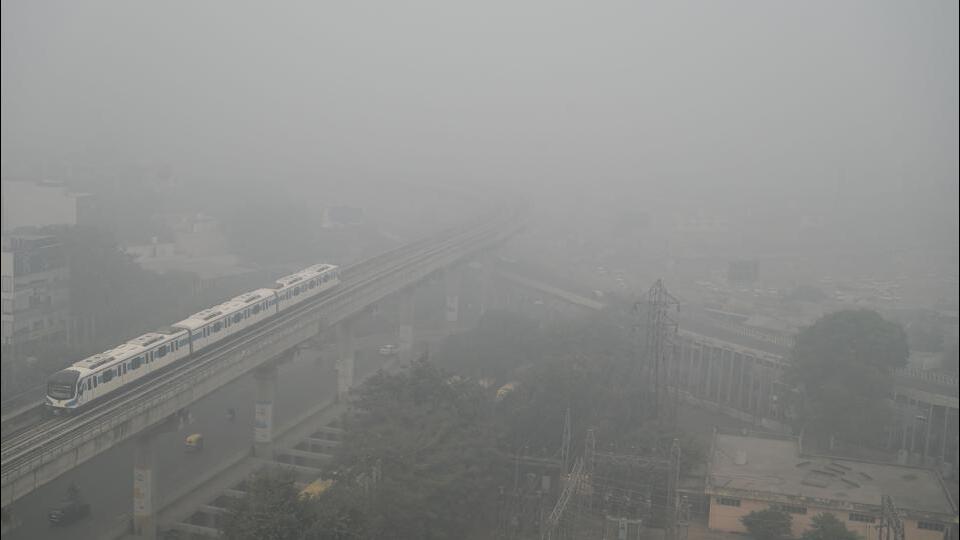
The decision was prompted by the district’s worsening Air Quality Index (AQI), which reached “severe” levels in several areas over the past 24 hours. Schools have been directed to switch to online teaching to ensure continuity in education while prioritising student wellbeing. “Concerned about the health and safety of young children, the administration has deemed it necessary to halt physical classes temporarily,” DC Kumar said.
Parents have welcomed the decision. “It is a wise decision for the safety of our children. The pollution levels are alarming, and this measure will help protect their health,” said Shrikant Srivastava, a resident of Sector 71. Prerna Sharma, a Sector 45 resident and mother of a seven-year-old, added, “While online classes are not the same as in-person learning, our children’s health must come first.”
Alarming AQI levels
The average air quality index in Gurugram on Monday was recorded at 469, placing it in the “severe” category, as per the Central Pollution Control Board (CPCB). This marked a sharp rise from the “very poor” category on Sunday (310) and Saturday (320). Notably, CPCB sensors across NCR do not register AQI levels beyond 500.
Pollution levels were recorded to be nine times higher than the acceptable standards. Additionally, the Meteorological Department has issued a yellow alert until November 21, warning of foggy conditions in the morning and evening and advising residents to exercise caution, said district officials.
Nirmal Kashyap, senior environmental engineer at the Haryana State Pollution Control Board, said Monday’s AQI was the worst recorded this year. “The AQI at Vikas Sadan station was 462, and at Terri in Gwal Pahari, it was 452 at 4 pm. These were the highest levels for the day and the year. Last year’s severe AQI was lower in comparison,” Kashyap said.
He attributed the pollution primarily to localised issues such as roadside dust, damaged roads, and potholes, rather than stubble burning, which has passed its peak season. “Construction dust, vehicle movement, and emissions are major contributors. Meteorological conditions, including lack of wind and dropping temperatures, have exacerbated the situation by trapping pollutants near the surface,” he added. Kashyap cautioned that no relief is expected for the next four to five days unless weather conditions improve.
SC intervenes
Amid rising pollution across Delhi-NCR, the Supreme Court on Monday directed state governments to enforce GRAP (Graded Response Action Plan) stage 4 restrictions immediately. It also ordered Delhi and NCR state governments to stop physical classes for all students up to Class 12. “The anti-pollution rules will remain in effect even if the AQI falls below 450,” the Court stated. Schools across the NCR, including Gurugram, will remain shut until further orders.
”The Delhi Government and the NCR State Governments will take an immediate call on stopping physical classes of all standards up to the twelfth standard,” the Court directed.
The apex court also criticised the Commission for Air Quality Management (CAQM) for delaying the imposition of GRAP stage 3 and 4 restrictions.


