
 E-Paper



Gurugram minor’s killing: Interim bail for 2017 murder
Three days ago, a Juvenile Justice Board (JJB) ruled that the accused must be tried in the case as an adult since he was “mature enough” to understand the consequences of his actions and to think of ways to escape punishment.


New Delhi: The Supreme Court on Thursday granted interim bail to a man who was 16 when he allegedly killed a seven-year-old schoolmate in Gurugram -- three days after a Juvenile Justice Board (JJB) ruled that he must be tried in the case as an adult since he was “mature enough” to understand the consequences of his actions and to think of ways to escape punishment.
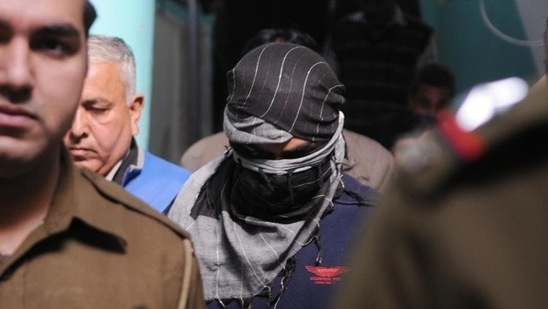
Also Read | Gurugram school murder: Accused’s home lights up for Diwali; bail a ‘shock’ for victim family
The bench of justices Dinesh Maheshwari and JK Maheshwari took note that the accused’s liberty has been curtailed due to the prolonged detention, and that “his continued detention pre-trial may have its own adverse effects”.
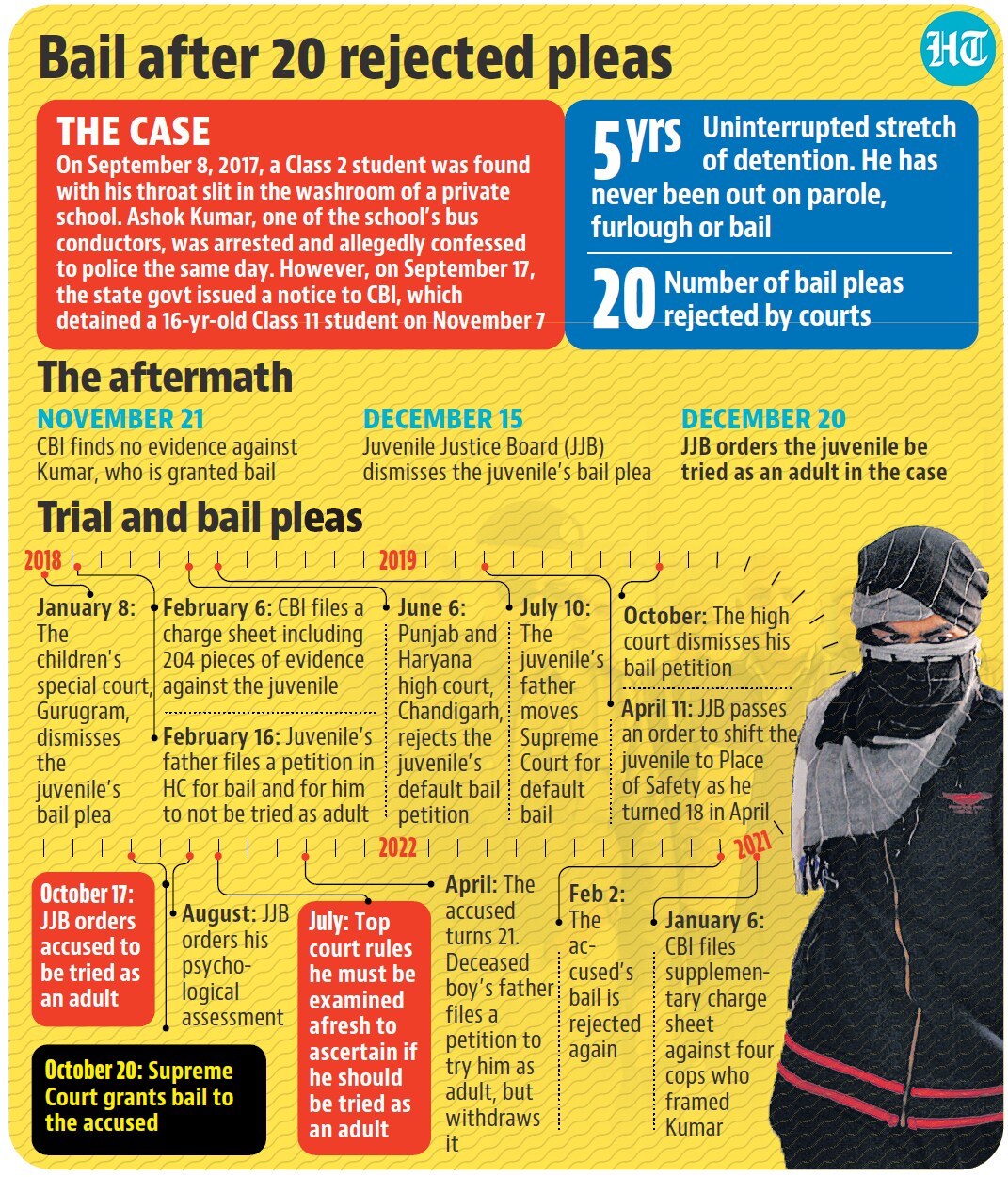
“The fact of the matter is that liberty of the petitioner has been curtailed in this case, and he is in detention for a period of one month less than five years. Even while looking at the serious nature of the crime in question, without making any comment on merits, the requirement of balancing the competing claims and equities cannot be ignored. Petitioner was 16 when he was taken in detention and is 21 now,” the court noted in its order.
It also underlined that although the accused has been housed in a correctional home after he was detained in November 2017, equities in law demanded he be granted the interim relief.
As conditions of the interim bail, the bench said that the delinquent would remain under the supervision of the concerned probationary officer of correctional home or any other person entrusted with the responsibility. The sessions judge, Gurugram, was directed to apprise the top court of any “shortcomings in the conduct of the petitioner”.
The accused man’s father and counsel declined to comment on the development. However, the murdered boy’s family members said they “feared for their safety”.
The bench added that the accused would not make any attempt to get in touch or influence any witness or any member of the family of the deceased child.
The court adjourned the case to January on a legal point regarding the applicability of Section 12 of the Juvenile Justice Act. This provision mandates a juvenile justice board to take a lenient view in granting bail to a delinquent. The question, however, arose before the bench whether the benefit of this section can be given to a delinquent who has become an adult during the pendency of the case.
The bail order was passed on a petition filed through advocate Durga Dutt against the Punjab and Haryana high court order declining bail to the accused even as the decision on whether he should be tried as an adult or not remained pending with the board.
A Class 2 student of a prominent school in Gurugram was found dead inside the school washroom on September 8, 2017, sending shockwaves across the National Capital Region. Haryana Police, which initially investigated the murder, arrested the conductor of a school bus the same day, and claimed that he had confessed to the crime.
However, the Central Bureau of Investigation (CBI), which took over the case on November 6, 2017, apprehended the delinquent who was studying in Class 11 of the same school, on November 7.
In July, the top court directed the board to carry out a fresh assessment of the delinquent to ascertain whether he should be tried as an adult or a minor for the alleged crime.
Under the Juvenile Justice Act, a juvenile can be sentenced to a maximum of three years in a reform facility when convicted of a crime. However, they can be sentenced to a lengthier jail term, barring life imprisonment and death penalty, under the Indian Penal Code when tried as an adult. Until the age of 21, the accused stays in a correction home, as per the Act.
On Monday, the board held that the accused should be tried as an adult, and transferred the case to the Gurugram sessions court where he will be produced on October 31.
The victim’s family said they were concerned that the accused man may try to influence witnesses.
“The decision has come as a blow to us. We fear that his bail could impact the trial. He might influence witnesses,” said the victim’s father.
He also said that his daughter was a key witness in the case and said that they now needed police protection for their safety.
The victim’s counsel, Sushil Tekriwal, also said they were disappointed with order and said they will not leave any stone unturned in getting the trial expedited.
“We will file for police protection if required,” he said.
Stay updated with all the Breaking News and Latest News from Mumbai. Click here for comprehensive coverage of top Cities including Bengaluru, Delhi, Hyderabad, and more across India along with Stay informed on the latest happenings in World News.


