
 E-Paper



Haryana hikes EDC by 20% for 2025, and 10% every year after
EDC is the fee collected from real estate developers to build external infrastructure facilities outside the boundaries of a project

 Prefer HTon Google


The Haryana government on Saturday approved the proposal to increase external development charges (EDC) of various potential real estate zones in the state by 20% for 2025, and a 10% increase every year from 2026.
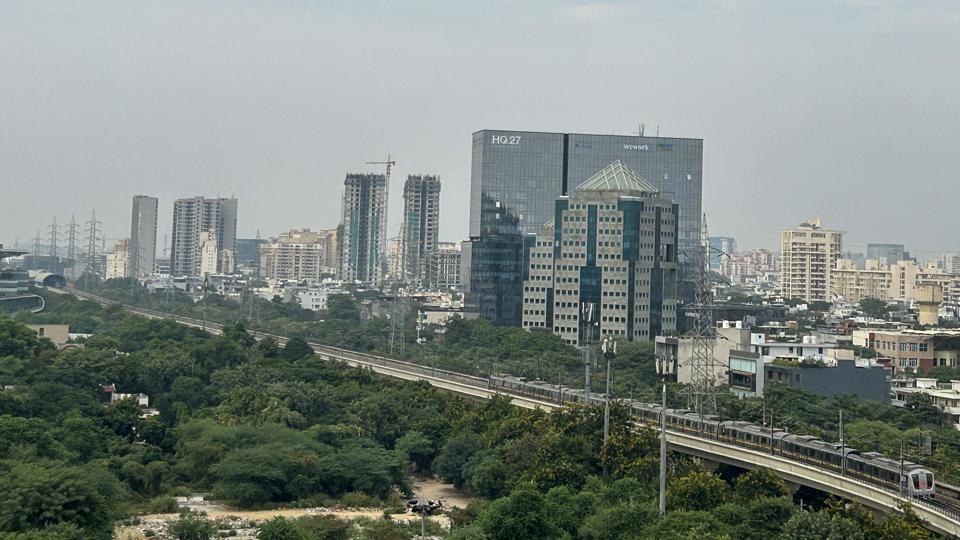
The decision will likely increase the cost of real estate development, which might make properties costlier for buyers. However, the positive impact could be a potential boost to infrastructure development funded by these higher EDC collections..
“The cabinet approved a one-time increase of 20% from January 1, 2025, and further an increase of 10% every year with effect from January 1 of every year was approved,” the government spokesperson said.
EDC is the fee collected from real estate developers to build external infrastructure facilities outside the boundaries of a project, such as roads, drains, electrical infrastructure, water and sewage lines. EDC is calculated by the department of town and country planning (DTCP) area-wise, depending on the potential for growth of a particular residential, commercial, industrial or mixed-use locality. The rates were last revised in 2015.
The 10% annual EDC increase will put major financial burden on developers and end users across the state and particularly Gurugram, said Parveen Jain, president, Naredco (National Real Estate Development Council), Haryana.
“Around 2015-2016, developers had almost stopped taking licence as EDC rates were very high after which the government slowed down on that and did not increase the charges. The 10% increase will be unviable, and the government should rethink this decision,” he said, adding that existing infrastructure in the city including roads has not been developed while developer and homebuyers have paid thousands of crores of rupees in EDC.
Vinod Behl, a real estate expert based in Gurugram, said that increasing EDC rates will badly hit the real estate industry as the rates are already high and affordability is low in the realty market. “The government had recently increased circle rates and property prices have already hit the roof in the city. High rate of interest and high cost of properties will ensure that real estate markets witness a slowdown in 2025,” he said.
According to experts, the current cost of EDC in a project in Gurugram is 7-8% of the entire project cost. A government spokesperson said that existing EDC rates were based on an indexation policy that had taken EDC rates of 2015 as the base, and these were not increased in the last eight years. Prior to the indexation policy of 2015, EDC rates were increased every year.
According to officials aware of the matter, the state government in 2018 requested the Indian Institute of Technology (IIT), Delhi, to determine EDC rates form Gurugram and Rohtak, and IIT-Roorkee for Faridabad, Panchkula and Hisar. However, both institutes expressed their inability to do the work due to which the indexation policy and previous EDC rates continued till date, they added.
Following the state cabinet’s decision on Saturday, DTCP can issue policy instructions under Section 9A of the Haryana Development and Regulation of Urban Area Act, 1975 and undertake amendments in the Haryana Development and Regulation of Urban Areas Rules, 1976.
In another decision, the state cabinet has approved the engagement of a consultant to decide the base EDC rates to determine indexation rates in future, the government spokesperson said.


