
Sign in

Liquor all set to get cheaper in Gurugram as state govt cuts taxes

VK Beniwal, the deputy commissioner of excise and taxation, Gurugram (east), said that as part of the policy, 60% of excise duty and 4% of VAT have been reduced on IFL.

Published on: May 7, 2022, 01:07:14 IST
By , Hindustan Times, Gurugram
Share
Share via
  • facebook
  • twitter
  • linkedin
  • whatsapp
Copy link
  • copy link

The prices of imported foreign liquor (IFL) in Gurugram are likely to decrease from June as the excise duty and value-added tax (VAT) on the sale of liquor have been reduced as part of Haryana’s new excise policy announced on Friday.
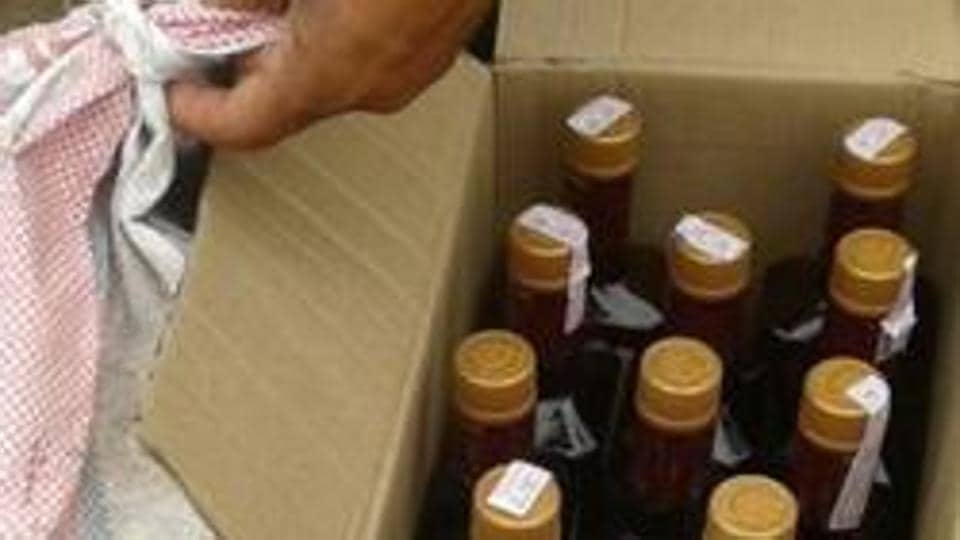
Vendors said that the price of imported scotch is likely to go down by  ₹300 to  ₹450 for a one-litre bottle, and that of IMFL whisky by  ₹150 to  ₹300. (Representative image)
Vendors said that the price of imported scotch is likely to go down by ₹300 to ₹450 for a one-litre bottle, and that of IMFL whisky by ₹150 to ₹300. (Representative image)

The new rules, which will come into effect from June 12, aim to counter the Capital’s excise policy which was released in November, under which bars and restaurants serving liquor can remain open till 3am, by allowing bars in Gurugram to stay open till 8am as long as their owners pay the excise department an annual additional fee of 20 lakh, excise officials said. The timings for liquor vends remain unchanged (from 8am to 12am), said officials. The policy will also allow more liquor vends in a single zone, and drinking places adjacent to liquor vends, which were called “ahatas”, have been renamed as “taverns”.

Also Read| Bars may stay open 24/7 in Gurugram under latest Haryana excise plan

VK Beniwal, the deputy commissioner of excise and taxation, Gurugram (east), said that as part of the policy, 60% of excise duty and 4% of VAT have been reduced on IFL. “The overall prices will reduce after re-tendering of the vends (annual auction of vends) in June. There has been a slight decline in the excise duty and VAT on India-made foreign liquor (IMFL) but only for limited brands, including Blenders Pride, Teachers, 100 Pipers,” he said.

Vendors said that the price of imported scotch is likely to go down by 300 to 450 for a one-litre bottle, and that of IMFL whisky by 150 to 300. Even beer will become cheaper with a case of 12 set to cost 150 less.

Beniwal said that since there is no maximum retail price on liquor in Haryana, they can sell it at any price without having to give discounts, and still offer customers better deals than Delhi. “Liquor shops will reduce their prices and will compete with Delhi and duty-free shops. Now footfall will increase in Gurugram,” he said.

Officials said earlier there used to be two liquor vends in a zone, the number has now been increased to four, and to prevent drunken behaviour in public, only one tavern will be allowed in a retail zone. Beniwal said, “The number of liquor vends will also increase in the city and the revenues will go up. It will be mandatory for all liquor vends and restaurants to issue invoices through Point of Sale to increase transparency. In case of violation of this provision, a penalty of 5,000 per incident shall be imposed on the licensee and repeated violations will attract cancellation of licence,” he said..

  • Leena Dhankhar
    ABOUT THE AUTHOR
    Leena Dhankhar

    Leena Dhankhar is Senior Editor and Bureau Chief, Gurugram, at Hindustan Times, where she has spent over 17 years chronicling the transformation of one of India's fastest-growing urban regions. From starting her career as a crime reporter to leading the Gurugram bureau, her journalism has been defined by investigative reporting, in-depth storytelling and an unwavering focus on public interest. Over nearly two decades, she has reported extensively across crime, politics, civic governance, elections, real estate, environment, courts, sports, education and entertainment, covering Gurugram, Faridabad, Nuh and Palwal. Her reporting has exposed several major scams and systemic failures, including insurance frauds, waste management irregularities, illegal arms manufacturing units in Nuh, illegal mining in the Aravallis, organised crime networks and governance lapses affecting millions of residents. Known for her investigative work and exclusive stories, Leena has reported on high-impact national issues, including the Nicaragua charter flight carrying Indian migrants that was turned back amid allegations of human trafficking, exposing the growing network of illegal immigration rackets. Her work has also focused on gang wars, prison administration, juvenile crime, women and child protection systems, the functioning of the Juvenile Justice Board and Child Welfare Committee, and environmental challenges such as pollution, waterlogging and deteriorating civic infrastructure. Beyond hard news, Leena has extensively documented Haryana's rich heritage, forests and wildlife, bringing attention to the state's historical landmarks, biodiversity, conservation efforts and ecological challenges through immersive reportage and feature writing. Her journalism has consistently gone beyond breaking news. She has documented Gurugram's rapid urbanisation through long-form narratives and enterprise reporting on issues ranging from pothole-ridden roads, flooding and waste management to the changing social fabric of India's Millennium City. She also writes widely read feature columns, including The Outsider, Changemaker, and Concern for Gurugram, profiling people, places and ideas shaping the city's identity. Leena is the author of Gurugram School Murder, published by Juggernaut Books, a deeply reported account of one of India's most high-profile school murder investigations. She is currently working on her second book, an investigative work exploring some of India's most significant scams and fraud investigations. Beyond print journalism, she has expanded her storytelling through public speaking and digital media. She is a TEDx speaker and has produced podcasts exploring Gurugram's transformation, civic challenges and untold stories. Her work reflects a commitment to narrative journalism that combines rigorous reporting with compelling storytelling. A law graduate with an MBA in Human Resources, Leena brings a multidisciplinary perspective to her reporting, particularly on governance, public policy and legal affairs. She has travelled extensively across India to pursue investigative assignments, often reporting from remote locations and conflict-prone areas in search of stories that matter.Read More