
Sign in

MCG gets proposal to transform city’s sanitation, waste collection

The framework, detailed in a document titled, “A Submission on Waste Management,” outlines an action plan to combat four major challenges: construction debris, road dust, horticulture waste, and garbage burning.

Published on: Oct 30, 2025, 04:40:19 IST
Share
Share via
  • facebook
  • twitter
  • linkedin
  • whatsapp
Copy link
  • copy link

The Making Model Gurugram (MMG), under the aegis of Rurban Initiatives, has submitted a comprehensive proposal to the Municipal Corporation of Gurugram (MCG) on Wednesday aimed at transforming the city’s sanitation, waste collection, and monitoring systems.
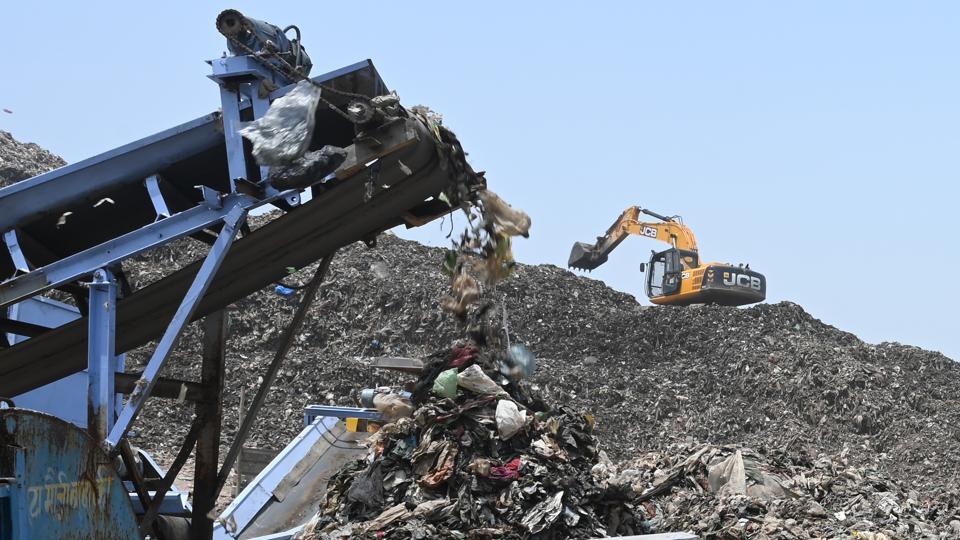
A waste treatment plant at Bandhwari in Gurugram. (Parveen Kumar/HT)

The framework, detailed in a document titled, “A Submission on Waste Management,” outlines an action plan to combat four major challenges: construction debris, road dust, horticulture waste, and garbage burning.

The report highlights that construction and demolition (C&D) waste has emerged as one of the most critical issues in Gurugram, with more than 2,000 tonnes generated daily against the Basai processing plant’s 1,500 tonne capacity. It proposes establishing 30–35 demarcated dumping points across the city and enforcing direct waste collection under MCG supervision through authorised vendors.

The plan recommends linking C&D waste clearance certificates with building occupancy approvals and imposing penalties for illegal dumping. “There must be a digital monitoring system where every construction site is registered, waste movement is tracked in real time, and challans are auto-generated for violations,” the report notes.

Road dust and poor maintenance have also been flagged as major contributors to air pollution. The plan suggests mechanised sweeping, daily sanitation schedules, and making contractor details public to enable citizen monitoring. It also calls for quarterly performance reviews based on feedback from Residents’ Welfare Associations (RWAs).

“There is a need for clear accountability and visible cleanliness on the ground. Cleaning schedules, manpower allocation, and complaint redressal mechanisms must all be transparent,” said Gauri Sarin, founder of Making Model Gurugram (MMG), who led the drafting of the proposal.

The framework further recommends decentralised composting units for horticulture and green waste, installation of leaf bins every 200 metres, and the inclusion of green waste collection in sanitation contracts to prevent burning and air contamination. It also calls for stringent enforcement against garbage burning, with police involvement, CCTV surveillance, and penalties for offenders.

RWAs have welcomed the proposal, saying citizen participation is crucial for sustainable change. “For years, Gurugram’s sanitation system has been reactive instead of preventive. A structured, tech-enabled model like this can finally bring long-term accountability,” said K.L. Sharma, general secretary of the Sector 21 RWA and a member of the Citizens Environment Action Steering Committee of Gurugram.

“We are studying the recommendations submitted by Making Model Gurugram and will integrate feasible measures into our ongoing waste management reforms,” said a senior MCG official. “Our focus is on creating a structured, transparent, and technology-driven system that ensures accountability at every level while making Gurugram cleaner and more sustainable.”

  • Leena Dhankhar
    ABOUT THE AUTHOR
    Leena Dhankhar

    Leena Dhankhar is Senior Editor and Bureau Chief, Gurugram, at Hindustan Times, where she has spent over 17 years chronicling the transformation of one of India's fastest-growing urban regions. From starting her career as a crime reporter to leading the Gurugram bureau, her journalism has been defined by investigative reporting, in-depth storytelling and an unwavering focus on public interest. Over nearly two decades, she has reported extensively across crime, politics, civic governance, elections, real estate, environment, courts, sports, education and entertainment, covering Gurugram, Faridabad, Nuh and Palwal. Her reporting has exposed several major scams and systemic failures, including insurance frauds, waste management irregularities, illegal arms manufacturing units in Nuh, illegal mining in the Aravallis, organised crime networks and governance lapses affecting millions of residents. Known for her investigative work and exclusive stories, Leena has reported on high-impact national issues, including the Nicaragua charter flight carrying Indian migrants that was turned back amid allegations of human trafficking, exposing the growing network of illegal immigration rackets. Her work has also focused on gang wars, prison administration, juvenile crime, women and child protection systems, the functioning of the Juvenile Justice Board and Child Welfare Committee, and environmental challenges such as pollution, waterlogging and deteriorating civic infrastructure. Beyond hard news, Leena has extensively documented Haryana's rich heritage, forests and wildlife, bringing attention to the state's historical landmarks, biodiversity, conservation efforts and ecological challenges through immersive reportage and feature writing. Her journalism has consistently gone beyond breaking news. She has documented Gurugram's rapid urbanisation through long-form narratives and enterprise reporting on issues ranging from pothole-ridden roads, flooding and waste management to the changing social fabric of India's Millennium City. She also writes widely read feature columns, including The Outsider, Changemaker, and Concern for Gurugram, profiling people, places and ideas shaping the city's identity. Leena is the author of Gurugram School Murder, published by Juggernaut Books, a deeply reported account of one of India's most high-profile school murder investigations. She is currently working on her second book, an investigative work exploring some of India's most significant scams and fraud investigations. Beyond print journalism, she has expanded her storytelling through public speaking and digital media. She is a TEDx speaker and has produced podcasts exploring Gurugram's transformation, civic challenges and untold stories. Her work reflects a commitment to narrative journalism that combines rigorous reporting with compelling storytelling. A law graduate with an MBA in Human Resources, Leena brings a multidisciplinary perspective to her reporting, particularly on governance, public policy and legal affairs. She has travelled extensively across India to pursue investigative assignments, often reporting from remote locations and conflict-prone areas in search of stories that matter.Read More

Catch every big hit, every wicket with Crickit, a one stop destination for Live Scores, Match Stats, Infographics & much more. Explore now!.

Stay updated with all the Breaking News and Latest News from Mumbai. Click here for comprehensive coverage of top Cities including Bengaluru, Delhi, Hyderabad, and more across India along with Stay informed on the latest happenings in World News.