
 E-Paper



Industries in Pune now short-staffed, but expects worse post-monsoon
The real challenge for industries will begin after the monsoon, believes J P Shroff, labour welfare committee chairman at Confederation of Real Estate Developers Associations of India (Credai)


With a large number of migrant labourers leaving Pune for their home, industries and shops that are on the verge of re-opening their businesses are facing some tough questions. However, a section of business-owners believe they’ll be able to pull off without the labourers since only 33 per cent staff are allowed due to the restrictions.
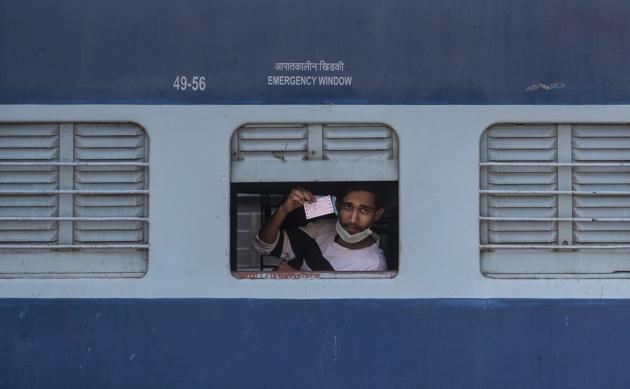
The real challenge for industries will begin after the monsoon, believes J P Shroff, labour welfare committee chairman at Confederation of Real Estate Developers Associations of India (Credai) said.
“Basically, the real estate will not feel so much of the pinch for starting pre-monsoon works which need minimum labour and during monsoon, the work slows down but there is a definite slowdown in the speed of work by 10 to 15 per cent. The real problem will start post-monsoon if the labour doesn’t come back, hence Credai members have taken special care to see that the labourers are enticed to come back by providing advances, return tickets and guarantee of work,” Shroff said.
But according to Credai, the developers will also have a gestation period of 15 days to make their site functional and up to mark to meet the new Covid-19 norms.
“Migratory labour generally go back home during May and June, to do their regular routine things. Once that is done, they start coming back from July to August. Normally, 30 to 40 per cent migratory labour go back but this year, there is a rise with 50 to 60 per cent going back, which leads to a shortage of 20 per cent of the labour,” Shroff said.
After the government of Maharashtra notification, some companies in the Ranjangaon area in rural Pune opened up with 33 per cent staff. On Friday, the Pimpri Chinchwad Municipal Corporation gave a nod to open businesses in the area.
According to the confederation of Indian industry (CII), the companies are currently managing operations due to a lesser load and demand, which is not letting labour shortage being felt immediately.
“However, as things improve and factories and establishments begin in full swing, labour shortages shall be felt and shall be a deterrent towards scaling up, if the situation of migration and shortage persists, said Alakesh Roy, chairman, CII Pune zonal council and managing director Zamil steel buildings India.
According to Roy, the current shortages if any are being taken care of, but the fact that not all industries have started and labourers are moving across sectors for jobs and livelihood is a sign of worry.
CII Pune has been working with all members and non-members, to raise matters with governments at the district, state and national level for an effective resolution.
“Social distancing norms were always followed by the very aspect of ergonomics, while at work. Special attention towards social distancing is now being ensured while during breaks for food and rest time and education is being provided to all employees. The transportation of employees is also being done at a reduced capacity of vehicles and other modes of transport. The companies are also avoiding overlapping shifts as of now to prevent crowding during shift switches,” Roy said.
Meanwhile, the Mahratta chamber of commerce, industries and agriculture (MCCIA) is trying to work as a bridge between the industry and local administration in solving the soon to hit labour shortage, according to Prashant Girbane, director-general, MCCIA.
“Many migrant labourers have now travelled back home out of state and also within the state. There are also constraints on movements within the district and city given the level of the lockdown being implemented by the local authorities. While the reasons are understandable, it is posing many problems for industries that are already facing the brunt of the economic downturn. On one hand, we advise our colleagues in the industry to implement stricter health and safety measures, on the other, we request city administration to release labour movement constraints outside containment zones,” Girbane said.
Deepak Garg, vice-chairman, CII Pune zonal council and managing director at Sany group believes labour shortage won’t have a big impact at present as only 33 per cent manpower is allowed.
“Companies who have employed from Maharashtra and specifically Pune, the impact will be lesser. Post lockdown 3.0, some of the labour who has moved to their native places within Maharashtra has been returning back to Pune with appropriate approvals from government authorities. The Maharashtra government is currently allowing employees to return back to their work city by their private vehicles. For companies employing labour from northern states, they will face issues. But this is also a good opportunity to provide employment for locals,” Garg said.


