E-Paper



Ability to deliver a good showing in Jat belt will determine RLD’s future role
The RLD hopes for a ministerial position for Jayant Chaudhary in the Modi government that it claimed was bound to return after polls. But this strongly hinges on the RLD’s ability to deliver a good showing to the BJP in the polls, proving that the party does have a sway over Jat voters in western UP.

 Prefer HTon Google


Lucknow: The stakes of the Rashtriya Lok Dal (RLD) and its leader Jayant Chaudhary may be high in the ongoing Lok Sabha elections in Uttar Pradesh where the first-phase voting to the eight seats in western UP was completed on Friday.
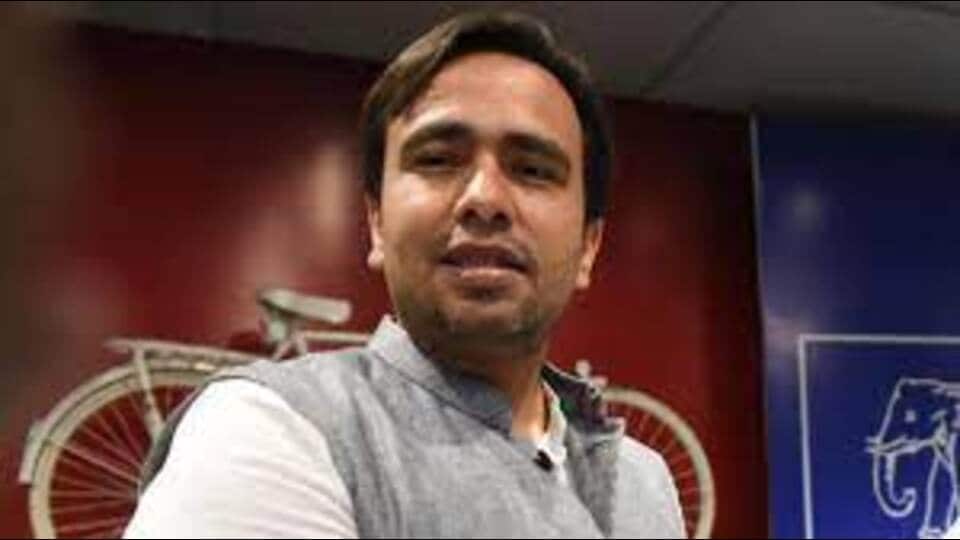
Considered largely a party of Jats, the RLD has influence in more than two dozen LS constituencies falling primarily under the first and the second phases and two or three constituencies like Hathras and Fathepur Sikri in the third phase as well.
Jayant Chaudhary surprised many with his political somersault when he moved out of the INDIA block and joined hands with the BJP-led National Democratic Alliance (NDA) only a few weeks before announcement of the Lok Sabha polls.
As a deal, the BJP conceded him two seats- Baghpat, the traditional prestigious family seat that the RLD lost in 2014 and 2019 to the BJP and Bijnor, apart from inducting an MLA as a minister in the Yogi Adityanath cabinet. He also succeeded in getting one RLD leader elected to the Vidhan Parishad with the BJP’s support.
“But this is not all. Jayant Chaudhary may be eying much more, like a cabinet birth for himself at the Centre post elections, besides a Rajya Sabha seat,” said SK Sharma, professor of political science in the Chaudhary Charan Singh University.
“And it is in this sense that the current elections are crucial for the RLD and its leader Jayant Chaudhary as their outcome will shape the party’s role in future,” he added.
The RLD hopes for a ministerial position for Jayant Chaudhary in the Modi government that it claimed was bound to return after polls. The party is also said to be unhappy with the portfolio allotted to its MLA Anil Kumar who has not taken charge yet, hoping go get the portfolio of science and technology changed after the polls.
“But we feel all this strongly hinges on the RLD’s ability to deliver a good showing to the BJP in the polls, proving that the party does have a sway over Jat voters in western UP and we are leaving no stone unturned for that,” said a senior RLD leader.
Hence Jayant Chaudhary now finds himself in a critical position. His adjustment within the Modi government and his political significance will undoubtedly be measured against his party’s ability to translate its regional influence into tangible electoral gains for the broader alliance.
As the election campaign gains momentum, all eyes are on the RLD’s performance in western UP, the party bastion.
“So far, Jayant Chaudhary has played his cards well and has demonstrated a fair level of political maturity,” Sharma said. “For example, his decision to field a common party worker from the family seat (Baghpat) instead of fielding his wife or any other family member shows his political maturity,” he pointed out, suggesting that the polls results may be favourable to him and his party.