
 E-Paper



Ajnala martyrs still await recognition, says historian Surinder Kochhar at BHU
Kochhar highlighted that the story of the 282 martyrs, whose skeletal remains were discovered in a well beneath a gurudwara in Anjala, has yet to be properly told.

 Prefer HTon Google


The forgotten martyrs of Ajnala, the town of Punjab’s Amritsar, whose bravery during the 1857 revolt remains largely unacknowledged, were the focus of local historian Surinder Kochhar, known as the “Ajnala Hero,” during his address at the ADNAT 2024 convention at the department of zoology, Banaras Hindu University (BHU).
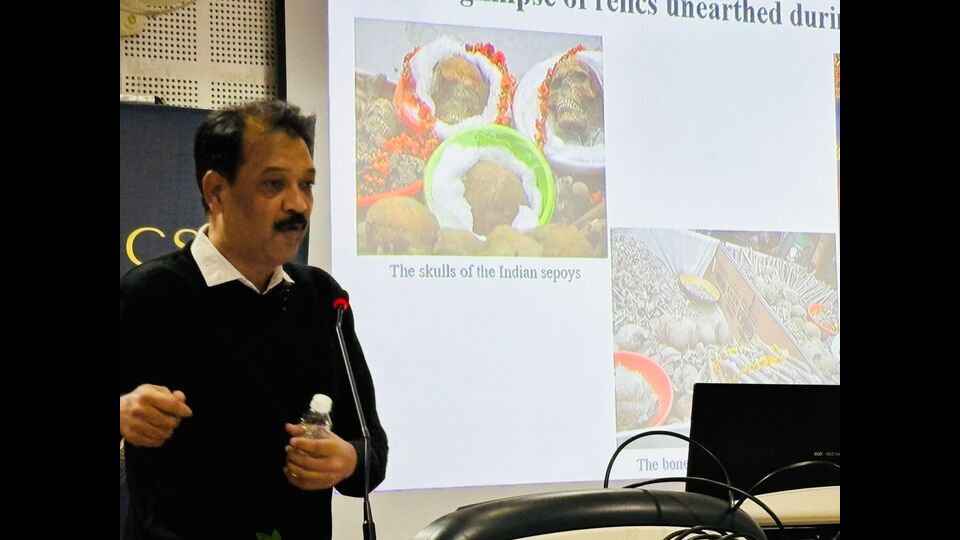
“The bravery of these martyrs has been overlooked for too long,” Kochhar said. “The discovery of 282 skeletons is a testament to their sacrifice, yet their story remains largely untold,” he added.
Kochhar highlighted that the story of the 282 martyrs, whose skeletal remains were discovered in a well beneath a gurudwara in Anjala, has yet to be properly told. These remains, symbolising the sacrifice of Indian freedom fighters during the British colonial era, represent a dark and forgotten chapter of India’s history.
The horrific incident took place in 1857, when British forces executed 282 Indian soldiers in Ajnala. The first clue about the well’s significance came from British officer and author Cooper, who wrote about the event in ‘Crisis in the Punjab’.
Kochhar further revealed that a key clue emerged from the first information report (FIR) filed against Prakash Pandey, who killed Major Spencer, leading to the discovery of the Ajnala well, known locally as the “Black Well.” The British had thrown 69 freedom fighters alive into the well, a gruesome act hidden for 157 years until Kochhar’s efforts uncovered it in 2014.
In his address, Kochhar also reflected on the challenges he faced during the excavation process. Initially, there was no support from local Gurudwaras or villagers. The rediscovery, after more than a century, met resistance and indifference. Despite multiple attempts to contact the Archaeological Survey of India (ASI), Kochhar faced ridicule from officials. However, it was the support of local villagers, shopkeepers, and military personnel that helped ensure the success of the excavation.
“The real archaeologists of Ajnala were the villagers and shopkeepers who assisted us,” Kochhar stated. “For three days, we worked tirelessly with their help,” he added.


