
 E-Paper



Design flaws or drainage system behind Lucknow-Kanpur E-way failures? IIT team’s report to reveal
The team is expected to establish whether the failures originated from deficiencies in pavement design, drainage arrangements, soil and embankment treatment, poor construction material, poor practices or a combination of these factors

 Prefer HTon Google


LUCKNOW With the final report of the IIT Kharagpur team on the recurring failures of the Lucknow-Kanpur Expressway expected within a week, preliminary observations by the experts have pointed towards possible deficiencies in the road’s design and drainage system rather than merely poor construction quality, highly placed sources familiar with the investigation told HT.
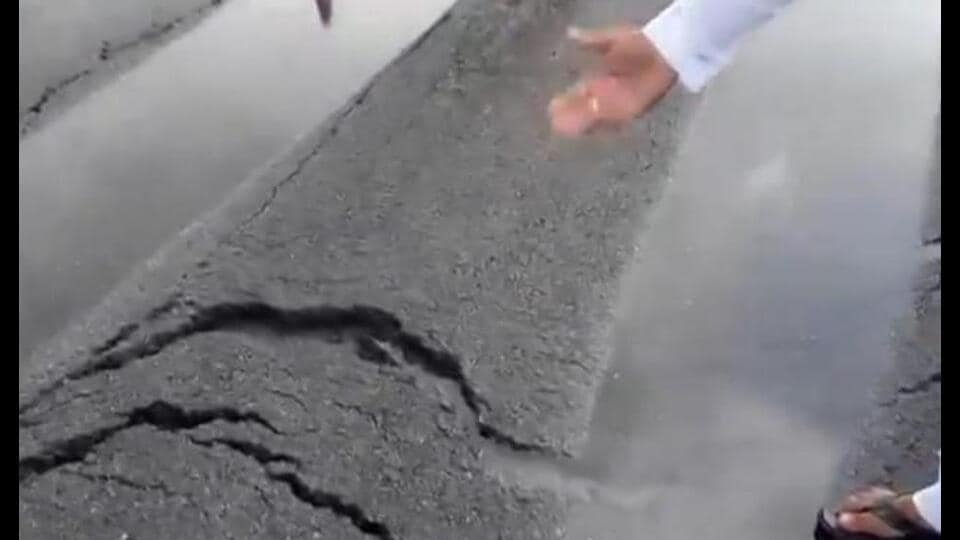
A two-member team, which examined the six-lane expressway after repeated instances of road subsidence, cracking and failure, collected around 50 samples from different locations for laboratory and forensic analysis.
Highly placed officials of NHAI said the experts have been particularly examining the movement of water through and around the pavement structure. Water seepage has been observed on the shoulders at several locations, raising questions over the adequacy of drainage provisions and the manner in which water is being discharged from the road formation.
The initial observations are significant because the expressway has witnessed repeated damage despite the relatively short period since its opening. Many stretches have developed depressions and potholes, while patchwork carried out after initial failures has itself come under scrutiny. At some places, water has seeped around 18 feet deep, affecting the strength of the road.
The IIT team is expected to establish whether the failures originated from deficiencies in pavement design, drainage arrangements, soil and embankment treatment, poor construction material, poor practices or a combination of these factors. The final report will also determine whether the damage can be attributed primarily to workmanship or whether there were shortcomings at the design stage.
The investigation assumes importance as the Lucknow-Kanpur Expressway was built at a cost of around ₹4,200 crore, with the project involving a substantial expenditure per kilometre. The route was conceived to provide a faster alternative between the two cities and reduce travel time substantially.
The National Highways Authority of India (NHAI) had launched a detailed probe after a major stretch near Km 64 suffered slippage on July 26. It subsequently initiated action against the concessionaire (PNC Infratech), the independent engineer and officials responsible for supervision. NHAI also issued a non-performer notice to the company, proposing action that could affect the company’s eligibility for future highway projects.
The authority had directed reconstruction of the damaged portion at the concessionaire’s cost and suspended toll collection on the affected stretch until restoration. NHAI had also proposed recovery of the revenue loss caused by the toll suspension.
The IIT Kharagpur investigation is now being closely watched because it could establish whether the recurring failures represent isolated construction defects or a systemic design problem.
Chief general manager and regional officer of NHAI (UP) Gautam Vishal said, “The findings of IIT Kharagpur will be particularly important. The presence of seepage along road shoulders was examined alongside rainfall, soil conditions, embankment compaction and pavement-layer specifications to determine how water may have entered or weakened the road structure. This has been examined by the team.”
The final report, expected within the next week, is likely to be crucial in fixing responsibility and determining whether repairing damaged portions will be sufficient or whether portions of the expressway will require fundamental engineering corrections.


