
 E-Paper



Idol care takes precedence as Hanuman Setu temple bars flower garlands
Lucknow’s Hanuman Setu temple has banned flower garlands on idols to prevent damage, allowing cloth or paper offerings while it seeks alternatives.

 Prefer HTon Google


Devotees visiting Lucknow’s Hanuman Setu temple can no longer offer flower garlands to Lord Hanuman and other deities, following a decision by the temple trust to protect the idols from damage caused by moisture, insects and repeated handling of garlands.
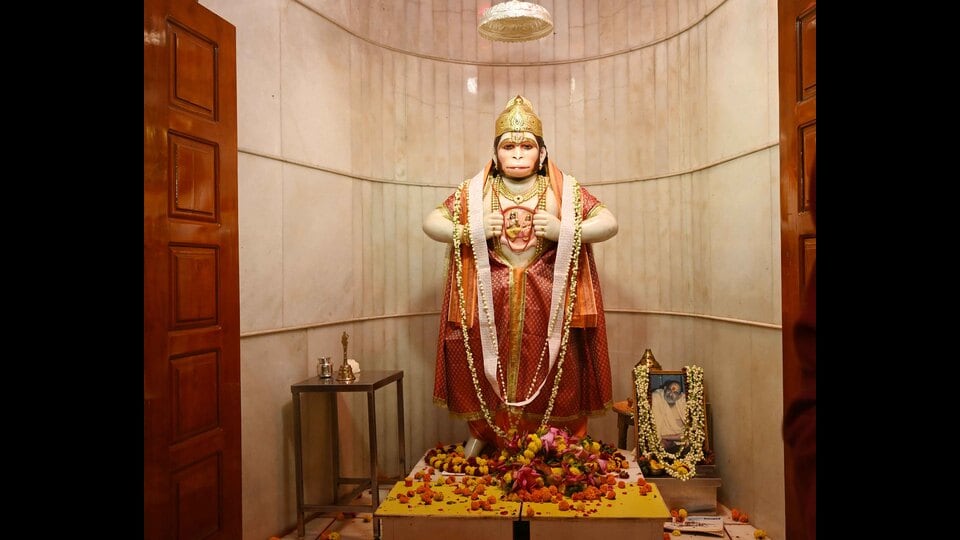
The restriction, introduced around two months ago, has ended the temple’s longstanding practice of accepting flower garlands as offerings. Devotees can now offer only cloth or paper garlands bearing the names of Lord Ram or ‘Siya Ram’.
Temple priests said flower garlands often contain insects and dirt. Water sprinkled on them to keep the flowers fresh causes the colours of the clothes adorning the idols to bleed and stain their surfaces. Repeatedly placing and removing garlands also causes the paint on the idols to wear off. However, devotees can still offer flowers and garlands, which will be placed near the idols instead of directly on them.
Diwakar Tripathi, managing head of the Hanuman Setu temple, said the decision was made after concerns were raised about the idols’ deteriorating condition. He added that an artist and painter from Jaipur, who specialises in the maintenance and restoration of temple idols, was recently called in to assess their condition.
“We recently brought in an artist from Jaipur who specialises in the maintenance and restoration of idols. He pointed out that the repeated offering and removal of flower garlands was causing wear and tear, making protective measures necessary,” Tripathi said.
He added that moisture from the garlands was particularly damaging the clothes adorning the deities, causing their colours to bleed and stain the idols.
“The moisture damages the clothes adorning the deities, causing their colours to bleed onto the idols and affect their appearance. Repainting and polishing the idols is also an expensive process. We have, therefore, introduced this arrangement to prevent further damage and preserve the idols,” Tripathi said.
However, the temple trust does not plan to make the restriction permanent and is exploring alternatives that would allow devotees to continue the traditional practice of offering flower garlands without causing damage to the idols.
“We want this to remain a temporary measure. We are consulting artists to develop specially designed clothes for the deities that would allow devotees to offer flower garlands to Lord Hanuman and other idols without causing any damage. Once a suitable protective arrangement is in place, we hope to resume the practice,” Tripathi added.
Temple priests also pointed out that insects found in flower garlands were sometimes seen crawling over the idols and even onto priests performing rituals. Several devotees had raised objections to this, prompting the temple administration to consider additional precautions.
The restriction applies to Lord Hanuman and other idols within the temple complex. However, floral decorations and the traditional offering of water continue to be permitted at the Shivling.
For now, devotees can offer cloth garlands or paper garlands inscribed with ‘Ram’ or ‘Siya Ram’, while the temple trust works towards finding a solution that balances religious traditions with the preservation of the idols.


