
 E-Paper



Parijat Lab: From flower to perfume bottle, Lucknow’s NBRI to do it all
Lucknow's National Botanical Research Institute (NBRI) has opened a lab, Parijat Lab, dedicated to research and development of natural ingredient-based perfumes. The lab will produce perfumes from flowers grown by farmers and aims to promote the production of desi perfumes in India.

 Prefer HTon Google


Lucknow’s National Botanical Research Institute (NBRI) has opened a lab, Parijat Lab, dedicated to exclusive research and development of natural ingredient-based perfumes. This is a first for any Council of Scientific & Industrial Research (CSIR) lab.
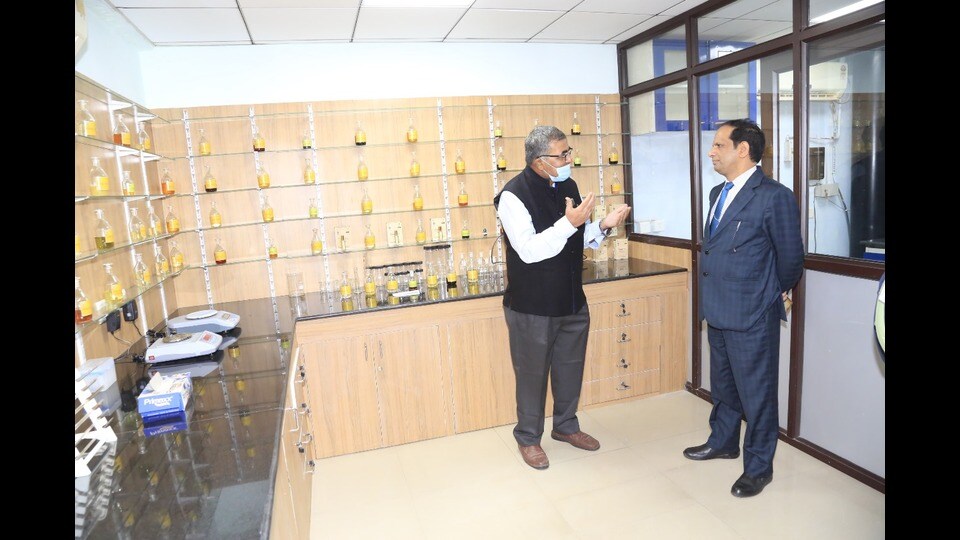
“Right from producing the raw material i.e. fragrant flower, to using it to make perfume, all research will be conducted here in this lab,” said Ajit Kumar Shasany, director, CSIR-NBRI, adding that the NBRI will also take the help of Fragrance & Flavour Development Centre (FFDC), Kannauj.
Explaining the process, Shasany, who is also the brainchild behind the concept, said that leftover flowers which are being grown by the farmers under floriculture mission will be used. Unsold flowers will be bought from them and then perfume will be made with them. This technology will be shared with interested private players as well.
‘Different from perfume made in Kannauj’
Differentiating the perfume manufactured in Kannauj, the NBRI director said, “In Kannauj, the perfumes are produced after purchasing the ingredients. They don’t produce it themselves. Whereas, here at CSIR-NBRI, from growing flowers to using their natural ingredients will be done indigenously.”
“The Indian perfume market is worth ₹10,000 crore. There is a lot of scope for people producing perfumes from their own finished products. However, currently the practice is exporting the raw material which is then imported back to India as high cost finished product by the big players after fabricating it using synthetic material,” said Shasany, a post-doctorate in Aroma Biology from Portugal University.
“The idea is to go vocal for local and produce a completely desi perfume, soap perfume, diffuser among others,” he said.


