
 E-Paper



Resignation by two ministers sparks fight for OBC votes in Uttar Pradesh
In the 2017 Uttar Pradesh assembly elections, the BJP had made a dent in the Samajwadi Party’s OBC base by wooing non Yadav backward caste leaders. Now, Akhilesh Yadav is looking to turn the tables on the ruling party

 Prefer HTon Google


The resignation of labour and employment minister Swami Prasad Maurya as well as forest and environment minister Dara Singh Chauhan from the Bharatiya Janata Party (BJP) government and their meeting with Samajwadi Party (SP) chief Akhilesh Yadav has sparked a fight for the other backward caste (OBC) votes between the BJP and the SP in the Uttar Pradesh assembly elections.
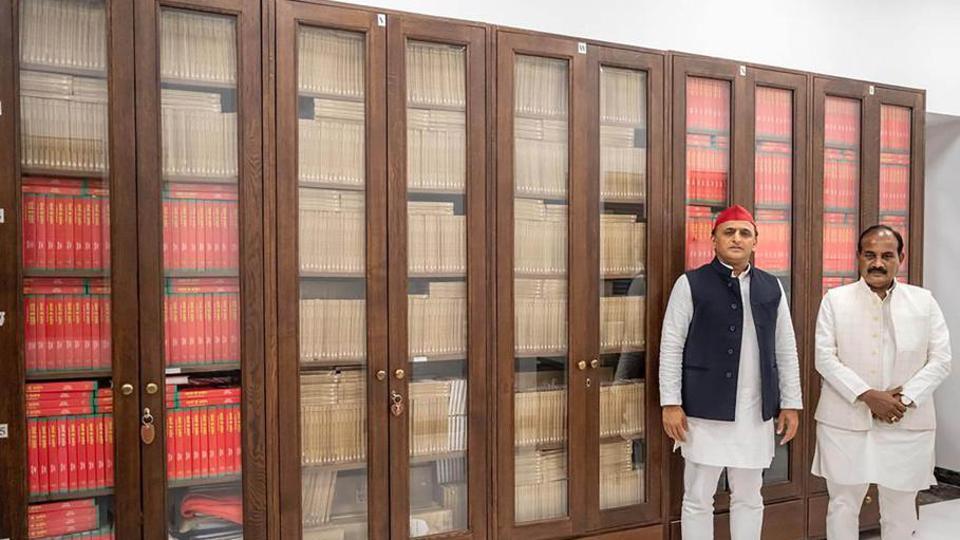
In the 2017 assembly elections, the BJP had made a dent in the Samajwadi Party’s OBC base by wooing non-Yadav backward caste leaders, including Kurmis, Mauryas, Shakyas, Sainis, Kushwahas, Rajbhars and Nishads, to join the saffron fold.
The OBC leaders in the Bahujan Samaj Party (BSP) were also lured by the BJP with ticket offers, ministerial berths as well as posts in the party organisation. The BJP leaders were able to cash in on the resentment among the non-Yadav backward caste leaders following the perception that the Yadav community cornered a major share of the government resources under the SP rule.
Several OBC leaders from the SP and the BSP, including Swami Prasad Maurya, RK Singh Patel, SP Singh Baghel, Dara Singh Chauhan, Dharam Singh Saini, Brijesh Kumar Verma, Roshan Lal Verma and Ramesh Kushwaha, joined the BJP before the 2017 assembly elections, paving the way for its landslide victory.
Several defectors were elected to the assembly. Others were accommodated in the legislative council or the party organisation.
The BJP alone won 312 of the 403 seats in the UP assembly election in 2017 while its allies Apna Dal and Suheldev Bharatiya Samaj Party (SBSP) bagged nine and four respectively. The SBSP parted ways with the BJP after the 2019 Lok Sabha elections.
Looking to make a comeback in the assembly election, SP chief Akhilesh Yadav is trying to turn the tables on the BJP by opening the party’s door to the non-Yadav OBC leaders of the ruling party and the BSP.
The BSP leaders belonging to the OBC who rose in rebellion after party chief Mayawati announced the breaking of the alliance with the SP after the defeat in the 2019 Lok Sabha election were sent feelers to join the SP. “Immediately after the slowdown of the Covid-19 second wave, Akhilesh Yadav sent senior party leaders to hold meetings with the sulking BSP leaders. Rebel BSP leaders Indrajit Saroj and RK Chaudhary, who had joined the SP earlier, were told to hold talks with the BSP rebels to convince them to join the SP. The SP’s OBC leaders were also entrusted with the task of winning the confidence of the rebels to join the SP fold,” said a BSP leader, who does not wish to be named.
Akhilesh Yadav’s move paid dividends as the rebel BSP leaders belonging to the OBCs, including RS Kushwaha, Lalji Verma, Ramachal Rajbhar, KK Sachan, Veer Singh and Ram Prasad Chaudhary, joined the Samajwadi Party. An influential rebel BSP leader Daddu Prasad announced support to the SP in the assembly elections. The rebel BSP leaders, in turn, convinced their former comrades in the BJP, including Swami Prasad Maurya, Dara Singh Chauhan, Roshan Lal Verma, Vijay Pal, Brijesh Kumar Prajapati and Bhagwati Sagar, who felt sidelined, to join the SP.
The BJP has launched a damage control exercise by contacting the rebels and assuring them of party tickets for the assembly elections. Besides, the BJP’s OBC leaders such as deputy chief minister Keshav Prasad Maurya and state unit president Swatantra Dev Singh have been entrusted with the task to hold talks with the rebels as Swami Prasad Maurya said more BJP MLAs belonging to the backward castes will join the SP.
“The rebel BJP MLAs are in contact with me. After a green signal from the SP chief, they will join the Samajwadi Party,” he said. Swami Prasad Maurya also said the BJP government’s policies were against the other backward castes and Dalits.
“The attitude of the BJP was indifferent to the weaker sections in the society. I was left with no option but to resign from the BJP,” he said.
Keshav Prasad Maurya, in a tweet on Wednesday said, “It hurts if any member of the family goes astray. I would urge the respected leaders that they will harm themselves by riding a sinking boat. Swami Prasad Maurya and Dara Singh Chauhan should reconsider their decision.”
Bahujan Samaj Party chief Mayawati had earlier said the inclusion of expelled leaders of the BSP and other rival parties would not increase the support base of the SP. Rather, it will decrease the mass base and weaken the SP further, she had said.
Samajwadi Party spokesperson Rajendra Chaudhary said the backward caste leaders of other parties joining the SP know that the party is fighting for social justice and dignity of all the communities. The SP will regain its lost ground and form the next government with the support of all the communities, he said.
SK Dwivedi, former head of the political science department at Lucknow University, said, “The disgruntled OBC leaders are deserting the BJP to join the Samajwadi Party, but their ability to transfer the votes of their community to the SP will be crucial in the assembly election.”
Another political observer SK Srivastava said, “The OBCs constitute around 45% of the population in Uttar Pradesh. Their support played a crucial role in the formation of the BSP government in 2007, the SP government in 2012 and the BJP government in the 2017 assembly election. The BJP capitalised on their disenchantment in the 2017 assembly election. Will Akhilesh Yadav be able to reap the electoral benefits of dissatisfaction of the rebel BJP OBC leaders in the coming election? This will be a decisive factor in the 2022 assembly elections.”


