E-Paper



Seven days on, amputated arm of ITBP man’s mother stuck at Kanpur police station
Police to seek ‘clear instructions’ from chief medical officer who says amputated arm should have been sent to medical college

 Prefer HTon Google


In a shocking deadlock, the amputated right arm of an Indo-Tibetan Border Police (ITBP) jawan’s mother has been lying in the malkhana (storeroom) of Kanpur’s Railbazar police station, waiting for someone to put in writing who should move it.
The limb, sealed by investigators on May 20, was scheduled for a histopathology examination at the Ganesh Shankar Vidyarthi Memorial (GSVM) Medical College seven kilometres away. It has yet to leave the police station.
Railbazar station house officer Aman Singh said the police could not move the limb without explicit written instructions from the chief medical officer (CMO), which have not yet been issued.
Deputy commissioner of police (East) Satyajit Gupta confirmed that the amputated hand remained in police custody.
“We are writing to the CMO, Kanpur, for clear instructions on how the limb is to be handled. It was sent to the police station without any documentation, and no formal letter has been sent to us till date,” he said, adding that the CMO would decide which tests were required and what further action was to be taken.
The deadlock follows the registration of criminal cases against two private medical facilities – Krishna Hospital and Paras Hospital – for alleged medical negligence.
On Tuesday and Wednesday, police investigators accompanied the complainant to both hospitals, seized treatment records, and secured CCTV footage on a pen drive. Formal notices have also been issued to the treating doctors, directing them to appear and record their statements.
Nirmala Devi, mother of ITBP constable Vikas Singh, who is deployed with the 32nd Battalion in Maharajpur, was admitted to Krishna Hospital on May 13 with severe respiratory and cardiac distress. Although her condition stabilised under treatment, her right hand began turning black. On May 17, Singh shifted her to Paras Hospital where doctors determined that immediate amputation was necessary and performed the procedure.
What followed was a direct violation of statutory biomedical waste guidelines. Hospitals are required either to seal an amputated organ and send it for forensic examination or to dispose of it safely as biomedical waste. Paras Hospital allegedly did neither. Instead, the staff handed the severed limb directly to Vikas Singh.
With no authority willing to take responsibility for it, Vikas Singh spent days running between offices, first approaching Railbazar police, then the additional DCP (East), and finally presenting the matter before police commissioner Raghubir Lal on May 19. Only after the police commissioner intervened directly did the CMO instruct Railbazar police to take possession of the limb and seal it on May 20.
Chief medical officer Dr Hari Datt Nemi on Wednesday said: “The police should have sent the amputated arm to the medical college after my report on May 23. I had preservatives added to ensure it did not deteriorate. They should have sent it by now.”
His office has not explained why it failed to coordinate with the police on the histopathology examination, which lawyers said was a crucial piece of evidence.
The police have confirmed that Paras Hospital authorities admitted to the lapse during preliminary questioning. Consequently, the chief medical officer has issued a show-cause notice to the hospital management, seeking an explanation for why the limb was handed to the family instead of being sent for forensic testing.
Defending the hospital’s actions, unit head of sales and marketing Nitin Saraswat said in a press statement that the surgery performed on May 17 was conducted only after obtaining explicit written consent from the patient’s relatives. He maintained that the treatment adhered strictly to established medical protocols and standard operating procedures.
The hospital management further stated that Nirmala Devi remains stable and is showing signs of recovery, and added that the administration is cooperating fully with the ongoing police investigation.
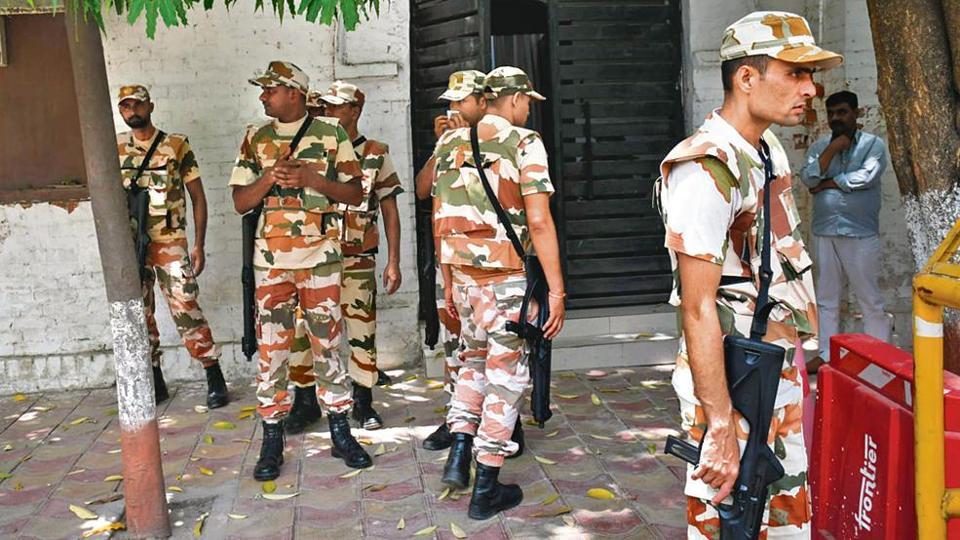
On May 23, around 50 armed ITBP personnel arrived at the Kanpur police commissionerate in over a dozen vehicles, including trucks, and stayed outside the headquarters for more than an hour, in support of Vikas Singh. Their action prompted authorities to scrap an earlier medical inquiry and order a fresh joint probe into alleged negligence that led to the jawan’s mother losing her arm.
ITBP commandant Gaurav Prasad and constable Singh met the commissioner while other personnel remained stationed outside. Some teams later went to the CMO office.
On May 27, the Kanpur police commissioner confirmed he had written to the ITBP director general (DG) seeking action against personnel who arrived at the Kanpur police commissionerate and took up what police described as an “intimidatory formation” outside his office.