
 E-Paper



Shringar Gauri case: Suit barred by limitation, argues Masjid committee
Anjuman Intezamia Masajid Committee (AIMC) has challenged a Varanasi court order turning down its objections to the maintainability of the suit filed by five Hindu women seeking permission to regularly worship Shringar Gauri and other deities in Varanasi’s Gyanvapi mosque compound.


PRAYAGRAJ: In a petition related to the suit seeking regular worship of Shringar Gauri and other deities in Varanasi’s Gyanvapi mosque compound, the counsel for Intezamia Masjid committee on Thursday submitted before the court that the suit was barred by limitation as the same had been filled beyond the period prescribed in The Limitation Act.
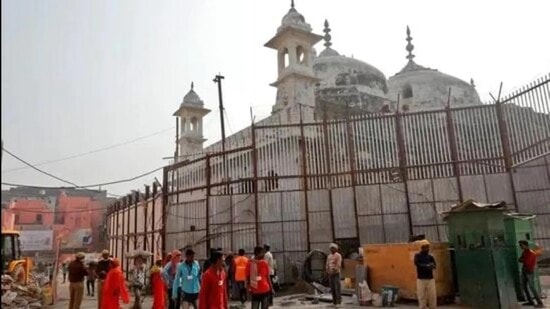
On the above submission, justice JJ Munir questioned whether this plea of delay in filing of present suit was taken before the court below or whether this was a ground under Order 7 Rule 11 application moved by the petitioner. However, in the middle of arguments (as the time was over), the court ordered the hearing to continue on Friday.
It may be recalled that Anjuman Intezamia Masajid Committee (AIMC) has challenged a Varanasi court order turning down its objections to the maintainability of the suit filed by five Hindu women seeking permission to regularly worship Shringar Gauri and other deities in Varanasi’s Gyanvapi mosque compound.
Earlier, the petitioner - AIMC, the Gyanvapi mosque management committee, had opposed the suit by saying that it was barred under the Places of Worship Act, 1991, which provides that no suit can be filed seeking conversion of any religious place as existed on August 15, 1947.
The counsel representing the Hindu side had argued that just by demolition of the temple at the disputed site, the said land did not lose its nature of being a temple land. Hence, in this way the Places of Worship Act, 1991 would not apply in the case, as the temple existed on the said land before its demolition much prior to independence of India, the counsel had added.
Earlier, the district judge, Varanasi had on September 12 dismissed the plea of AIMC filed under Order 7 Rule 11 of Civil Procedure Code (CPC), challenging the maintainability of the suit filed by the five Hindu plaintiffs.
While rejecting the AIMC’s plea, district judge Varanasi had observed that the suit of the plaintiffs (five Hindu women) was not barred by the Places of Worship (Special Provisions) Act, 1991, The Waqf Act 1995, and the UP Shri Kashi Vishwanath Temple Act, 1983 as was being claimed by the AIM.
The present revision petition has been filed by AIMC before the high court, challenging the September 12 order on the ground that the suit before the court below is barred under the Places of Worship Act, 1991, which provides that no suit can be filed seeking conversion of any religious place as existed on August 15, 1947.
The law of limitation specifies the statutory time frame within which a person may initiate a legal proceeding or a legal action can be brought.


