E-Paper



To be or not to be: Illegal power connections expose UP’s floodplain dilemma
UPPCL proposed temporary prepaid connections in 2024, citing revenue loss from illegal connections in floodplain settlements.

 Prefer HTon Google


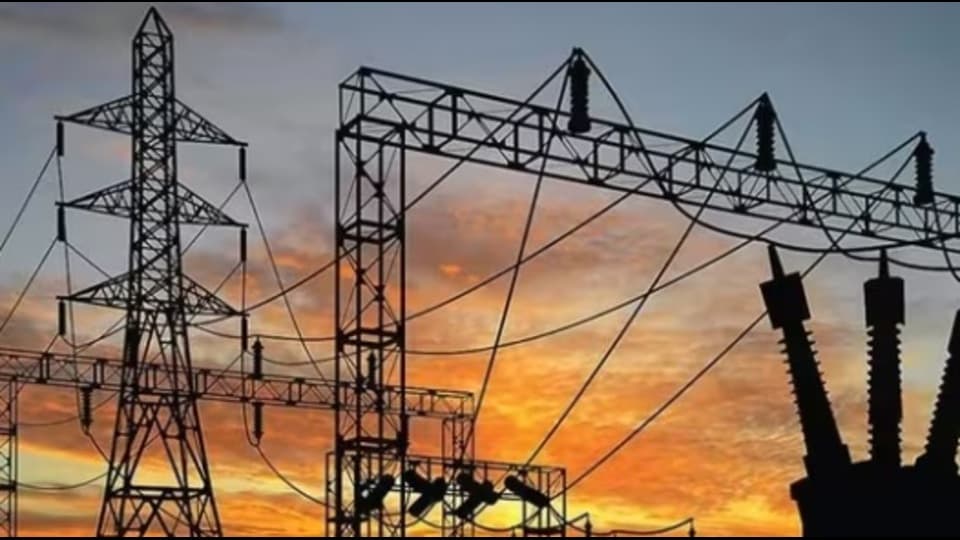
The existence of thousands of unauthorised electricity connections in the Hindon river floodplain areas under Ghaziabad and Gautam Buddh Nagar has brought a larger policy dilemma for Uttar Pradesh into sharp focus: whether to continue denying power connections to illegal settlements or provide regulated power supply to people who have continued to live there despite a strict construction ban.
The issue was flagged before chief minister Yogi Adityanath during a high-level meeting last week, with Chhijarsi village, which has illegal power connections in Gautam Buddh Nagar emerging as a particular concern.
The review pointed to unauthorised connections used by residents in the villages within the declared floodplain areas and alleged syndicates operating parallel power supply networks and recovering the cost of power from the dwellers. The CM, it is said, expressed displeasure at the situation and directed officials to take appropriate steps to plug the theft of electricity there.
State Transformation Commission head and former chief secretary Manoj Kumar Singh who flagged the issue during the meeting told Hindustan Times that following the chief minister’s detectives he had called a meeting with various departments including the Noida Authority on September 3 to “understand the issue and find a way out.”
Singh said he was not aware of the UP Power Corporation Ltd’s (UPPCL) 2024 proposal to legally give temporary power connections in the floodplain areas but felt such a proposal was called for.
Officials in UPPCL have so far been guarded about the matter. The corporation and the energy department are examining old records and the circumstances in which the illegal connections arose before deciding on the next course of action. When contacted, UPPCL managing director, Nitish Kumar refused to react saying the issue was too big for him to comment on.
UPPCL had proposed regulated supply in 2024
Interestingly, UPPCL itself flagged the problem in 2024 and proposed a solution that is now being seen as particularly relevant.
The corporation had sought permission from the state energy department to provide temporary, prepaid electricity connections to residents living in floodplain areas of Ghaziabad and Gautam Buddh Nagar.
In a letter written by then UPPCL managing director Pankaj Kumar on January 8, 2024, the corporation estimated that around 18,650 households, representing nearly 60,000 people, were living in the floodplain areas of whom around 13,150 households did not have formal electricity connections.
UPPCL’s argument was that all efforts and restrictions had failed to stop the encroachments and the illegal settlements from coming and existing while residents were drawing electricity illegally. This was causing power theft, overloading of the distribution network, safety hazards and revenue losses to the corporation.
The proposal was deliberately designed not to cover legitimacy on the settlements. Power connections were to be temporary and prepaid, with armoured cables. Consumers, according to the proposal, were to bear the cost of electrical infrastructure while the connection would carry no ownership or occupancy right. Residents would also have to undertake to vacate the premises whenever ordered by authorities or courts and the discom could disconnect supply if demolition action was initiated.
2010 GO presents contradiction
The proposal, however, runs into a long-standing government policy. A March 16, 2010 government order issued by the irrigation department and circulated by the chief secretary Atul Kumar Gupta to the department concerned for strict compliance had directed authorities to prevent illegal construction and encroachment in the floodplains. It specifically said that illegal constructions and encroachers should not be provided government facilities including electricity, water and ration cards.
Yet, illegal settlements in the Hindon floodplain areas of Ghaziabad and Gautam Buddh Nagar have continued to exist and expand. According to officials even farmhouses and show rooms had come up in these areas and residents were availing of most government services including ration cards despite the 2010 order.
Gap between policy and ground reality
For UPPCL, the argument is straightforward: the settlements have continued despite attempts to stop them, and denying formal electricity has not prevented people from consuming power. Instead, it had encouraged illegal tapping, created safety hazards and deprived the Meerut discom of revenue.
But from an environmental and regulatory perspective, a difficult question arises as to if the UPPCL can provide electricity to settlements that are unauthorised without indirectly facilitating their continued occupation.
The question is believed to be particularly relevant in view of National Green Tribunal (NGT) directions concerning protection of the Yamuna and Hindon floodplains. “The September 3 meeting is expected to discuss all these complexities while finding a way forward,” an energy department official said.
The central question for the government, according to the official now, is whether it should continue treating these settlements purely as illegal encroachments and deny them formal utilities or acknowledge the ground reality.