
 E-Paper



Agriculture in 25 districts of Maharashtra vulnerable to climate changes, says study
Of the state’s 36 districts, 11 were found to be highly vulnerable to climate-related agricultural distress (making up 40% of cropped land)

 Prefer HTon Google


A new study by researchers from two Central government institutes — both under the Indian Council of Agricultural Research (ICAR) — has found that just over two-thirds of arable land in Maharashtra is vulnerable to climate change-related impacts, such as drought, floods, and diminishing water security.
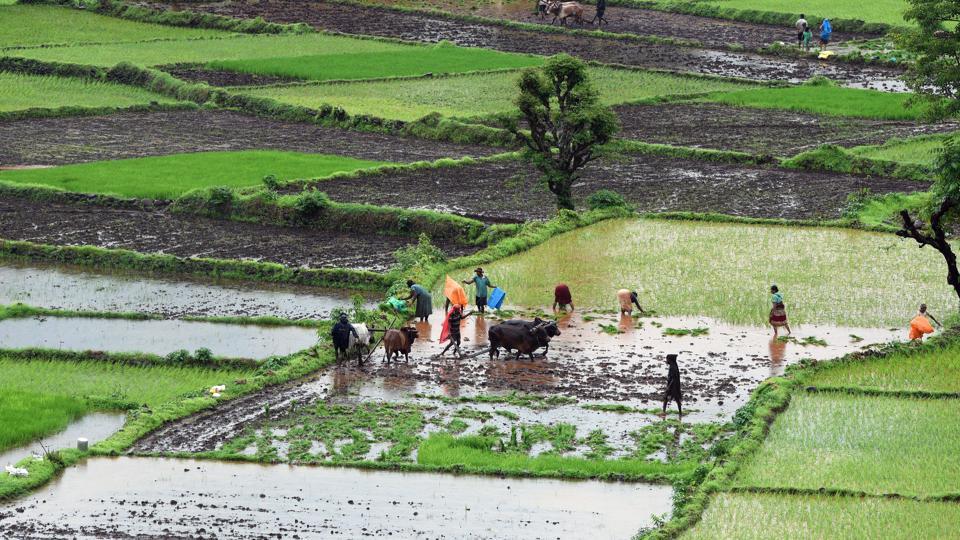
Of the state’s 36 districts, 11 were found to be highly vulnerable to climate-related agricultural distress (making up 40% of cropped land), while another 14 districts (making up 37% of the state’s agricultural land) were found to be moderately vulnerable to climate change. These districts are all spread out over eastern Vidarbha and central Maharashtra.
The study, titled ‘Socio-economic vulnerability to climate change – Index development and mapping for districts in Maharashtra’, was led by researchers Chaitanya Adhav (from the ICAR-National Dairy Research Institute in Karnal, Haryana) and Dr R Sendhil (from ICAR-Indian Institute of Wheat and Barley Research in Karnal).
Adhav, who is originally from Ahmednagar district in Maharashtra, clarified that his paper (available as a pre-print on the Social Science Research Network) is currently awaiting peer review, and has been submitted to an internal environmental journal for publication. Mumbai city and suburban districts have been excluded from the scope of the study.
“Maharashtra has been selected purposively for this study as the state is severely facing rainfall and temperature anomalies along with persistent droughts and many climatic factors impacting agriculture and allied activities,” the authors have noted in their paper. Citing the example of water scarcity during the Kharif season (June to October) of 2018-19, which affected 151 talukas (blocks) across 26 districts, the authors note that such incidents “signify a key threat to communities that depend on agriculture for food and livelihoods”.
To quantify the risk faced by 34 of the state’s districts, Adhav and his team developed a “climate change-induced socioeconomic vulnerability index (SeVI) comprising various socio-economic as well as crop and dairy indicators” using a methodology prescribed by the Intergovernmental Panel on Climate Change (IPCC) to assess regional-level climate vulnerability. IPCC’s model categorises various indicators into three categories: exposure, sensitivity and adaptability.
For the study, a total of 44 indicators were selected after expert consultations and literature reviews. Under the exposure vertical of the IPCC’s assessment, for example, indicators include trends in temperature for summer, Kharif and rabi crop season, along with trends in humidity and meteorological drought. Under the sensitivity vertical, indicators include data on population density, irrigation capabilities, size of operational holdings for small and marginal farmers, groundwater availability, and farmer suicides among others. Finally, under the adaptivity vertical, data on literacy rate, human development index (HDI), several fair price shops in the district, crop diversity and subsidised food grain distribution were considered.
After assigning an index value to each district, under each of these verticals, a composite socio-economic index value was computed to assess the district’s overall risk and preparedness to deal with climate-related distress. The Socioeconomic Vulnerability Index was highest in Nandurbar, the authors have noted. Other districts categorised as ‘highly vulnerable’ include Buldhana, Beed, Jalna, Aurangabad, Hingoli, Parbhani, Nanded, Akola, Amravati and Washim.
Another 14 districts were categorised as ‘moderately vulnerable’, including Dhule, Jalgaon, Ratnagiri, Sindhudurg, Sangli, Solapur, Osmanabad, Latur, Yavatmal, Wardha, Chandrapur, Bhandara, Gondia and Gadchiroli. Across both degrees of vulnerability, the main cash crops which are likely to bear the brunt of changing climate trends include jowar, rice, wheat, sugarcane, cotton, ragi, cashew nut, barley, and millets, the authors have cautioned. Meanwhile, nine districts including Palghar, Thane, Raigad, Nashik, Satara, Kolhapur, Ahmednagar, Nagpur and Pune were found to be least vulnerable to climate agricultural distress.
Expressing concern over these findings, Akshay Deoras, independent meteorologist and PhD student at University of Reading in England, said, “The last decade alone has shown us severe droughts in 2014, 2015 and 2018, massive hailstorms in 2014 and 2015, and excess rainfall in 2016, 2019 and 2021 that led to significant flooding in western parts of the state. In the absence of proper irrigation in Marathwada and Vidarbha, fluctuations in the monsoon rainfall will affect sowing and crop growth, resulting in a high vulnerability to crop yield. Even this year, districts across northern Maharashtra such as Dhule, Nandurbar, Jalgaon, Nashik and parts of western Vidarbha have witnessed a very low number of monsoon rainfall days, impacting Kharif sowing. Proper and lucid advisories could have prevented farmers from sowing in June, which would have mitigated the resultant financial stress.”
Vijay Anna Borade, trustee, Marathwada Sheti Sahayak Mandal (MSSM), also agreed with Adhav’s analysis. “What we are witnessing now is a concern because, on one hand, the number of rainy days in a year has reduced drastically while on the other hand areas in Marathwada, which usually receive very little rainfall, are now being flooded. Changing crop patterns is a solution but we also need to create parallel programs to tackle the lack of drainage, irrigation and facilitate efficient crop rotation to ensure stable incomes and productivity. There is a lot of discussion on climate change and agriculture, but it is very little on-ground action.”
Speaking to HT over the phone, Adhav expressed particular worry for districts that scored low on the adaptivity index in his analysis. “Some of the districts which were found to be the least adaptable, like Beed, have already seen extremely high numbers of farmer suicides. Our analysis is a reflection of trends which have already been established or are just beginning to emerge.”
Hindustan Times reached out to Aditi Tatkare, minister of state for horticulture and Dheeraj Kumar, commissioner, agriculture department for a comment but has not received a response yet. Despite attempts, HT was unable to contact Dadaji Bhuse, minister of state for agriculture, on Friday.


