
 E-Paper



All eyes on Wakf Board hearing 186 petitioners on declaring their plots as non-wakf properties
Samajwadi Party MLA Rais Shaikh, along with a host of other Muslim organisations, has demanded that the State Wakf Board to make its proceedings public

 Prefer HTon Google


Mumbai: The furore over the new Wakf Amendment Bill introduced in Parliament may have died down but in Maharashtra another controversy is brewing over wakf properties.
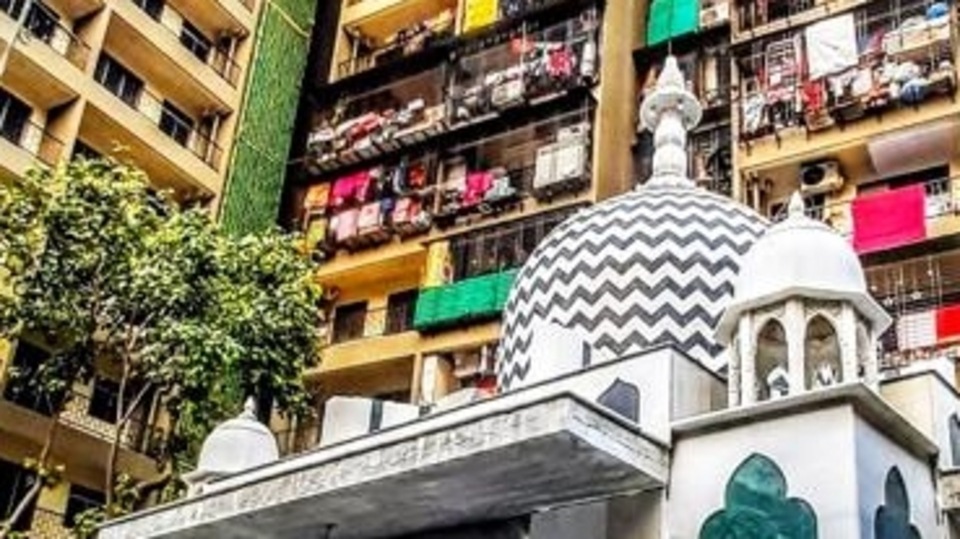
Samajwadi Party MLA from Bhiwandi east Rais Shaikh, along with a host of other Muslim organizations, has demanded that the State Wakf Board which is hearing 186 representations from stakeholders seeking to delink their land from wakf properties, make its proceedings public.
The story behind these hearings reflects the complexities that surround the issue of wakf. This includes the resistance by wealthy Muslims to the concept of wakf; the government’s hold over the Board that controls around 23,000 properties spread over 92,000 acres in the state; the Board’s own reluctance to open its doors to the community it’s supposed to serve. All these contestations are reflected in the legal challenges the Maharashtra Wakf Board has faced since its inception.
Wakf properties are those donated by Muslims to be used for religious and charitable purposes. Given in the name of God, they are to be managed but not owned by caretakers, under the overall control of State Wakf Boards. Such donations are irrevocable: “Once a wakf, always a wakf’’ is the rule. Wakf properties cannot be sold as per law.
The Maharashtra Wakf Board was set up in January 2002, in accordance with the Wakf Act, 1995. Its first task was to study the findings of a government survey of wakf properties. Based on this survey, the Board published two lists of wakf properties in the state, in November 2003 and December 2004 respectively. Included in this list was the land on which now stands Antilia, the Ambani home.
Soon after the setting up of the Board in 2002, the Charity Commissioner issued a circular saying that wakf properties registered under the Bombay Public Trusts Act 1950, and administered by the Charity Commissioner, would henceforth be exempt from its purview, and would be considered to have been registered under the 1995 Wakf Act.
A petition was immediately filed in the Bombay High Court by the Anjuman-I-Islam, challenging this circular as well as the constitution of the State Wakf Board. Other petitions on the same lines, including by the Adamji Peerbhoy Sanatorium Trust, followed. These resulted in the Bombay High Court staying the Charity Commissioner’s circular.
In 2011, the Bombay High Court further ruled in favour of the petitioners, holding the constitution of the Board illegal. The State government and the State Wakf Board went to the Supreme Court in appeal. In October 2022, the apex court upheld the formation of the Board as well as the validity of both the 2003 and 2004 lists of wakf properties. It ordered that those aggrieved by the lists apply to the Board if they wanted their properties to be declared as non-wakf.
Thus, it came to be that a number of properties registered under the Charity Commissioner’s office before 1995, are today fighting to be exempt from the tag of wakf properties.
“We are conducting these hearings as per the Supreme Court’s instructions,” said Wakf Board Acting CEO Junaid Syed. “Applicants have submitted documents to support their claim that their properties are not wakfs. The Sate Wakf Board studies these documents and then calls them for a hearing.” He expects the hearings, which began in January 2023, to conclude by next month.
When asked about Rais Shaikh’s demand to make the hearings public, Syed told HT: “There’s a difference between judicial and quasi-judicial hearings. As a quasi-judicial body, we can’t arrange public hearings.”
Except for one individual who has raised objections in 140 of the 186 petitions being heard, there have been no other objections, said Syed, refusing to reveal the identity of this objector. “We have not entertained his petition,”’ he added. Once the Board has heard all the petitions and arrived at its decisions, they would be made public through the Wakf Board’s website.
However, Farid Tungekar, director, Wakf Liason Forum, said the lack of transparency in the Board’s decision making was troubling. The Board, he said, had not even uploaded the minutes of its meetings since October 2023.
“If Lok Sabha and Supreme Court proceedings can be televised, why can’t the Board’s hearings be made public?” asked Saleem Mulla, founder of the Wakf Liberation and Protection Task Force, an NGO. “Transparency would curb any underhand activities.”
“The Board’s activities are like actions in a dark room where no light is allowed to enter,” complained Akramul Jabbar Khan, retired Income Tax Commissioner and co-director of the Wakf Liason Forum. “The least the Board can do is announce the schedule of these hearings.”
For Samajwadi Party MLA Rais Shaikh, the matter is urgent. There is widespread speculation that the government wants to complete the hearings before the Assembly elections, the lawmaker told HT. “Making these hearings public would dispel widespread fears of deals being worked out between the Board and the property owners,” he added.
In 2015, the report of a one-man judicial inquiry commission indicted wakf Board officials and members for negligence and connivance in encroachment of wakf properties. Then, in March this year, the government relieved the acting CEO of the Wakf Board, who was, as mandated under the Wakf Law, of deputy secretary rank, and replaced him with a junior desk level officer. The replaced CEO had, apart from improving the working of the Board by hiring new staff and setting up district offices, also sent 13,500 notices to organizations listed under the Board, asking for their audit reports.
Last year, Maharashtra Wakf Board chairman Wajahat Mirza alleged that more than 60% of wakf land in the state had been encroached upon. Akramul Jabbar Khan points to a blatant example in Mumbai’s Lal Shah Baba dargah at Parel which is now surrounded by huge residential towers built on the 72 acres belonging to the dargah.
“Why doesn’t the government realize that these properties are not just the wealth of the community but of the entire nation?” asked Khan. “If these properties were developed, the funds generated could resolve the community’s problems of backwardness, destitution and joblessness. Think of the benefits this could have on the economy and society.”


