
 E-Paper



Blackout highlights glaring gaps in Mumbai’s transmission network
Mumbai is serviced by three power distribution companies (discoms), namely, Tata Power Company (TPC), Adani Electricity Mumbai Limited (AEML) and Brihanmumbai Electric Supply and Transport (BEST).

 Prefer HTon Google


After a major power failure in the country, an islanding scheme was introduced in 1981 to insulate the financial capital from blackouts by severing it from the grid to service a limited area during any external grid disturbances. The islanding system has helped prevent 27 blackouts in the city so far.
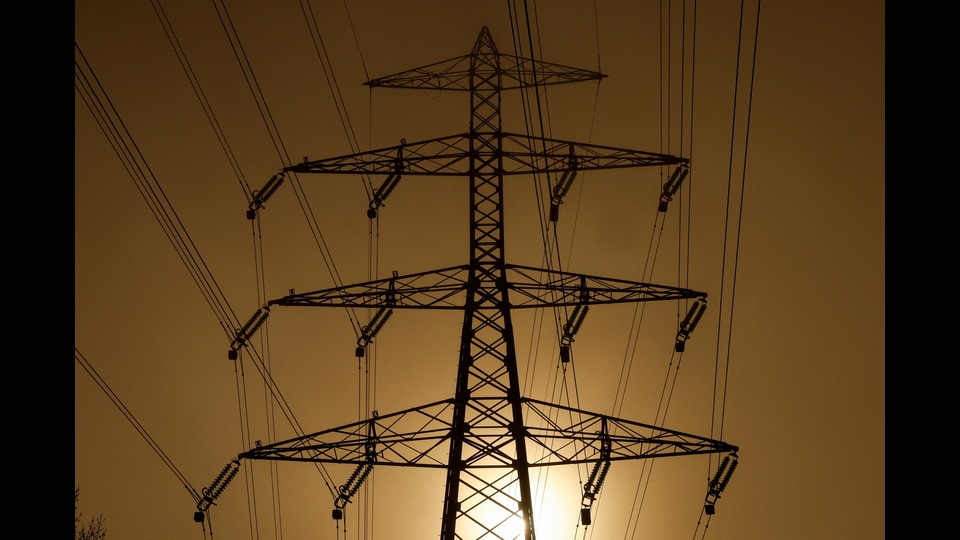
However, in October 2020, a power failure exposed the chinks in the system as Mumbai grounded to a halt for a few hours. A Central Electricity Authority (CEA) team that investigated the outage pointed to the inadequacy of the transmission network in the Mumbai Metropolitan Region (MMR) for the future and highlighted the need to increase embedded generation as against importing power from the grid.
Mumbai is serviced by three power distribution companies (discoms), namely, Tata Power Company (TPC), Adani Electricity Mumbai Limited (AEML) and Brihanmumbai Electric Supply and Transport (BEST). The Maharashtra State Electricity Distribution Company Limited (MSEDCL) covers areas like Mulund and Bhandup in the eastern suburbs. These companies have a generating capacity of 1,877 MW, including 500 MW with AEML and TPC’s 1,377 MW for Mumbai.
The power failure on Sunday—the second in less than two years—has once again underlined the need to hike embedded generation within the city while also boosting the capacity of transmission networks, which are getting clogged considering the growing demand for power.
The peak power demand has touched 3,600 MW in the 2019-20 summers and is expected to soar to 5,000 MW by 2024-25 and further to 6,000 MW by 2030.
Officials from the Maharashtra State Electricity Transmission Company Limited (MSETCL) said that Mumbai had a 4,000 MW transmission capacity. However, sources from Tata Power Company said that the peak power that can be brought using the power corridor was 2,286 MW and added that the maximum peak demand that Mumbai has seen so far was 4,000 MW.
Officials and experts said that transmission capacity varies based on the voltage levels, planned outages for maintenance and linear projects like the Metro railway corridors and forced outages.
Power sector expert Ashok Pendse noted that TPC and Adani had dedicated and embedded generation capacity for Mumbai in Trombay and Dahanu. “Tata cannot increase generation at its Trombay plant due to the stringent pollution control norms and local resistance. Bringing in additional power from outside Mumbai will be affected by bottlenecks in the transmission networks,” he explained. The cost of electricity sourced from outside the city could also be cheaper.
“Mumbai was self-sufficient when Tata and Adani’s units could meet the demand, but the peak demand for Mumbai has increased, and the additional power must be wheeled in using the transmission network. So, to ensure round-the-clock power supply in Mumbai, we need to upgrade this transmission network,” said Pendse.
“Due to work on linear projects like the Metro railway, we have to shut down our systems in some areas. This has to be done at times when the demand is low like the winters. Such outages can happen during these times,” said an MSETCL official, adding that they were working on augmenting the infrastructure.
Adani Transmission Limited (ATL) is undertaking work on a transmission line and sub-station project from Kharghar to Vikhroli which will enhance the power supply by 1,000 MW and be completed by 2023-end. The other project, which will also add 1,000 MW transmission capacity, is the Kudus-Aarey high voltage direct current (HVDC) corridor, which will be partly underground, and be completed in around three years. The MSETCL is also doubling its transmission capacity to 8,000 MW by February-March 2023.
“We have launched projects for enhancing transmission capacity and work is underway,” said energy minister Nitin Raut, while adding that Sunday’s outage was not related to transmission bottlenecks.
“We want to increase the embedded power generation capacity in the MMR considering the surge in demand due to the completion of the Navi Mumbai International Airport (NMIA), increase in services on the harbour line, and construction of data centres. The city’s power demand is expected to touch a peak of 6,000 MW by 2030,” said Raut.
He further said that there were plans to add 800 MW capacity to the existing 672 MW at the Maharashtra State Power Generation Company Limited’s (MahaGenco) Uran Gas Turbine Power Station, which is located close to the load centres in the MMR.
Pendse pointed out that while rooftop-based solar power generating projects were being pitched as a likely solution, this was tough to achieve in a city that had several old buildings and less open spaces. Around 110 to 112 square feet is needed to create generating capacity for one kilowatt (KW) of rooftop solar power.


