E-Paper



Rock, paper, panels: A MAP show offers a history of visual storytelling in India

 Prefer HTon Google


We’ve told tales in panels for centuries: on cloth, paper, rock. Check out a few prime examples, from 10th-century hero stones to modern-day political cartoons.
India has famously told stories in stone.
Think of the Taj Mahal. Khajuraho. The ancient cave art of Bhimbetka. There were emperors, kings and artists behind some of this work. But the average person has typically had their say too.
An exhibition at the Museum of Art and Photography (MAP), Bengaluru, revisits this history in an evocative exhibition titled A Moving Line: 1500 Years of Indian Visual Storytelling, which traces such tales in mediums ranging from hero stones to colonial-era political cartoons and modern-day graphic novels.
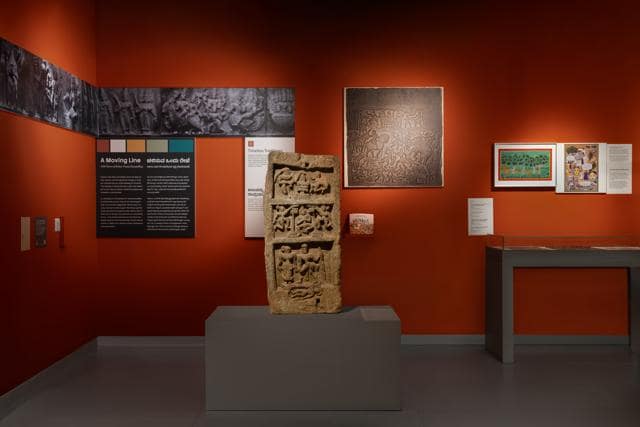
The centrepiece of the show is the Begur hero stone. Erected in present-day Karnataka in the 10th century, it depicts the story of a battle. Part of this story is told in six lines of Old Kannada script: a lord named Nagattara died in a bloody conflict, it says; his successor, Iruga, is ruler now. It goes on to show, in carved images, how the local king Ereyappa granted a number of villages to the new lord, as a tribute to his predecessor’s bravery.
“Such stones often feature narratives unfolding in sequence, making them an early example of visual storytelling in India,” says Khushi Bansal, assistant curator of the show. The Begur hero stone is now at the Government Museum across the road, while other such stones are on display at MAP.
The show’s curator, graphic novelist Amruta Patil, says the idea for A Moving Line first came to her while she was in France, a land of proud comics, bold cartoons and international festivals around these art forms.
“We tend to think of comics as a Western import, but India has a rich and diverse legacy of ancient visual storytelling that remains poorly researched, archived and translated,” Patil says. Mughal miniatures, for instance, show the passage of time as simultaneous scenes unfolding in the same frame, making them one of the earliest depictions of sequential storytelling.
“Pattachitra scrolls do something similar,” adds Bansal.
They are doing it even now.
A pattachitra scroll created in Midnapore, West Bengal, depicting the events and aftermath of the 9/11 attacks in the US, is on display here too, representing how the art form continues to record the seminal events of our times. In the show, this scroll sits beside a kaavad from Rajasthan, a 20th-century portable wooden shrine that tells its story through a series of unfolding images.
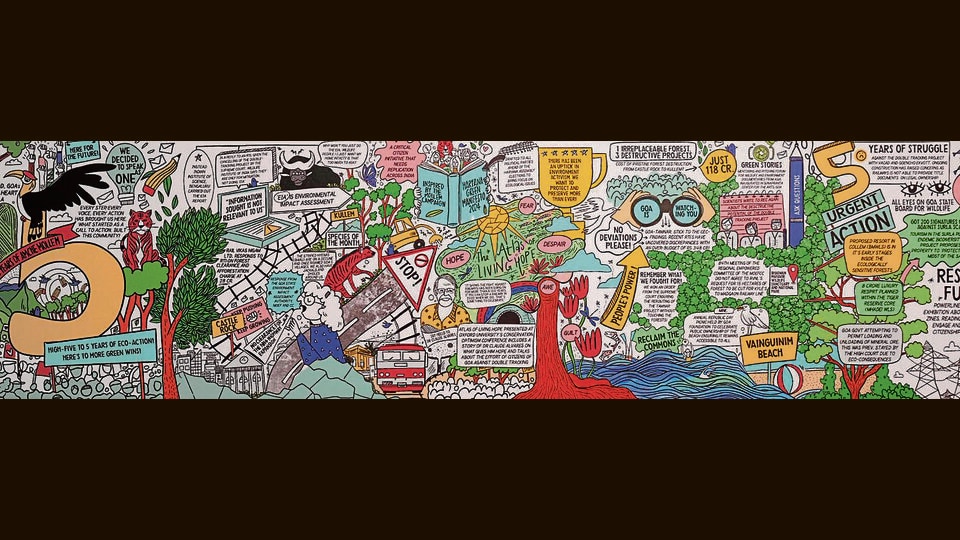
Elsewhere in these halls, modern formats abound, from a vibrant and intricate poster created for the Amche Mollem “save the forests” campaign in Goa to cartoons of satire and humour from colonial and newly independent India.
“Sequential storytelling as a medium has been used to critique the hypocrisies of the rich and challenge the bourgeois status quo, in places like Bengal, as far back as 1874, when seminal weeklies such as Indian Punch and Basantak were born,” Bansal says.
By the early 20th century, satirists such as the painter and cartoonist Gaganendranath Tagore (nephew of Rabindranath Tagore) and poet and illustrator Sukumar Ray were using the medium as a way of lampooning the absurdities of colonial society, mocking, for instance the dandy culture in which Kolkatans sought in vain to emulate the British.
PLOT POINTS
Fast-forward through the eras of Indrajal Comic’s Phantom and Amar Chitra Katha, and by the 1990s, the graphic novel was coming of age.
Orijit Sen’s River of Stories (1994; republished by Blaft in 2022) told of the controversies around the Narmada dam, and is part of the exhibit.
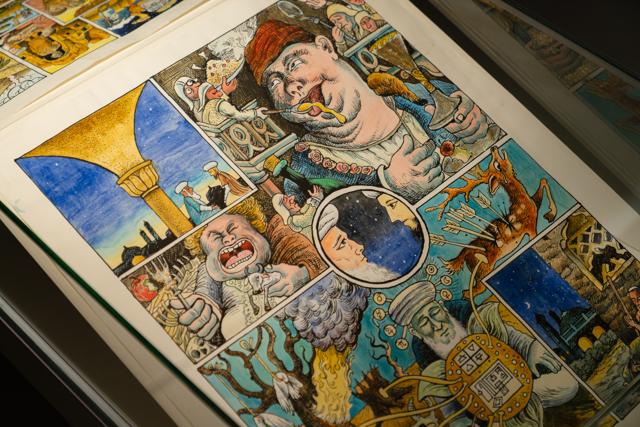
Also on display are contemporary comics that address a range of issues, from gender identity and caste to politics, migration, relationship troubles and the angst of modern urban living. An open sketchbook offers illustrator Deepti Megh’s autobiographical take on queer love. Panels from artist Indu Harikumar’s graphic narrative project 100 Tinder Tales (2016) illustrate anonymous stories from the world of dating apps.
A Moving Line will travel to an international comics festival in France in January, accompanied by a publication that holds nine essays by critics, artists and graphic novelists.
Graphic artist and researcher Sarita Sundar, in her piece, traces sequential storytelling to the 1st century, across stone, cloth and leather. Filmmaker and illustrator Nina Sabnani writes about the kaavad. Scholar and artist Pinaki De maps Bengal’s long and influential history of comics. Archivist Arun Prasad draws on his collection to tell the story of the 1970s and ’80s, often called the golden age of Indian comics.
Cartoonist and editor-publisher of Comix India Bharath Murthy remembers the independent comics that remade the medium for adult readers. Journalist and consulting editor of Comixense magazine Aniruddha Sen Gupta follows the activist streak through the Indian graphic novel. Artist Siddhesh Gautam writes on caste, and illustrator Mia Jose explores who will claim the medium in the near future.
“Where there are humans, there will always be stories, and Indian comics will continue to evolve, alongside the platforms that host, distribute and share them,” Bansal says.
MAP, in a bit of a meta twist, is one such evolving platform; the exhibition itself a new means of archiving and displaying for a wider public that which has been niche, little-known, or entirely underground.
(A Moving Line: 1500 Years of Indian Visual Storytelling is on display at the Museum of Art & Photography (MAP), Bengaluru, until November 15)