
 E-Paper


Leena Raghunath Baliga (byline: Linah Baliga) is Associate Editor with nearly two decades of experience in journalism,and has earlier worked with TOI, DNA and Mumbai Mirror specialising in civic affairs, urban governance and political reporting. Based in Mumbai, she has looked into the functioning of civic administration, public policy and governance, with a particular focus on the Brihanmumbai Municipal Corporation (BMC), urban infrastructure, housing, redevelopment and city planning. Over the years, she has consistently reported on issues that directly impact citizens, including municipal administration, public health, BEST, environmental concerns, major infrastructure projects and state government policies affecting urban development. Her reporting combines on-ground reporting, making complex civic and governance issues accessible to readers while ensuring accountability in civic administration. She has extensively covered political developments that shape urban policy. Her work has also focused on redevelopment policies, affordable housing and the implementation of major infrastructure projects across Mumbai.She continues to chronicle the evolving and changing landscape of Asia's richest municipal corporation. When she isn't chasing stories or poring over civic documents, she enjoys dabbling in art and unwinding with music. An avid rock 'n' roll enthusiast, she has an anachronistic taste in music, with a playlist that happily skips across decades, filled with timeless classics.
BMC drops underground development at Mahalaxmi Racecourse
While overground landscaped gardens and recreational spaces will remain part of the plan, Olympic-level sports facilities and a massive parking bay, which were to occupy two underground levels, have been dropped


MUMBAI: The civic administration has decided to scrap the ambitious underground component of the reimagined Mahalaxmi Racecourse plan, signalling a victory for urban planners and architects advocating for the city of Mumbai.
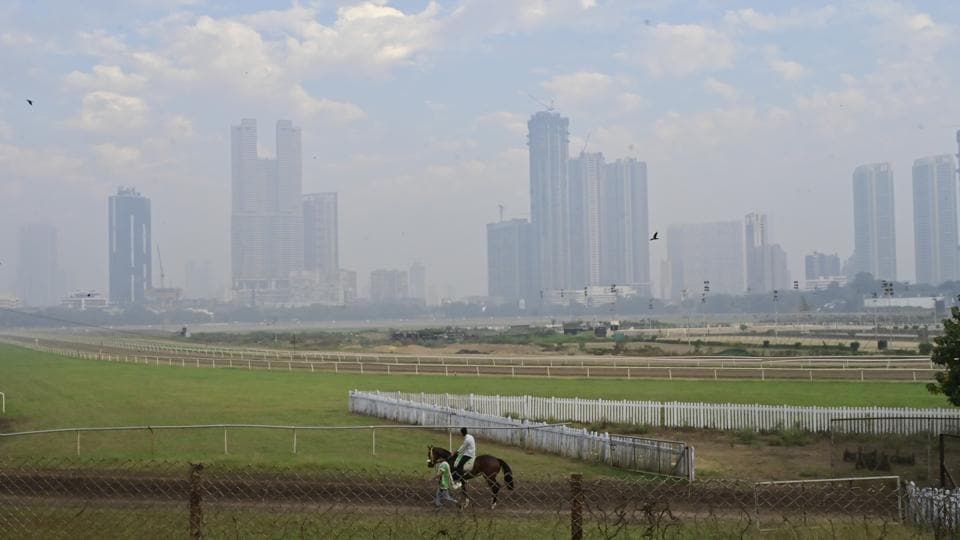
While overground landscaped gardens and recreational spaces will remain part of the plan, Olympic-level sports facilities and a massive parking bay, which were to occupy two underground levels, have been dropped.
Municipal Commissioner Ashwini Bhide recently approved the revised plan, directing officials to restrict development to a “simple, green park”. The project has been entrusted to the BMC’s Gardens Department.
Mantayya Swami, chief engineer with the BMC’s Coastal Road Department said the decision took into account objections raised by the Mumbai Architects Collective (MAC), a group of architects, urban designers, planners and allied professionals, who had cautioned against underground construction at the racecourse. “The racecourse is a low-lying area that acts as a holding pond and a flood barrier. If a parking lot is constructed underground, groundwater recharge could be affected,” said Swami.
The BMC had announced the plan to rework the over 140-year-old Mahalaxmi Racecourse into an international-standard “Central Park” after the state cabinet approved the mega-project in March 2024. The civic administration had appointed noted architect Hafeez Contract to reimagine the 120-acre space.
However, more than 100 MAC members collectively opposed the proposed underground infrastructure, pointing out that extensive excavation could aggravate the city’s flooding concerns. They also said it would compromise the environmental character of one of Mumbai’s largest open spaces when the stated objective was to create a public park. Their concerns centred on the ecological role of the racecourse, particularly its capacity to act as a natural holding area for rainwater.
In August last year, Contractor had called his plan a “game-changer for Mumbai”. He had said, “Every Olympic sport you can think of will be represented here.” The underground plan was to include a 400-metre running track, an Olympic-size swimming pool, and international-level facilities for an array of sports disciplines. One level further down, a parking facility with space for 5,000 cars was also planned.
Under the revised plan, the 120-acre theme garden will have a designated corner for events. Parking space for these events will be accommodated at the Haji Ali underground parking facility, Swami said, ruling out the need for a separate underground parking facility within the racecourse.
Ajitkumar Ambi, deputy municipal commissioner, gardens, said he had received the revised proposal for the racecourse on Saturday. The Gardens Department will take the planning forward, including decisions on the species and number of trees to be planted and the overall landscaping of the park.
Architect PK Das from PK Das and Associates and a member of the Mumbai Architects Collective opposing the component of the plan, said, “We are extremely happy that the civic authority has positively responded to the collective voice of concerned professionals, architects and above all citizens of the city.This is an issue that directly concerns our response to the climate change crisis and we wish that a similar response of the authorities continues for a sustainable future.”
ABOUT THE AUTHOR

Stay updated with all the Breaking News and Latest News from Mumbai. Click here for comprehensive coverage of top Cities including Bengaluru, Delhi, Hyderabad, and more across India along with Stay informed on the latest happenings in World News.


