
 E-Paper



Citizens submit feedback on pigeon feeding to BMC
Mumbai's debate on pigeon feeding ends as citizens clash over health hazards and animal rights, with a committee set to decide the issue.


MUMBAI: Friday, the last day to respond to the BMC’s call for feedback on pigeon feeding in the city, ended in a tug-of-war between citizens motivated by health concerns and those on the side of religion/animal activism. It is now up to the government-appointed committee to take a decision.
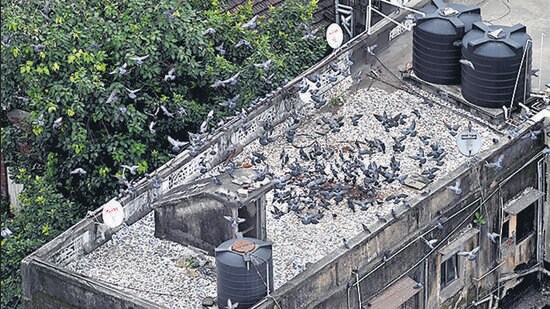
“What many perceive as religious activity is a serious public health hazard that the city can no longer afford to ignore,” argued civic activist Dhaval Shah from Andheri Lokhandwala Oshiwara Citizens Association. In response, a change.org petition with over 600 signatures, responded, “Yes, health concerns must be respected, but the answer cannot be cruelty or bans. The answer must be balance, regulated spaces, cleanliness, and compassion.”
The anti-pigeon feeding votaries submitted a load of evidence to support their stand. A Juhu group, for instance, listed and backed with academic sources the lung diseases caused by pigeon droppings and feathers: cryptococcosis (fungal lung infection), Bird Fancier’s Lung, allergic alveolitis, histoplasmosis, a fungal infection, and urban respiratory distress.
These diseases have led to deaths in Andheri, recounted Shah. “For a city already grappling with high air pollution and rising bronchitis cases, this is an invisible ticking time bomb,” he wrote. Sailesh Mishra, founder of the Silver Innings Group, wrote, “Senior citizens with comorbidities, pregnant women, and children are especially vulnerable.”
“Kabutarkhanas only serve to concentrate bird populations, aggravating health, hygiene and safety hazards in Mumbai,” wrote Chetan Kamble, founder of the civic group Chakachak Dadar. Apart from health concerns, he highlighted the hygiene issues as well as road safety hazard due to too many flying pigeons at a concentrated spot. “Kindness to pigeons must not mean cruelty to citizens.”
Even notions of “controlled feeding,” introduced by the BMC as a middle ground, did not fly. “The idea of ‘controlled feeding’ is not only contrary to the intent and spirit of the court’s orders but also fundamentally flawed,” wrote lawyer Ritesh Karkera. “It cannot control the menace of pigeons; on the contrary, it will normalise the practice of feeding and further aggravate the problem. Moreover, the corporation, which has consistently failed to implement the existing ban, will not succeed in managing any form of so-called controlled feeding.”
Civic activist Freya Mistry from the Mumbai North Central District Forum (MNCDF) asked for the feeding zones to be shifted outside residential areas. “The pigeon-feeding at the kabutarkhana in D ward has got worse after the issue was stirred, as people are feeding them with a vengeance,” she said. Kamble too suggested that feeding zones be shifted to designated aviaries in isolated coastal stretches or controlled facilities.
Those batting for pigeon feeding in public spaces also went out all guns blazing. Having pasted QR codes linked to a form sending emails at Jain and Hindu temples, Sandeep Doshi, a trustee of the Dadar kabutarkhana, estimated that over 100,000 emails had been sent. “Feeding of the pigeons must be allowed, even if it is for a few hours a day,” he said.
Sneha Visaria, one of the three petitioners in the Bombay high court arguing for pigeon feeding, took another 5,000 letters to the headquarters on Friday, only to be allowed to submit only 500 of them.
The letters stated, “We have never suffered from any lung or respiratory diseases or any other alignment due to pigeon feeding. On humanitarian grounds, we all animal and bird lovers, we urgently request you to allow partial or controlled feeding as many urban pigeons are dying of starvation and hunger, and in search of food coming on roads leading to accidents and cruel deaths in thousands. We shall ensure the cleanliness is maintained daily at 6pm once pigeons have finished eating.” (Sic)
A senior health department official told HT, “We are still receiving inputs. Once the department finishes compiling them, we will send our report to the municipal commissioner in two to four days.”

Stay updated with all the Breaking News and Latest News from Mumbai. Click here for comprehensive coverage of top Cities including Bengaluru, Delhi, Hyderabad, and more across India along with Stay informed on the latest happenings in World News.


