
 E-Paper



How the riots that began in BDD chawls altered the course of Dalit movement
While the story of these riots can be told in multiple ways, the main theme around which it revolves is the political struggle for power. Hannah Arendt, who analysed the role of violence in public life, remarked that “violence appears where power is in jeopardy


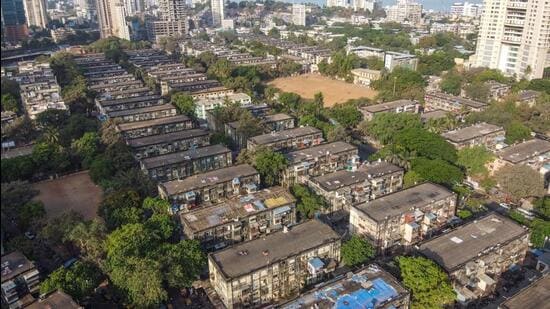
MUMBAI: As a millennial, who grew up watching films like Mani Ratnam’s ‘Bombay’, whenever somebody uttered “riots in Mumbai”, by default, the images of the 1992 riots (following demolition of Babri Masjid) conjured up in my mind. The Worli riots which began in the Bombay Development Department (BDD) chawls on January 5, 1974, during the lifespan of the revolutionary Dalit Panthers and altered the course of the Dalit movement, are not very well known and seldom talked about. They, however, were a significant turning point in the Dalit movement in Maharashtra and hold lessons for today. Fifty years ago, beginning from January 5, these riots shook the core of central Mumbai.
While the story of these riots can be told in multiple ways, the main theme around which it revolves is the political struggle for power. Hannah Arendt, who analysed the role of violence in public life, remarked that “violence appears where power is in jeopardy.” Though the Dalit Panthers were squarely blamed for their provocative speeches and remarks against the Hindu religion, other political, and socio-cultural factors were also at play that led to the 1974 riots.
After its inception, the Dalit Panthers were gaining momentum. They had started developing their organisation with ward-specific units in Mumbai. By announcing a boycott of the by-election to the Lok Sabha from the Central Bombay constituency, they wished to raise the political consciousness of the Dalit populace. Furthermore, it was also an attempt to bring to the attention of the government and the broader public the appalling conditions of the Dalits in the country. The ruling class was thrown a curveball due to this and the dynamics changed.
Riots are usually planned, deliberate attempts or a clampdown on the assertion of the marginalized, thereby, hampering their socio-economic capacity to create wealth and resources. Veteran leader J V Pawar in his book, ‘Dalit Panthers: An Authoritative History’ (translated from Marathi by Rakshit Sonawane) has observed: “The Dalit Panther was at its prime until January 4, 1974. On January 5, 1974, a masterminded riot engulfed the entire Mumbai metropolis, especially Worli and Naigaon, and claimed the lives of Dalit Panthers Bhagwat Jadhav and Ramesh Deorukhkar.” Here emphasis must be laid on the word “masterminded”. The news of Dalit Panther’s support for the Congress candidate was deliberately disseminated. To clarify their position on the by-election, the Panthers called a public meeting on January 5. As the meeting progressed and the Panther leaders upheld their call for a boycott of the election, troublemakers from the audience started pelting stones. In turn, the police started using tear gas and lathis to quell the mob. This episode turned out to be the precursor to a bloody phase of rioting.
The Worli riots lasted for over two months – from January 5 to February 16 and from April 6 to 19. Violence persisted between the Hindu chawls and Buddhist chawls which were next to or facing one another. Alleys, corners, and terraces were all hotspots for violence. During the clashes, stones, bricks, soda water bottles and sticks were freely used; some chawls were also set on fire. A judicial inquiry into the matter was ordered by the Maharashtra Government and the one-man Inquiry Commission led by Justice S B Bhasme, submitted its report in 1976.
Dalit assertion has been always putting up with systemic biases. One must also dwell upon the police brutality. The awful mentality of the privileged castes to “teach a lesson” to the Dalits who had defiantly challenged them plagued even the police force. Many have, therefore, dubbed the 1974 riots a “police riot” against Dalits since the police kept the Dalits under control while allowing those who were attacking them to be scot-free.
This partisanship was also the source of the sustained violence. Selective and distorted reportage by the press also heightened tensions and fuelled animosity between the Shiv Sainiks and Panthers, and therefore between Hindus and Buddhists. These riots also underlined the need for proper channelization of the unrest of the youth. In such circumstances, systemic disparities, and partisan attitudes of the police and media are to be blamed. It was prudent on the part of the Panthers to demand that more Dalits be recruited into the police force.
The Dalit Panther leaders received significant national and worldwide recognition because of these riots, but the movement and its radical assertion suffered. Buddhists were the primary victims of this caste violence and imbroglio since they were a minority. A segment of the Panthers started to reconsider their methods and strategy. Internal disagreements over the best strategies to pursue their goals which were still dormant until the riots, became manifestly apparent. By the end of 1974, the Panthers had split due to these internal discords. Besides, in the aftermath of these riots, an effort for the unity of RPI was also made, whose leaders perceived the Dalit Panthers as a threat to their leadership. But this unity was short-lived. Personality clashes, political ambitions, jealousy and infighting among the leaders serve only to weaken the movement at such times.
Studies on violence show that whenever an outfit raised by the disadvantaged or marginalized gains popularity such violence is utilised to splinter them and keep them in “their place.” Following the riots, the Dalit Panther Movement faced a setback. Often electoral incentives determine the instigation of communal and casteist sentiments. In such a situation, the fragmentation of the Dalit movement serves the interests of the oppressors. The tussle between Shiv Sena and Buddhists was later utilised to bolster support for the ruling party which thwarted the radical challenge posed by the Dalit Panthers. The issue of the unity of the Dalit leadership still looms large in front of us. Also, the fact that Dalit women were at the forefront of the morchas and agitations that had taken place to condemn police brutality and seek the release of the Dalit Panthers cannot be disregarded.
Since the times of Dr Babasaheb Ambedkar, Dalit women have had a place in the Ambedkarite movement. It is now time for them to assume significant leadership roles. Even though the 1970s was a different era, the political fortunes of the Dalit community have not changed much. The Dalit movement has to steer itself carefully by revisiting and learning from the past.
(Shweta Ahire is an assistant professor of Political Science, at Joshi-Bedekar College, Thane.)
Stay updated with all the Breaking News and Latest News from Mumbai. Click here for comprehensive coverage of top Cities including Bengaluru, Delhi, Hyderabad, and more across India along with Stay informed on the latest happenings in World News.


