
 E-Paper



Six stung by jellyfish at Juhu Beach this week
Several dozen of these marine creatures annually wash up on city shores, and a few citizens inevitably come into contact with them, conspicuous as they are against the sandy beach. In 2018, an unusually large number of them were stranded on Mumbai’s beaches, leading to 150 such incidents

 Prefer HTon Google


Mumbai: At least six people, including three minors between the ages of six to ten, have been stung by bluebottle jellyfish – also known as Portuguese man o’ war – at Juhu Beach this week.
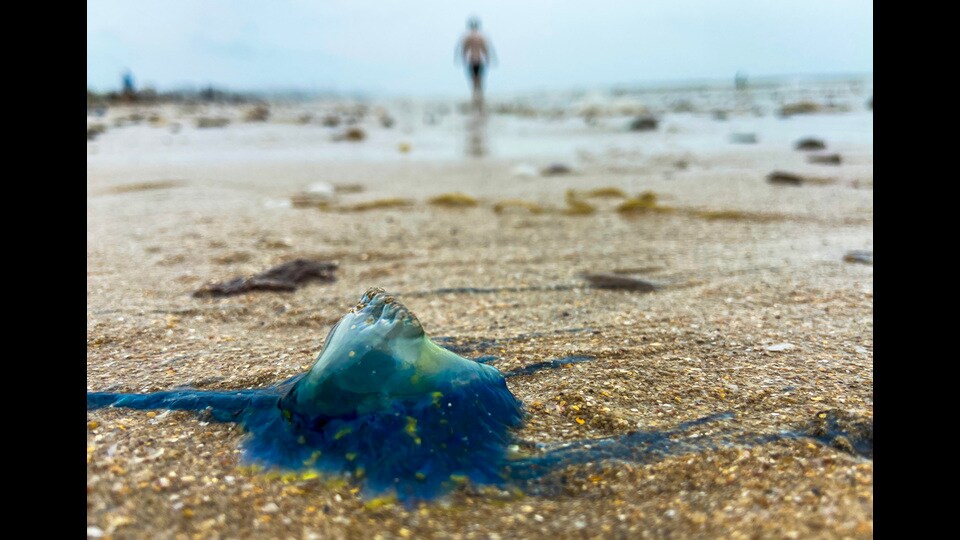
Several dozen of these marine creatures annually wash up on city shores, and a few citizens inevitably come into contact with them, conspicuous as they are against the sandy beach. In 2018, an unusually large number of them were stranded on Mumbai’s beaches, leading to 150 such incidents.
Despite this, there are no signages or informative hoardings placed at Juhu to warn beachgoers of the same. At present, such public information is only available at Girgaum Chowpatty.
A marine biologist working with the state forest department’s mangrove cell, said, “Each time there are strong onshore winds during the monsoon months, the jellyfish get washed up. The stingers contain a kind of venom which can cause severe irritation and inflammation of the skin. People should be careful when walking on the beach, and they should definitely not be swimming in the water. In rare instances, the sting can cause other medical complications as well.” Redness of skin, swelling, irritation, itching, blisters and severe body ache are common symptoms of these stings.
According to a 2013 article by the Mumbai Research Centre of the Central Marine Fisheries Research Institute, “Despite its outward appearance, the man-o’-war is not a true jellyfish (true jellyfish are those that belong to the class Scyphozoa) but a Siphonophore, which differs from jellyfish as it is not actually a single organism, but is a colony of numerous organisms called polyps (or zooids) that are so specialised that they cannot live without each other.”
“Strong winds drive them into bays or onto beaches. It is rare for only a single Portuguese man-of-war to be found; often the finding of one results in the finding of many... Given their sting, however, they must always be treated with caution, and the discovery of man-of-war washed up on a beach may lead to the closure of the whole beach in the western world,” the article states.


