
 E-Paper



Maharashtra fisherworkers’ group seeks new land revenue category for koliwadas
The Akhil Maharashtra Machhimaar Kruti Samiti (AMMKS), a state-wide fisherworker’s society, has written to the chief minister, revenue minister and urban development minister, seeking creation of a new land revenue category called ‘aadhya gaothan’ for koliwadas in Mumbai


The Akhil Maharashtra Machhimaar Kruti Samiti (AMMKS), a state-wide fisherworker’s society, has written to the chief minister, revenue minister and urban development minister, seeking creation of a new land revenue category called ‘aadhya gaothan’ for koliwadas in Mumbai. Their demands also include giving fisherfolk freehold property rights over commons and providing home owners with additional floor space index (FSI) rights based on future needs.
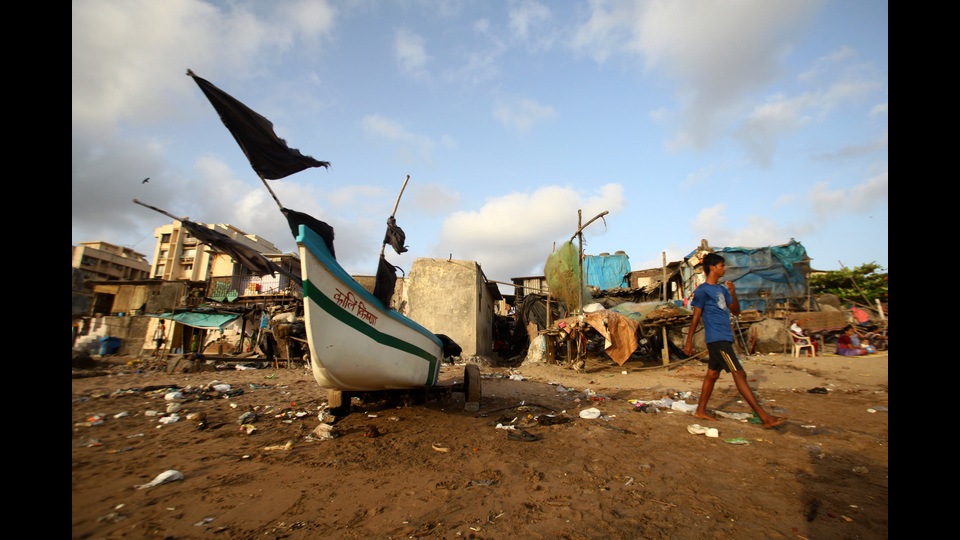
“Presently, koliwadas are shown in the DP (development plan) 2034, but there are no additional benefits for residents because the final demarcation of koliwadas has not been completed. Common land is owned by the government and there is a constant threat of redevelopment and land grab, which will become worse with the new Coastal Zone Management Plan (CZMP) that was approved by the environment ministry. We want our traditional rights over land to be acknowledged by giving us ‘aadhya gaothan’ status,” said Devendra Tandel, president, AMMKS.
While placing koliwadas under ‘gaothan’ status would give fisherfolk ownership and redevelopment rights to their land, ‘aadhya gaothan’ lands have been envisioned by fisherfolk to come with several other safeguards in the interest of the artisanal fishing business. For example, Tandel’s letter to authorities also asks for collective ownership of areas used to dry and mend fish nets, and areas used for drying of fish. AMMKS has also sought collective ownership of boat parking, playgrounds and areas used to receive tourists.
“Koliwadas which are registered as per the Maharashtra Land Revenue Code (1966) are given village status, so all laws concerning property, development rights and land ownership which are applicable to the village become applicable to any koliwada within the village boundary. In order to rectify this historic mistake, Section 122 of the Revenue Code should be amended to give the status of “aadhya gaothan” to all koliwadas, kolivastya, kolipade, and other koli villages registered in the state, including Mumbai,” Tandel wrote in his letter, a copy of which has been reviewed by HT.
Speaking to HT on Saturday, Tandel explained that the state government is vested with the power to amend ownership rights in gaothan areas, and should do so in the interest of protecting the koliwadas, which have been in existence for years before the Land Revenue Code was formulated in 1966.
“There are basically three kinds of ownership. One is ownership by encroachment, ownership of village land, and then ownership of koliwada. Koliwadas are neither encroachments and have been around since before village planning was taken up, so our customary rights should precede those of encroachers and village land owners,” Tandel said.
Another notable demand is that home owners in koliwadas be given additional FSI to construct homes based on current and future requirements. AMMKS has proposed an ‘XYZ’ approach for the same.
“Let us assume that I am living with my family in an area of 1,000 square feet with a current FSI limit of 2. A survey would be carried out to determine my family’s space requirement over the next 20 years and the FSI needed for the same. That FSI – called Y – would be added to X to arrive at a number, Z, which is the new FSI available for a fisherman to build his home,” Tandel explained.
Independent experts, however, viewed these demands with scepticism.
“For any indigenous community, it is important to distinguish between environmental rights, land rights, livelihood rights, infrastructure rights and development rights. Each of these rights is governed by a different set of rules. CRZ, for example, governs environmental rights, while the Land Revenue Code deals with land rights, and DP2034 deals with development rights,” said Pankaj Joshi of Urban Design Research Institute.
“If the demand here deals with ownership rights, then it’s important to note that the Land Revenue Code is community neutral and does not distinguish between Kolis, Agris or Bhandaris, for example. As for development rights, there is a provision under Section 33.16 of DCPR (Development Control and Promotion Regulations), which states that development plans for koliwadas will be framed as and when the demarcation is finalised. The DP also sets aside land used for fishing-allied activities. There are issues with these rules, of course, but such an overarching demand tends to muddle the situation and comes off more as political posturing,” Joshi added.
Stay updated with all the Breaking News and Latest News from Mumbai. Click here for comprehensive coverage of top Cities including Bengaluru, Delhi, Hyderabad, and more across India along with Stay informed on the latest happenings in World News.


