
 E-Paper



Malcolm Baug: A historic hundred for Parsi oasis of calm
Even today, Malcolm Baug is an oasis of calm and lush flora and fauna in the heart of North Mumbai. With its bungalows and low-rise buildings, and its dense green cover comprising trees, plants and flowering shrubs, its birdsong and quiet elegance, Malcolm Baug is something of a rare jewel


N.M. Wadia Charities, a reputed Parsi trust involved in a host of welfare activities including housing, built the first two blocks of Malcolm Baug at Jogeshwari, Mumbai, in 1922. Over the next few decades, N.M. Wadia Charities went on to create a unique community residential enclave with ecological sustainability and an atmosphere that seldom fails to captivate both first-time visitors and long-time residents alike. It is, perhaps, one of the earliest gated societies in Mumbai, setting the template for future gated societies to follow across Mumbai city.
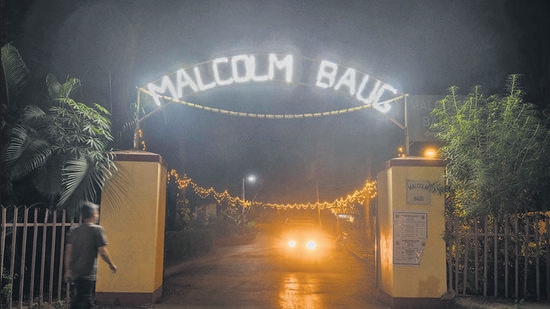
Even today, Malcolm Baug is an oasis of calm and lush flora and fauna in the heart of North Mumbai. With its bungalows and low-rise buildings, and its dense green cover comprising trees, plants and flowering shrubs, its birdsong and quiet elegance, Malcolm Baug is something of a rare jewel.
Parsi housing colonies in Mumbai retain their own unique charm and so does Malcolm Baug, which is called the ‘Garden Colony’.
About 300 blessed Parsi families have been provided with homes in Malcolm Baug’s 60-plus bungalows as well as multiple blocks of residential flats, all of which are well ventilated and spaced apart with no over-crowding or cheek-by-jowl construction.
For the benefit of the residents, the trustees of N.M. Wadia Charities have ensured well-lit roads throughout the entire 35-acre Malcolm Baug estate, uninterrupted water supply and a host of amenities including a large gymkhana that has its own pavilion and playground where sporting activities such as football, cricket, volleyball, carom, table-tennis, chess and other games are played. It is no wonder, then, that the youngsters of Malcolm Baug excel in a variety of sports and go on to win prizes at different competitions.
There is a beautiful sacred Fire Temple – the Bai Motlibai Wadia Adaran, named after the lady whose family bequeathed the Malcolm Baug estate to the Parsi community. Bai Motlibai Wadia was a remarkable philanthropist who did a lot of charity during her lifetime and she is rightly regarded as the patron saint of Malcolm Baug.
There is also a large ground and a hall adjoining it for hosting marriages and other celebrations called the Malcolm Hall, to ensure that the colony is practically self-sufficient.
A primary school is being run in Malcolm Baug since 1975 where nursery and kindergarten classes are conducted. Malcolm Baug Zoroastrian Association (MBZA) was formed on March 21, 1929, undertaking various welfare activities for the residents including their children.
Like in most old and well-established housing colonies across Mumbai, there is a stream of vendors who come to the doorstep to take care of day-to-day needs like bread, eggs, vegetables and even fish and mutton, because Parsis like their patra-ni-machi and salli-boti!
My parents moved to Malcolm Baug in the late 1950s and I was born and brought up there. All my early growing up memories are associated with this place. The residents have always had a strong sense of bonhomie and even today, although I no longer reside there since the past decade-and-a-half, I know most of the residents of the colony and they know me.
Sheramai and Jehangirji Kavasmaneck were the first to run a nursery school, which I attended, where the fees were as nominal as ₹2 – ₹3. The couple thereafter started giving tuitions to students of Malcolm Baug at a sum of just ₹5 per month.
As a child I used to take part in the many activities that were held at Malcolm Baug, including elocution and prayer competitions and won several prizes, which boosted my morale and confidence. Najoo Lovji, a resident of Malcolm Baug, who was also the secretary of Bombay Parsi Association, encouraged me and many other children from Malcolm Baug to participate in the elocution and prayer competitions and she would also train us painstakingly for the same. All this was a labour of love and was done free of charge.
Another resident would give free assistance to students of Malcolm Baug in mathematics. Since most of the students did not have a TV in their homes, they would wait for him to ask them to sit back after the tuitions and watch programmes like ‘Chaya Geet’ and Adi Marzban’s ‘Aavo Mahri Sathe’.
There were fashion shows and talent contests held in the Baug and every year on Jamshedi Navroze (March) and Parsi New Year (August) there used to be a Jashan (thanksgiving prayer) at the Fire Temple and the sweet ‘malido’ (Parsi prasad) used to tempt us kids to attend.
Those were simple days and we enjoyed the simple pleasures of life. There used to be so many mango trees all over Malcolm Baug and one such tree was right outside my house. Every summer it would be laden with mangoes and I would wait for a strong gust of wind to shake the tree and drop the mangoes to the ground. When that would happen, I would run out and pick them up. On one occasion, I actually managed to collect 40 mangoes!
There was no fancy security but one “Lala” to whom the entire security of the Baug was entrusted. A resident manager looked into the day-to-day running of the Baug.
When I was growing up in Malcolm Baug, I recall that we were mostly all middle-class Parsis who could barely afford the luxuries of life. You could count the houses in Malcolm Baug that could afford to have a telephone or a fridge. An air conditioner or a car was absolutely out of bounds for nearly everyone.
I also vividly remember as a five-year-old witnessing the construction of the Bai Motlibai Wadia Adaran (Fire Temple) and the excitement that was generated when the Holy Fire was brought on foot by a group of devotees from the Bai Motlibai Wadia Adaran at Pitha Moholla, Fort, in Mumbai. It took them three days, with stops along the way, to reach Malcolm Baug and when the Holy Fire was installed at our Fire Temple, it was a euphoric and historic occasion for the residents.
Another such euphoric and historic occasion was witnessed last week when Malcolm Baug turned 100 years old and celebrated its centenary with grand fanfare over the weekend of November 18-19, 2023.
On Sunday, November 19, there was a momentous Jashan (thanksgiving prayer ceremony) performed by around 120 Parsi priests, led by our High Priest Vada Dasturji Keki Ravji MeherjiRana. On the previous day there was a ‘Maachi’, which is a ritual offering of sandalwood to the Holy Fire with priests reciting special prayers. On both the days, with the blessings of the Almighty, the celebrations commenced. One evening saw a western music retro night with nearly all the 650 attendees dancing and grooving. The next evening saw a host of professional singers regale the residents with old Hindi classic songs. It was wonderful to witness so much bonding and bonhomie among the residents of Malcolm Baug—it is this solidarity that has sustained the colony for 100 years…and counting!
On a personal note, it gives me great satisfaction that from being a humble resident of the Baug, today I am chairman of N.M. Wadia Charities, which is the trust that administers the running of Malcolm Baug. I feel grateful and blessed that I am able to contribute back towards the welfare of the Baug from where I began my life’s journey.
· Some details for this article were sourced from ‘N.M. Wadia and His Foundation the next 50 years 1959-2009 by Marzban Jamshedi Giara

Stay updated with all the Breaking News and Latest News from Mumbai. Click here for comprehensive coverage of top Cities including Bengaluru, Delhi, Hyderabad, and more across India along with Stay informed on the latest happenings in World News.


