
 E-Paper



Monsoon arrives with a fury, over 300mm rain recorded on Day 1
Colaba recorded 248mm of rainfall, nearly 45% of its June average of 542mm, while Santacruz received 225mm, about 42% of its monthly average of 537mm

 Prefer HTon Google


MUMBAI: After a delay of nearly two weeks, the monsoon finally announced its arrival with force, unleashing an intense overnight downpour that flooded roads, uprooted trees, disrupted traffic and exposed the city’s monsoon preparedness to heavy rain barely a day after the India Meteorological Department (IMD) declared the onset of the monsoon over the city.
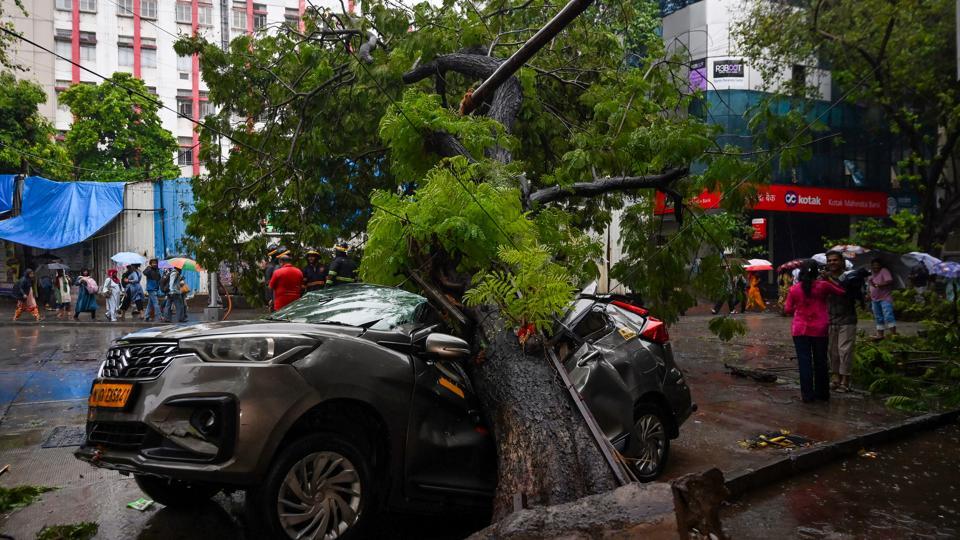
The rain spell between Tuesday night and Wednesday morning triggered a series of civic emergencies across Mumbai and ignited a political slugfest over the city’s monsoon preparedness, even as the Brihanmumbai Municipal Corporation (BMC) insisted that transport networks and essential services largely remained operational.
According to the BMC’s disaster management department, several parts of the city received more than 200mm of rainfall within 24 hours, while some locations crossed the 300mm mark.

During the 24-hour period ending at 8am on Wednesday, Colaba recorded 248mm of rainfall, nearly 45% of its June average of 542mm, while Santacruz received 225mm, accounting for about 42% of its monthly average of 537mm.
Data from the BMC’s network of automatic weather stations showed that the island city received an average of 195mm rainfall, the eastern suburbs 167mm and the western suburbs 208mm, making the latter the worst-hit region.
Like every year, waterlogging was reported from several low-lying and flood-prone areas, including King’s Circle, Dadar TT, Gandhi Market, Sion Circle, Kurla, Chembur, Mankhurd, Dahisar, Borivali, Kandivali, Malad, Goregaon and Andheri, slowing traffic and inconveniencing commuters through much of the morning.
In Powai’s Milind Nagar, frustrated residents staged an unusual protest after their neighbourhood was inundated. Sitting in waterlogged streets, they raised slogans against the BMC, alleging years of civic neglect and inadequate drainage infrastructure, and demanded permanent measures to prevent recurring flooding.
7,000 officers deployed
Civic officials maintained that emergency response mechanisms functioned effectively despite the intensity of the rainfall. More than 7,000 officers and employees were deployed across the city, while pumping stations were activated at key locations to expedite drainage and clear accumulated water.
The downpour also triggered 70 electrical short-circuit incidents across Mumbai, 37 in the island city, 18 in the eastern suburbs and 15 in the western suburbs. Authorities received 113 complaints of fallen trees and branches, nearly half of them from the western suburbs.
Seven incidents involving partial collapse of houses or structural elements were also reported. No casualties were recorded.
Municipal commissioner Ashwini Bhide visited the BMC’s Disaster Control Room at the civic headquarters at 4:30am to review the situation, while disaster management chief Mahesh Narvekar remained at the control room from 2am onwards to monitor the evolving weather conditions.
Mumbai Mayor Ritu Tawde also inspected several vulnerable locations, including the Hindmata and Gandhi Market mini pumping stations as well as the Milan, Andheri and Malad subways.
Worker falls into manhole
An early morning inspection by Tawde took an alarming turn when a BMC sanitation worker fell into an open manhole while stormwater drain-cleaning work was underway in a waterlogged area.
The worker sustained minor injuries.
The incident prompted Tawde to warn civic officials of strict action, including suspension, if manholes are found left uncovered. She said the cover had been temporarily removed to clear debris from the drainage system and that barricades and warning signs had been placed around the site.
Deputy Mayor Sanjay Ghadi called for a citywide survey of manholes and urged authorities to install durable protective safety nets, particularly near schools, hospitals, railway stations and flood-prone locations.
The season’s first major spell of rain quickly turned into a political flashpoint.
Shiv Sena (UBT) leader Aaditya Thackeray and Congress MP Varsha Gaikwad criticised the BJP-led administration, arguing that Mumbai had been brought to its knees by the first significant downpour of the season and accusing the civic leadership of neglecting infrastructure issues.
Responding to the criticism, Tawde said desilting and drain-cleaning works had been substantially completed before the monsoon and remarked that those criticising the administration were “sitting at home” while civic teams were working on the ground.
Lakes offer ray of hope
With concerns mounting over rapidly declining reservoir levels and estimates suggesting that only 40 to 45 days of drinking water remained, Wednesday’s rainfall boosted storage in the city’s seven lakes by nearly two percentage points.
According to BMC data, the reservoirs collectively held 1,14,864 million litres of water against a total capacity of 14,47,363 million litres, taking overall stock levels to 7.94%.
The figure remains significantly lower than the 32.89% recorded during the corresponding period last year, though it is higher than the 5.30% recorded on the same date two years ago.
Officials are expected to review the situation after June 30 before taking a final call on whether existing water restrictions need to be increased to 25% or beyond. Sources in the disaster management department indicated that a 25% water cut may be difficult to avoid unless substantial rainfall continues over the coming days.
Heavy rain was not limited to Mumbai. The Navi Mumbai Municipal Corporation (NMMC) area received around 200mm of rainfall in the 24 hours ending Wednesday.
In neighbouring Raigad district, authorities shut the historic stairway route to Raigad Fort for two days after a rockfall near the Mahadarwaja triggered by incessant rain. The route will remain closed until June 25 while debris clearance and restoration work are undertaken.
With inputs from G Mohiuddin Jeddy


Stay updated with all the Breaking News and Latest News from Mumbai. Click here for comprehensive coverage of top Cities including Bengaluru, Delhi, Hyderabad, and more across India along with Stay informed on the latest happenings in World News.


