
 E-Paper



More than two years in power, but Congress flounders in Maharashtra
For the Congress, which was at a low ebb in 2019, coming to power in Maharashtra was meant to be an elixir for its sagging fortunes


For the Congress, which was at a low ebb in 2019, coming to power in Maharashtra was meant to be an elixir for its sagging fortunes. But, around two-and-a-half years on, the party may be in the government, but it is certainly not in authority. The eroding presence of the high command, factionalism, lack of a strategy, and the aggressive Nationalist Congress Party (NCP) trying to encroach upon its social base have weakened the Congress in Maharashtra, where it once held an undisputed sway.
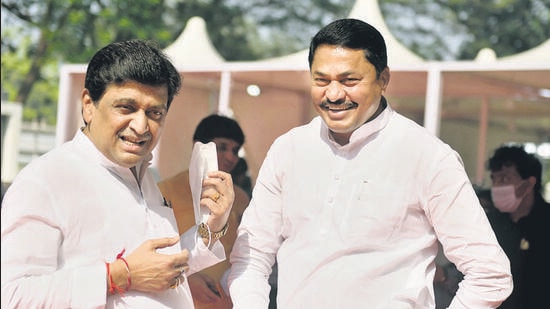
It also faces a Hobson’s choice whether it should ally with the Shiv Sena and the NCP in the coming local body elections in the state or fight on its own.
The Congress was born as the Indian National Congress at Gokuldas Tejpal Sanskrit College in Mumbai in December 1885. Till the late 1980s, the Congress dominated the politics of Maharashtra with opposition parties like the Communists, Socialists, Jan Sangh and its later day avatar the Bharatiya Janata Party (BJP), confined to certain social and geographical pockets.
However, the factionalism in the party, coupled with the decision of the central leadership to appoint chief ministers with little political base, inability to balance urban-industrial interests with the interests of its rural supporters, and the rise and growth of parties and outfits like the Sena and the BJP eroded its domination.
Following the BJP’s campaign for Ram Janmabhoomi in Ayodhya, the party managed to reach across the state. The Sena-BJP alliance grew in strength in the early nineties and managed to win power in the state in 1995. Four years later, even though the Congress was split as Sharad Pawar formed the NCP, the two parties together managed to retain power for 15 years till the Modi wave helped the saffron combine to return to power in 2014.
In 2019, the Congress won just one of the 48 Lok Sabha seats in Maharashtra. Sena MLA Suresh (Balu) Dhanorkar switched to the party and won the Chandrapur seat defeating the then Union minister of state, Hansraj Ahir, even when veterans like former chief ministers Ashok Chavan (Nanded) and Sushilkumar Shinde (Solapur) bit the dust. Incidentally, Dhanorkar’s nomination had been opposed by a section in the party.
In the state Assembly polls held later that year, it was a last-minute fightback by ally and NCP chief Pawar that helped the Congress win 44 seats, marginally up by two from its 2014 tally. Though it ended up as an also-ran, a set of circumstances saw the Congress join the Sena and the NCP in forming the Maharashtra Vikas Aghadi (MVA) as a rainbow coalition.
However, Congress leaders admit that despite being in power, the party’s downslide continues, though it may have managed to stem further erosion from its ranks. The NCP, which has its leadership based in Maharashtra, is gradually reaching out to sections like Buddhist Dalits and Muslims, who are seen as traditional Congress supporters. The Congress also faces a challenge from newer players like the All India Majlis-e-Ittehadul Muslimeen (AIMIM) led by the Owaisi brothers.
“The downslide of the Congress in Maharashtra is a trickle-down effect of the weakening of its national leadership. In Maharashtra, the NCP is sensing a political opening due to the gradual withering of the Congress, and is trying to gain at our expense,” said a senior Congress leader, while blaming the Congress central leadership for the state of affairs.
The Congress leader admitted that while the party had come to power in Maharashtra, this had not helped in its revival. “But, the purpose of forming the MVA was to stop the BJP from coming to power. That was achieved. The scenario, if this would not have happened, is scary for the party,” he said.
A Congress minister said the lack of a strategy had led to the party sinking deeper into a morass. For instance, Nana Patole, the then speaker of the Assembly, had quit in February 2021 after being appointed as the Maharashtra Pradesh Congress Committee president, without any wider consultations. Today, the post remains elusive for the Congress with Governor B.S. Koshyari, who has a running battle with the MVA, refusing to announce election to it on some pretext or other. “Thus, the party has ended up being the loser,” he said. “The Congress is unable to reap the benefit of being in power as our leadership is not hitting the ground or even claiming credit for the government’s decisions,” the minister added.
Congress leaders also fear that when it comes to a pre-poll alliance, the NCP and the Sena are likely to join hands, while ditching the party.
Another Congress leader said their undoing had been the weakening of the party organisation and the habit of leaders to work in silos and nurture their own fiefs instead of strengthening the grassroots machinery across Maharashtra. “Our leaders focus on their own districts, constituencies, and institutions for their personal gains,” he said.
The leader added that the NCP had sensed a political opening in the withdrawal of the Congress. Hence, whenever the party was weak, it was the NCP that had made inroads to emerge as the principal opposition to the Sena or the BJP. “The Congress gradually ceded space to the NCP… the Congress is on a weak wicket in the Konkan, where districts like Raigad and Ratnagiri were once its strong base. Here, it is the NCP that has emerged as an alternative to the Sena,” he said.
The Congress leader also said that the party had failed to nurture leaders from sections like Maharashtrian Muslims. The Marathi-speaking Muslims rue that their leadership has been taken over by Muslims from north Indian states like Uttar Pradesh and Bihar. After the demise of former chief minister A.R. Antulay, who hailed from Raigad and flaunted his identity as a Maharashtrian, there is no pan-Maharashtra Marathi Muslim leader in the party.
Such nurturing of organic leaders from sections like Muslims and Dalits would have also prevented parties like the AIMIM from eating into this core vote base of the Congress.
“The Congress has been unable to increase its footprint using its presence in the government,” said political analyst and commentator Hemant Desai. Apart from the weakening of the central leadership, factionalism in the state Congress had contributed to this. “Though the party is in power, [senior leader] Rahul Gandhi has not come here or taken interest in the government’s functioning… Patole is making controversial statements, but this is not helping the party revive itself,” he said.
However, public works minister Chavan said, “Maharashtra’s development activities have picked up [since the MVA came to power]... we have kept the BJP out of power and that has helped.”
Senior Congress leader and energy minister Nitin Raut said the party was on the path to revival. “The purpose of forming the MVA was to keep the BJP out of power… the Congress is a party that has always acted with a social conscience and in the government,” added Raut, stating that its ministers had taken decisions to benefit the scheduled castes, tribals, other backward classes, women, and dairy farmers. “The Congress is gradually reviving itself in Maharashtra,” Raut said.
Atul Londhe, Congress general secretary and spokesperson, too said that the grand old party was gradually regaining its position. “Vidarbha is a stronghold of the Congress, but had been taken over by the BJP. We are gradually regaining it. We won Nagpur zilla parishad despite the presence of [Union minister] Nitin Gadkari and [former chief minister] Devendra Fadnavis,” he said.
Stay updated with all the Breaking News and Latest News from Mumbai. Click here for comprehensive coverage of top Cities including Bengaluru, Delhi, Hyderabad, and more across India along with Stay informed on the latest happenings in World News.


