
 E-Paper



Mumbai: IIT-B, Kasturba researchers develop quick test to predict high-risk severe Covid patients
The test – which performed with 85% accuracy in a small pilot study of Covid-19 patients – could in future be used to triage patients in areas with large outbreaks of Covid-19


Researchers from the Indian Institute of Technology-Bombay (IIT-B) and Kasturba Hospital, Mumbai, who were part of a global industry-academia collaboration, have developed an algorithmic model that can predict if a patient is more at risk of becoming severely ill from Covid-19.
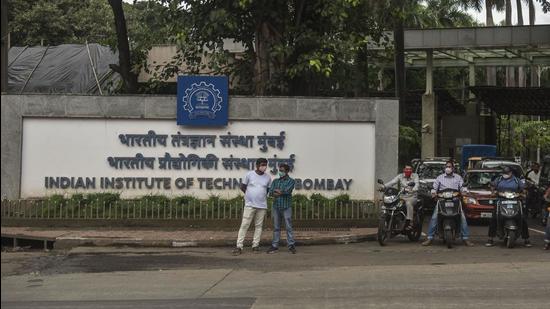
The team, which included doctors and scientists from QIMR Berghofer Medical Research Institute in Australia and Agilent Technologies in the United States, have designed a novel method of using infra-red technology to rapidly test which patients are most at risk of becoming severely unwell from Covid-19. Their work was published in the peer-reviewed journal Analytical Chemistry on July 19.
The team was led by Sanjeeva Srivastava, professor in the department of biosciences and bioengineering and head of the Proteomics facility at IIT-B, who has been studying protein patterns in Covid-affected patients since last year. His team has been working with Kasturba Hospital for conducting a comprehensive proteomics-based investigation of nasal swab and plasma samples from Covid-19 patients to identify host prognosis markers by employing simple extraction strategies.
Earlier the team had used high-resolution mass spectrometry to establish a panel of host proteins. Building on this work, Srivastava endeavoured to create a simple test to detect any spike in proteins in the patient. “While mass spectrometry gave us accurate results, the process was cumbersome and required heavy equipment. So we needed to build a more handy test,” said Srivastava.
Fourier-transform infrared (FTIR) spectroscopy was used to measure the levels of different chemical groups in a sample. “From our FTIR study as well as previously performed mass spectrometry-based proteomics study, we can say that there is a correlation between blood chemical signature and becoming severely unwell with Covid-19. However, we can’t conclude that slight differences in these chemical groups cause patients to become more unwell. We can only conclude that there is an association,” Srivastava said.
From their previous works, the team had a large database of protein spikes in patients’ plasma samples. “We recorded the spectra of around 130 patients with mild and severe symptoms using FTIR spectroscopy. There were mild changes in the spectra of samples collected from patients with severe symptoms,” said Srivastava. These changes in spectra were sent for analysis to QIMR Berghofer.
The head of QIMR Berghofer’s Precision and Systems Biomedicine Research Group and associate professor, Michelle Hill, said “We found there were measurable differences in the infra-red spectra in the patients who became severely unwell. In particular, there were differences in two infra-red regions that correspond to sugar and phosphate chemical groups, as well as primary amines, which occur in specific types of proteins,” Hill said.
The head of QIMR Berghofer’s Statistics Unit, Dr Gunter Hartel, then used artificial intelligence to develop an algorithm to work out which chemical groups, or ‘signatures’, were correlated with patients who became severely unwell.
The test – which performed with 85 per cent accuracy in a small pilot study of Covid-19 patients – could in future be used to triage patients in areas with large outbreaks of Covid-19. “It’s easy to use and much more convenient than RT-PCR. It’s simpler than the tests that doctors are currently doing to study protein spikes such as keratin,” said Srivastava.
Dr Jayanthi Shastri, head of the microbiology department from Kasturba Hospital, said this kind of blood-based test will be beneficial for the clinicians in determining the severity of Covid-19 patients in India. The study was primarily funded by India’s Science and Engineering Research Board, the Government of India, and a grant from IIT.
Arghya Banerjee, lead author of the study and a doctoral candidate in IIT-B said, “We now need to test the method in additional patient groups to confirm whether the findings of this study can be applied to other populations. We also found that having diabetes was a predictor of becoming severely unwell in this group of patients, so we fed this information into the algorithm. We then tested the algorithm on blood samples from a separate group of 30 patients from Mumbai and found it was 85 per cent accurate in predicting which patients would become severely ill. However, it did result in more ‘false positives’ than predictions that were based solely on the clinical risk factors of age, sex, hypertension and diabetes. We hope that with more testing we can reduce these false positives”.
Scientists feel if the infra-red test proved successful in further trials, the teams hoped it could be used in hospitals facing high volumes of Covid-19 patients.
“While many countries worldwide are quickly vaccinating their populations, we know that it will take longer to vaccinate other nations, particularly in the developing world,” Hill said.
“This simple infra-red test only takes a few minutes. We hope it could be a quick and cost-effective way of triaging patients who present at hospitals, particularly where capacity is limited. Patients with a high likelihood of severe Covid-19 complications could be admitted early in their illness, while other patients could potentially be sent home to monitor their symptoms,” he added.
Stay updated with all the Breaking News and Latest News from Mumbai. Click here for comprehensive coverage of top Cities including Bengaluru, Delhi, Hyderabad, and more across India along with Stay informed on the latest happenings in World News.


