
 E-Paper



Navi Mumbai civic body pushes for anti-pollution programme, zero-dust policy to tackle toxic air
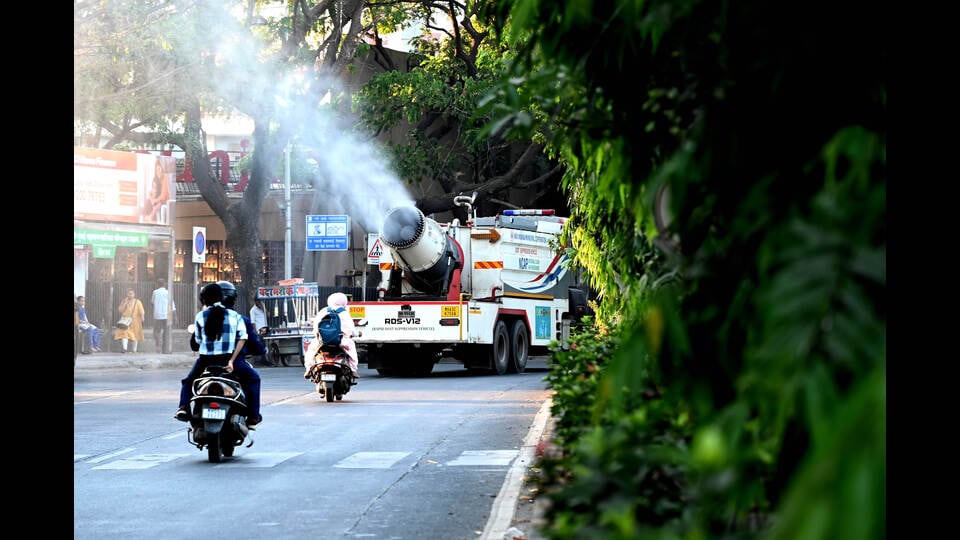
At the core of the plan is a zero-dust policy aimed at eliminating legacy dust along roads, dividers and open spaces, while tightening controls on construction activity and strengthening dust-suppression measures such as mechanical sweeping and water fogging

 Prefer HTon Google


NAVI MUMBAI: Raising alarm over worsening air quality and recurring foul odour from industrial zones, Navi Mumbai Municipal Corporation (NMMC) house leader Sagar Naik moved a resolution in the general body proposing a city-wide anti-pollution drive, including a “Comprehensive Air Pollution Eradication and Air Quality Improvement Programme” and a zero-dust policy.
The move comes amid growing concern over declining Air Quality Index (AQI) levels, persistent haze, dust accumulation and frequent night-time pollution spikes across several parts of the city. Naik said that despite Navi Mumbai being a planned urban centre, rapid urbanisation, infrastructure work and industrial emissions have led to a steady deterioration in air quality.
“Our environment and air quality have become extremely poor and highly polluted. If we improve AQI, there should not be much difference between our air and global standards,” Naik said, adding that he has been studying the issue since 2020.
The proposal identifies key pollution sources, including dust from roads, construction and excavation sites, open plots, vehicular emissions, and industrial and chemical processes. It cautions that fine particulate matter such as PM2.5 and PM10, along with toxic gases, pose serious long-term health risks, including respiratory illnesses, lung damage and allergies.
“Air pollution is not just an environmental issue, it is directly impacting public health and requires urgent intervention,” he said.
At the core of the plan is a zero-dust policy aimed at eliminating legacy dust along roads, dividers and open spaces, while tightening controls on construction activity and strengthening dust-suppression measures such as mechanical sweeping and water fogging.
Naik has proposed an 18-month action plan based on detection, identification, penalisation, eradication, control, prevention and maintenance, noting that existing measures have been fragmented and ineffective, leading to recurring pollution episodes.
A key focus is the scientific identification of pollution sources, including those originating outside city limits. Naik pointed to recurring night-time pollution in areas such as Kopar Khairane and MIDC zones, attributing it to emissions from nearby industrial belts like Taloja.
“Several parts of the city experience such intense pollution at night that breathing becomes difficult. Pollution from industrial areas travels over the hills and settles in Navi Mumbai, creating a suffocating situation,” he said, describing a “saucer effect” caused by the city’s geography between hills and the coast.
To address this, the proposal includes advanced monitoring methods such as vertical profiling using tethered and near-space balloons equipped with sensors to track pollutants at different altitudes and identify hotspots. It also proposes a dense network of air quality sensors across the city to analyse patterns and enable targeted interventions.
“We will collect continuous data on where pollution is coming from, what pollutants are present and where the hotspots are. This will allow precise and effective action,” Naik said.
The plan also proposes setting up a central environmental monitoring and control system to integrate real-time data, track vehicular and industrial emissions and strengthen enforcement. The civic body is preparing a detailed framework, including a 90-page draft and a 70-page standard operating procedure (SOP), and plans to introduce municipal bye-laws to enable stricter penalties against violators.
“Past efforts have been temporary and disconnected. What Navi Mumbai needs is a sustained, data-driven and strictly implemented action plan,” Naik said.
Framing clean air as a civic responsibility, he added, “The air we breathe does not differentiate between rich and poor. Providing clean air to citizens is our duty.”
The proposal, expected to be taken up for approval at the next general body meeting later this week, is likely to lay the foundation for a technology-driven, enforceable and long-term strategy to improve AQI and public health outcomes across Navi Mumbai.
What was proposed in the house
-Comprehensive programme to curb pollution and improve AQI
-Zero-dust policy targeting road and construction dust
-18-month action plan with scientific framework
-Identification of sources, including pollution from outside city limits
-Advanced monitoring using balloons, sensors and real-time data
-Hotspot mapping for targeted enforcement
-Central control system for tracking emissions
-Stricter bye-laws and penalties for violators
-Dust-control measures such as sweeping and fogging
-Focus on health risks from PM2.5, PM10 and toxic emissions


Stay updated with all the Breaking News and Latest News from Mumbai. Click here for comprehensive coverage of top Cities including Bengaluru, Delhi, Hyderabad, and more across India along with Stay informed on the latest happenings in World News.


