
 E-Paper



Opposition walks out as BMC panel clears revised trenching policy
MUMBAI: High drama unfolded at the civic standing committee meeting on Wednesday as corporators from opposition parties staged a walkout to protest against the revised Comprehensive Trenching and Reinstatement Policy 2026, which was passed by the ruling alliance amid objections pertaining to the BMC’s alleged revenue losses

 Prefer HTon Google


MUMBAI: High drama unfolded at the civic standing committee meeting on Wednesday as corporators from opposition parties staged a walkout to protest against the revised Comprehensive Trenching and Reinstatement Policy 2026, which was passed by the ruling alliance amid objections pertaining to the BMC’s alleged revenue losses.
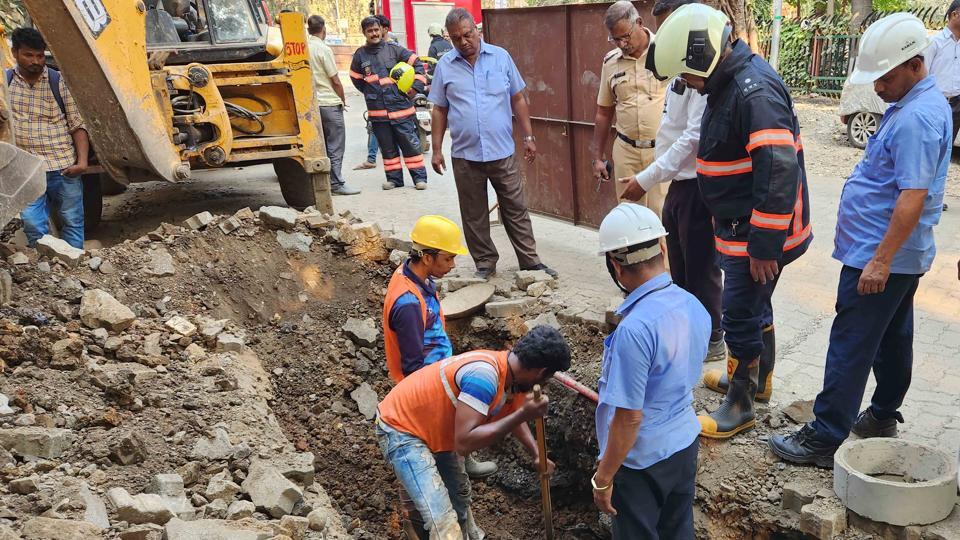
Ashraf Azmi, Congress group leader in the BMC, first opposed the proposal, arguing that the revised policy would result in the civic body losing out on ₹120 crore in annual revenue, with earnings from trenching expected to fall from ₹200 crore to ₹80 crore. AIMIM corporator Zameer Qureshi added that the new policy would not only reduce the BMC’s revenue but also compromise the quality of road reinstatement, and suggested that it be sent back for further study.
Qureshi pointed out that whenever a telecom or utility company dug up a road, it had to pay the BMC. “We would then carry out reinstatement work worth ₹100 for just ₹50,” he said. “Now the utility companies themselves will dig up the roads and carry out the reinstatement, bringing an end to this revenue stream. Moreover, work worth ₹40,000 is being handed over for just ₹4,000. The quality of the work will also suffer. This is a loss-making deal for the BMC.”
Qureshi subsequently staged a walkout and tore up a document in protest.
Defending the policy, standing committee chairman Prabhakar Shinde argued that the BMC’s reinstatement charges were substantially higher than those levied by other municipal corporations and needed to be rationalised. “While other civic bodies charged ₹3,000 per metre for digging, we charged ₹30,000,” he said. “The charges have now been revised in accordance with the state government’s instructions.”
Shinde added that the BMC commissioner’s proposed policy, which required utility agencies to use ducts, would help prevent repeated excavation of roads. “Ducts measuring 580 mm have already been installed, and the BMC has also been increasing charges by 10% every year,” he said.
The standing committee chairman said objections could not be raised to the municipal commissioner’s statement as it was part of the prescribed procedure. The proposal was subsequently passed by a majority consensus.
The Comprehensive Trenching and Reinstatement Policy 2026 will replace the existing 2023 guidelines. The civic administration said the revision was necessary, as the existing policy had become cumbersome to implement and its provisions were repetitive.
The main provision in the new policy is the reduction in reinstatement charges for utility works undertaken alongside road construction, from ₹6,711 to ₹2,300 per metre. The BMC said the lower rate was intended to encourage utility agencies to lay their services while roads were being constructed, thereby avoiding repeated excavation of newly laid roads.
The policy also proposes a penalty of five times the standard reinstatement charge for unauthorised trenching. Low-voltage electrical and telecom utilities with cables up to 100 mm in diameter will have to use existing utility ducts. If ducts are unavailable, the utility agency will have to construct them, failing which the BMC’s roads department will undertake the work.
Digital mapping of underground utilities has also been made mandatory. Utility agencies will have to submit details of underground conduits through a GIS-based Web Map Service and update the data within 30 days of completing the work. Agencies which fail to meet the deadline will be barred from undertaking further trenching until the information is updated.
The defect-liability period (the period during which utility agencies remain accountable for defects in the work) will be extended from the existing three years for all road surfaces to 10 years for cement-concrete roads and five years for non-cement-concrete roads. The policy also simplifies the classification of road surfaces for calculating reinstatement charges, reducing the existing 16 categories to two: cement-concrete and non-cement-concrete roads.

Stay updated with all the Breaking News and Latest News from Mumbai. Click here for comprehensive coverage of top Cities including Bengaluru, Delhi, Hyderabad, and more across India along with Stay informed on the latest happenings in World News.


