
 E-Paper



Parts of Mumbai, Thane and adjoining cities suffer power cuts due to glitch
At 10:08 am, a technical fault at the Padgha sub-station affected all 400 Kv and 220 Kv transmission lines there.

 Prefer HTon Google


Mumbai: A technical fault in a sub-station of the Maharashtra State Electricity Transmission Company Limited (MSETCL) led to a power supply failure in parts of Mumbai, Thane and other areas on Tuesday morning. However, the supply was restored in about thirty minutes to an hour. This is the third such power cut in Mumbai since October 2020.
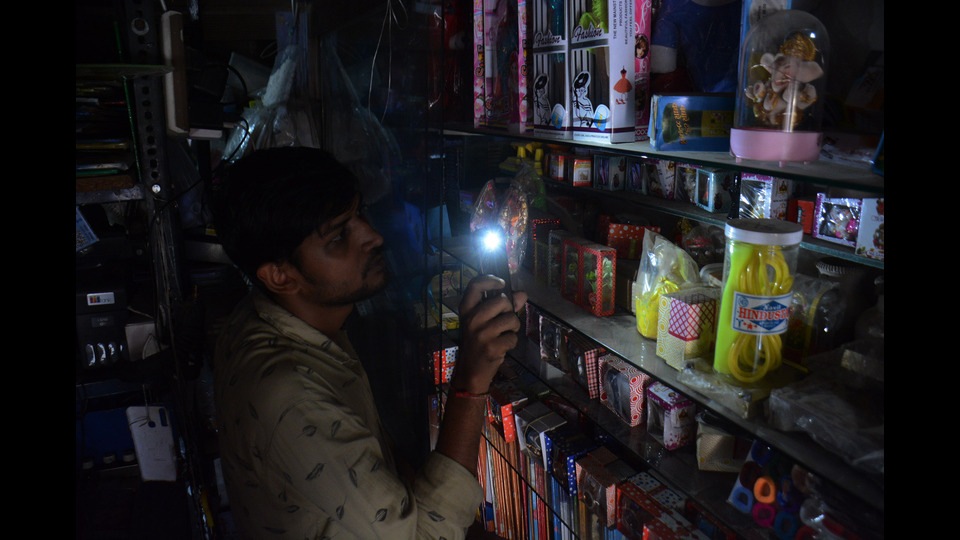
At 10:08 am, a technical fault at the Padgha sub-station affected all 400 Kv and 220 Kv transmission lines there. Consequently, power supply was affected in areas like Dharavi, Chembur, Govandi, Chunabhatti, Bandra, Mankhurd, Mulund, parts of Thane city, Vasai, Belapur, Boisar, Kharghar, Vashi, Kalyan, Bhiwandi, Dombivali, Ambarnath, Shahapur, Murbad and Badlapur, among others. Around 2,350 MW load was shed in Mumbai city and the suburbs. The power supply was fully restored by 11:30 am.
The Padgha sub-station sees around 2,500 MW of power being dumped there via transmission lines for distribution in areas in and around Mumbai.
The outage comes amid rising summer heat and a power crisis caused by declining coal inventories at thermal power plants.
Speaking to HT, state energy minister Nitin Raut said that the disruption may have occurred due to shortcomings in the maintenance of equipment. “It seems there were shortages in maintenance. I have asked for an inquiry to be conducted,” he added.
“The system is old and has been subjected to wear-and-tear… the atmospheric conditions have changed and the rising temperatures have also affected the equipment, which has not been designed for it,” said a senior MSETCL official.
He added that the supply to Mumbai and other areas had been cut as a precautionary measure to prevent an overload on the system. “In the Mumbai network, just the less important load was disconnected. The ‘important load,’ that is, supply to the railways, hospitals and important institutions was unaffected,” he added.
On October 12, 2020, Mumbai had come to a halt for a few hours due to a massive power outage. It had taken up to 24-hours for supply to be restored in some areas. On 27 February, a similar power cut occurred in Mumbai due to the tripping of a transmission line and planned outages for linear infrastructure projects. However, the impact on the commercial and financial sectors was minimal as most establishments were closed on the weekend, though suburban train services were briefly affected.
The power outage in Mumbai led to a war of words between the two electricity utilities which cater to Mumbai—Tata Power Company (TPC) and Adani Electricity Mumbai Limited (AEML).
“The statement of Adani Electricity saying today’s outage was caused due to tripping at Tata Power’s Dharavi Receiving Station and affected their consumers is misleading,” said TPC. It added that the MSETCL had said that the outage happened due to a breakdown (bus trip) in their 400 KV substation at Padgha, which had a resultant impact on the Tata Power network.
“It is a known fact that Mumbai’s power network is wired up to keep the city’s system safe from widespread outages in case of any major tripping. In such a scenario, automated power supply trimming gets activated, like what has happened today, resulting in load trimming to effectively manage the load. In fact, the unique power network of Mumbai helps in avoiding the outages similar to as observed two years back i.e. on October 12, 2020. It is noteworthy to mention that Tata Power today also ensured the running of its hydro, gas, and thermal plants to the full capacity to safeguard the city against further load shedding,” it stated.
Adani Electricity’s statement reiterated: “Tata Power in its own statement, has nowhere denied that the Tata Power Dharavi Substation tripped. We hereby clarify that Adani Electricity has only stated facts and once again reiterates that the Tata Power Dharavi Substation tripped due to outages in the incoming MSETCL Transmission Lines resulting in power supply disruptions in parts of Suburban Mumbai. Adani Electricity team took quick actions to restore supply to its consumers within 40 minutes.”
These outages in Mumbai have also revealed the chinks in its islanding scheme which was introduced in 1981 to insulate the megapolis from power outages in the state grid. It has also pointed to the need to enhance the embedded generation within the city and boost the capacity of transmission networks, which are getting clogged considering the growing power demand. An addition in the transmission capacity will ensure that more power can be wheeled in to meet the city’s requirements.
Mumbai’s peak power demand touched 3,600 MW in the 2019-20 summers and is expected to soar to 5,000 MW by 2024-25 and further to 6,000 MW by 2030. Raut said they had launched projects to boost the city’s transmission capacity.
The MahaTransco official quoted earlier said that forest clearances and issues regarding grant of right of way (RoW) consents in agricultural fields and privately-owned lands had affected the progress of transmission projects.
Meanwhile, the water supply was affected in Mumbai due to the power outage. The BMC on Tuesday said water supply in eastern and western suburbs will be supplied at 60% & 75% capacity owing to power supply tripping in different parts of the city and suburbs. However, south Mumbai’s water supply remained unaffected.
The water pumps of the water supply infrastructure need power due to which the supply got impacted. According to BMC officials, the supply will remain impacted for 24 hours and will be normal by Wednesday noon.


