
 E-Paper



Prosecution failed to make out a case against Chhagan Bhujbal, kin: Court
A special anti-corruption bureau (ACB) court in its detailed order observed that after taking into account the material available on record and hearing both the sides, it required to hold that the prosecution had not made out a prima facie a case against Chhagan Bhujbal, kin and other accused


A special anti-corruption bureau (ACB) court, which discharged Nationalist Congress Party (NCP) leader Chhagan Bhujbal along with seven others on September 9, in its detailed order observed that after taking into account the material available on record and hearing both the sides, it required to hold that the prosecution had not made out a prima facie a case against the accused Chhagan Bhujbal, his son Pankaj, nephew Sameer, the then public work department (PWD) secretary Deodatta Marathe, Mumbai Educational Trust (MET) employees Tanveer Shaikh, Iram Shaikh, Sanjay Joshi and Geeta Joshi.
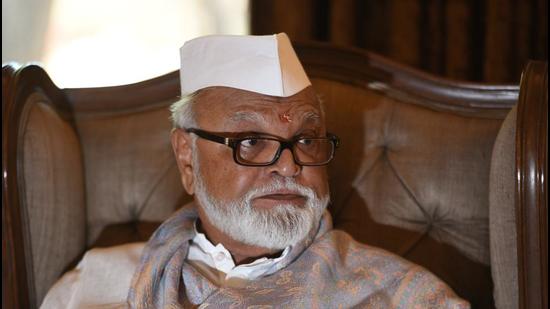
The case dates back to 2005 when Bhujbal was the Public Works Department (PWD) Minister who allegedly gave a contract without inviting tenders to KS Chamankar Enterprises. The ACB had registered a case in the matter in 2015 after the Bombay High Court had observed there was prima facie evidence and ACB can register FIR if a case of corruption is made out. The ACB had registered a case against eleven people alleging that a developer was favoured for a project under which an RTO land in Andheri was to be handed over for a project in lieu of construction to the tune of ₹100 crores at Maharashtra Sadan in Delhi and RTO building in Tardeo.
Earlier the court had discharged five accused in the case — Arun Deodhar, Krishna Chamankar, Pravina Chamankar, Pranita Chamankar and Prasanna Chamankar.
Additional sessions judge, HS Satbhai who discharged the eight accused in a detailed 106 pages order observed from the material available on record, though a suspicion against the accused has been shown by the prosecution, the same has been satisfactorily explained by the accused through their counsels Prasad Dhakepalkar and Sajal Yadav.
None of the ingredients constituting the alleged offences punishable under sections of the Prevention of Corruption Act, 1988, and under sections of the Indian Penal Code are found, so that a trial can be held against the accused.
The judge further observed the Prevention of Corruption Act, 1988, speaks about obtaining a pecuniary advantage for himself or others by corrupt or illegal means. As discussed there is nothing on record that suggests that the accused did certain things by corruption or illegal manner to cause the benefit to the developer or any other person or that they have acquired any benefits for themselves. The prosecution has failed to establish that the accused obtained for themselves any valuable thing or pecuniary advantage by abusing their position as public servants.
The court further wrote that the whole episode was a contract between the developer and the State Government. Since it was a contract between two parties the developer constructing some buildings for the state government, against the consideration in terms of FSI, it was but natural that while entering into the contract, both the parties were keenly interested in protecting their own interest, while negotiating the terms and conditions of the contract.
At this stage of framing of charge, it is necessary to find out that are their sufficient grounds for prosecuting the accused. While making that exercise, it is from the court to sift the material, which is produced and relied upon by the prosecution. The sifting is not to be meticulous. What is required is that the court must be satisfied that with the materials available, a case is made out for the accused to stand trial? A strong suspicion suffices. But the strong suspicion must be premised on some material that will help the court to formulate an opinion that the accused have committed an offence. The judge should not act as a trial judge but should weigh the evidence and form an opinion on whether prima facie a case has been made out. Excerpting the case of grave suspicion which the accused is unable to explain, the judge empowered to discharge the accused.
The allegations against one of the accused Devdatta Marathe then PWD, secretary, Mantralaya, Mumbai that he should have checked the preliminary report of estimate/assessment of the construction to find out the profits and loss of either party to the contract. Being a public servant, he must be working under certain rules to that effect. But prima facie no such rules are made available to establish that the preparation of estimate was against the provisions of those rules.
The feasibility report was presented before the committee twice from May 2006 to August 2006, the committee even had chief minister Vilasrao Deshmukh who was then the chief minister as a member.
The estimates and reports were shared with every department over 100 communications were made on it.
For re-developing the areas Anna Nagar Housing Society and Kasam Nagar Housing Society, KS Chamankar was appointed in 1998, by the SRA, there was no role of Chhagan Bhujbal in appointing KS Chamankar Developers.
The court has also stated that though Bhujbal carried out a meeting on 13th July 2001, asking others to decide about giving building the RTO building on a non-slum plot he did not give any specific directions to favour any developer. However, the NOC given by RTO took 22 months and was finally given 26th May 2003, this show there was no personal interest of the accused in the matter he had called the meeting as several others had written to him.
The court further observed that it is alleged that Bhujbal on 29th of March 2006, called a meeting of PWD, Home and SRA officials and overlooked the objections raised by Finance and PWD department to the said proposal but after going through the minutes of the meeting it is clear that not only favourable but unfavourable things also were discussed in the meeting. It is not the prosecution story that Bhujbal asked anybody to hide anything unfavourable about the proposal, but he indeed kept everything before the Cabinet Ministers to decide on it.
The court also observed that the first meeting was taken by Bhujbal on 29th July 2001, and the second directly on 29th March 2006, there is no material to show that the accused took a direct part in awarding the contract to the developer K S Chamankar. It cannot be said that the accused conspired developer in the year 2001, when he was not the PWD minister but called a meeting, and further the conspiracy was accomplished in the year 2006 when he was the PWD minister. It was not anticipated by the accused in 2001 that he would win elections as Member of Legislative Assembly and will be given a portfolio of PWD minister.
The Transport department had already taken an opinion of MHADA on the said proposal which had said it was beneficial for Transport Department and the RTO may give a NOC to the developer.
The court also observed that no favours or illegality have been granted by the accused to the developer to get the contracts nor he has paid any kickbacks/quid pro for it.
It was also observed in the month of August that the ACB had registered the FIR in hurry. Most of the calculations in the matter were made by Narendra Talegaonkar who was the ACP with ACB; he was neither an architect nor an engineer and he was no expert to do calculations related to said matters.
The ACB had registered an FIR against all the accused on June 11, 2015, much before the appointment of an architect who is an expert on such matters who was officially appointed on June 30, 2015. The architect had submitted a report on June 9th, 2015, but prior to it on June 4th a sanction was asked to register an FIR in the case where points of the report were mentioned.
The court further said that the PWD report came in December 2015, which said that there was no illegality in the contract and the feasibility report was prepared as per prevailing rules and practices followed in PWD however the FIR was already registered by then by the ACB on June 11, 2015.
Stay updated with all the Breaking News and Latest News from Mumbai. Click here for comprehensive coverage of top Cities including Bengaluru, Delhi, Hyderabad, and more across India along with Stay informed on the latest happenings in World News.


