
 E-Paper



Raj Bhavan’s new Darbar Hall and Secretariat carry signature of colonial architecture
Darbar Hall, where the swearing-in of chief ministers takes place, can accommodate three times its earlier capacity and can even host a grand sit-down dinner for 300 people in a dining hall below. The Secretariat building has four times the original space for offices with a predominantly white and brown palette


Raj Bhavan now boasts of two reconstructed buildings - of historical importance - which are swanky, spacious and carry the signature of the colonial architecture.
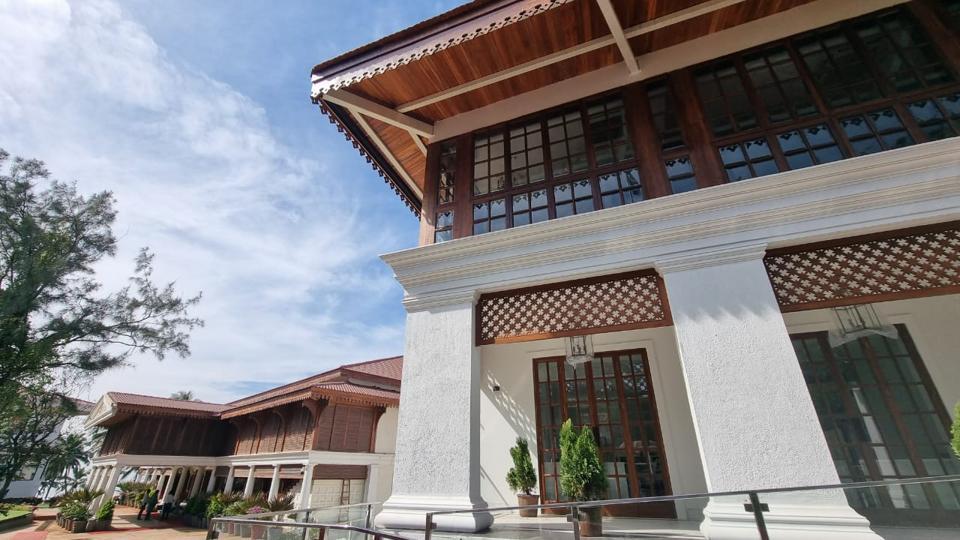
Darbar Hall, where the swearing-in of chief ministers takes place, can accommodate three times its earlier capacity and can even host a grand sit-down dinner for 300 people in a dining hall below. The Secretariat building has four times the original space for offices with a predominantly white and brown palette.
For conservation architect Abha Narain Lambah whose firm bagged the project after winning a design competition, it was unlike the usual brief she had received. This is because the public works department had already torn down the two structures and she had to design them afresh without altering the look of the heritage precinct.
Lambah, however, sought inspiration from the site itself, and retained the ceremonial and majestic look of Darbar Hall and gave a contemporary yet functional look to the Secretariat’s office.
The objective was to make the buildings low rise in order to respect the heritage precinct, she said.
“We chose the sloping tiled roofs which are the characteristics of all the buildings at Raj Bhavan. As an ode to the city’s old structures, we have also used the enveloping verandas and Burma teak louvered verandas. The buildings respect the historic context while opening up views to the sea and provide state-of-the-art facilities,” she said.
Asked about the difference between the old and new structures, Lambah said they have the same height. “We have respected the fact that the banquet hall is the oldest building and that all the other structures should be lower than that. The only difference is that the old Secretariat was a ground-floor structure while the new one has three floors. However, you cannot see it from the front because the third floor is tucked away in the slope.”
The new Secretariat building can house more than four times the number of staff. It has air conditioners, state-of-the-art conference rooms, LAN, and all such services required of a modern office.
Darbar Hall has three times the original capacity.
“It has a huge deck with a cantilevered roof which gives an unhindered view of the Arabian Sea. The old hall could accommodate 150 people. It must have served in the past as an auditorium-cum-ceremonial hall which it does to this day for any large gathering, public function, and swearing-in of CM,” Lambah said.
On January 26, Raj Bhavan hosts the governor’s tea at Darbar Hall and it used to be crammed, she said.
“We have designed the building which sits on the slope and we have also created on the seaside a dining room below,” the architect said, adding they can not only use it for public functions but for musical performances and even conferences.
The construction of Darbar Hall began in 2019 and Lambah’s team worked through the lockdown where Raj Bhavan had set up a labour camp inside. It was completed in February this year. The Secretariat building was started in 2021 and completed in December.
President Droupadi Murmu inaugurated Darbar Hall in February and chief minister Eknath Shinde inaugurated the Secretariat building on December 16.
Stay updated with all the Breaking News and Latest News from Mumbai. Click here for comprehensive coverage of top Cities including Bengaluru, Delhi, Hyderabad, and more across India along with Stay informed on the latest happenings in World News.


