
 E-Paper



Report on Wadhavan Port doesn’t consider ecological risks: Experts
Experts and locals from the area emphasized that the document, prepared by the National Centre for Sustainable Coastal Management (NCSCM) and submitted to the Union environment ministry in April this year, is based merely on secondary data, does not include public consultations, and does not consider various ecological risks posed by the Port, which will reclaim approximately 3,496 acres of land from the Arabian Sea.


Mumbai: A key report, responsible for paving the way for construction of the Wadhavan Port in Dahanu, Palghar, has been heavily criticised for relying on insufficient data to conclude that the project does not pose a serious threat to surrounding ecology. The document – Assessment and evaluation of impact of setting of port on overall ecology of the Dahanu Taluka – was recently accessed by Hindustan Times.
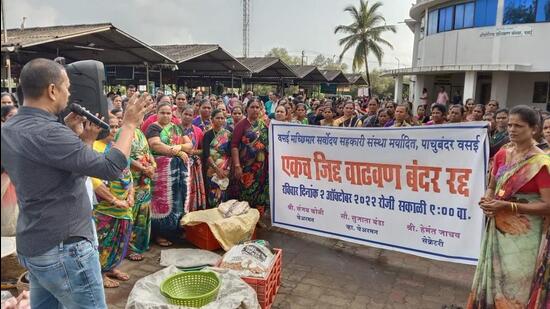
Experts and locals from the area emphasized that the document, prepared by the National Centre for Sustainable Coastal Management (NCSCM) and submitted to the Union environment ministry in April this year, is based merely on secondary data, does not include public consultations, and does not consider various ecological risks posed by the Port, which will reclaim approximately 3,496 acres of land from the Arabian Sea.
Such a move, experts said, will pose a serious threat to marine biodiversity and affect the livelihoods of several thousands of fishermen, farmers and adivasis living in Dahanu. The NCSCM report is significant because it formed the basis for an MoEFCC directive on May 26, which paved the way for construction of ports and harbours in the Dahanu eco-sensitive zone (ESZ).
It was previously prohibited by virtue of a 1998 order of the Supreme Court-appointed Dahanu Taluka Environment Protection Authority (DTEPA). The DTEPA at the time concluded that construction of a port at Wadhavan would be “wholly impermissible and... illegal” as it would be “detrimental to the environmental and the socio-economic conditions of Dahanu area.”
While the NCSCM assessment (details of which have not previously been reported) concludes that “the environmental and ecological impacts of the proposed offshore port facility is rather minimal”, it also admits that this conclusion is not based on any field investigations or primary data. Instead, the NCSCM was assigned the task by the MoEFCC in February, pursuant to a June 2021 order of the National Green Tribunal (NGT) staying all further work on the project. The Tribunal had called for a fresh assessment of the port’s environmental impact, which the NCSCM report aims to provide.
“But by their own admission, the report is based entirely on secondary data. Not a single site visit has been conducted, nor any local stakeholders consulted,” said Debi Goenka, a former invitee of the DTEPA and executive trustee of the Conservation Action Trust (CAT).
He added that the report itself emphasises the need to undertake a detailed field survey to address several issues which it has not been able to evaluate.
“For all practical purposes, the assessment is incomplete and does not serve the purpose of the NGT’s June 2021 order in any way. Despite this, the MoEFCC has used the document as an excuse to allow the construction of a mega-port in a designated eco-sensitive zone,” said Goenka.
The NCSCM’s recommendations were considered by an MoEFCC-appointed expert committee in April, in which the latter opined that “construction of ports and harbours... can be considered non-industrial activities that can be taken up under Dahanu Taluka Ecologically Fragile Area Notification, 1991,” subject to clearance from the DTEPA.
Justice Arun Chaudhuri, chairman of the DTEPA, is scheduled to conduct a site visit to Wadhavan and surrounding villages in early December, prior to delivering a controversial fresh verdict, overturning the DTEPA’s 1998 order.
Bhushan Bhoir, a Palghar-based fisherman and professor of marine biology who has been tracking the project closely, questioned how the MoEFCC could allow such a large project in an ecologically fragile area based on a report that relies only on secondary data.
“The NCSCM was mandated to study the port’s impact on fishing and agriculture, and a detailed biodiversity report was to be prepared as well,” he said. “As per the NGT’s order from June 2021, NCSCM was obliged to visit the proposed area and do thorough fact finding. But sadly they haven’t visited the site even once.”
Stay updated with all the Breaking News and Latest News from Mumbai. Click here for comprehensive coverage of top Cities including Bengaluru, Delhi, Hyderabad, and more across India along with Stay informed on the latest happenings in World News.


