
 E-Paper



Standoff between tribals, SGNP officials over celebration of tribal rights day
The standoff began in the morning, when tribals, including those from far-off places such as Nashik, Yavatmal, Nandurbar, Palghar, Yeoor and Thane marched to the Kasturba Marg police station after being denied entry into the park and sought to lodge a complaint regarding alleged atrocities by forest officials

 Prefer HTon Google


Mumbai: A major standoff ensued on Sunday after tribals from across the city and beyond tried to enter the Sanjay Gandhi National Park (SGNP) to mark the International Day of the World’s Indigenous Peoples at Chinchpada, one of the 27 tribal hamlets inside the SGNP, but were not allowed to enter the premises.
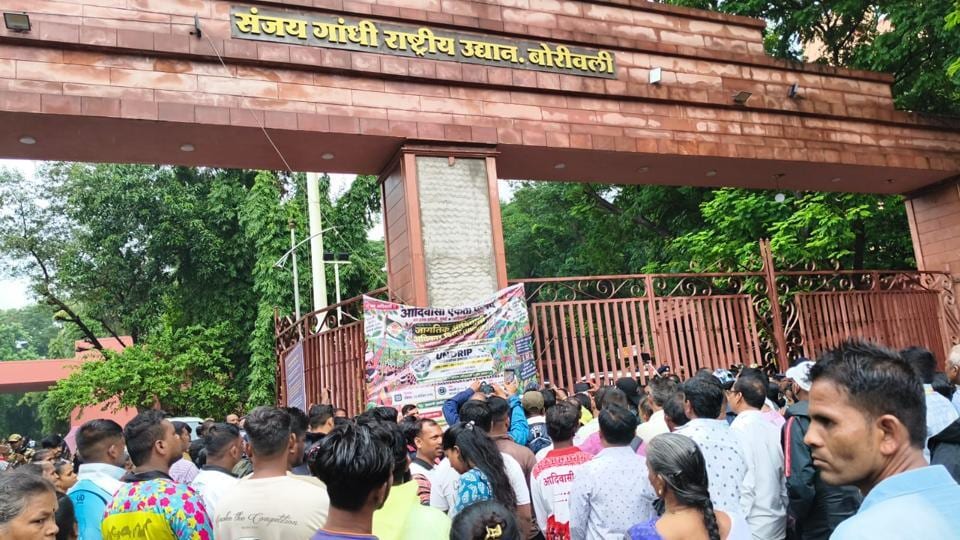
The standoff began in the morning, when tribals, including those from far-off places such as Nashik, Yavatmal, Nandurbar, Palghar, Yeoor and Thane marched to the Kasturba Marg police station after being denied entry into the park and sought to lodge a complaint regarding alleged atrocities by forest officials.
“When they returned to the SGNP after submitting the complaint and tried to buy tickets to enter the park, SGNP authorities shut down the ticket windows and main gate completely and the security pushed the tribals out,” said Vijay Matera from the Adivasi Ekta Parishad.
Tribals from across the state had planned to convene at Chinchpada in SGNP on Sunday to commemorate the ninth anniversary of the adoption of the United Nations Declaration on the Rights of Indigenous Peoples, and to assert 47 rights granted to tribals by the Constitution, Matera said.
“We were not here to dance,” he said, referring to the denial of entry on Saturday to a musical banjo group which was supposed to participate in Sunday’s event.
Matera said it was unfortunate that tribals were prevented from entering the SGNP on Sunday, which is marked as the International Tribal Rights Day. “Undeterred, we commemorated the event outside the (SGNP) gate, sang hymns and even had our food,” he said.
SGNP officials, however, told HT that it was the police and not them who stopped the tribals from entering the park. Ticket windows at SGNP were shut around 3.30pm due to excessive crowd inside, he claimed.
“We regularly halt visitors when crowds inside swell to more than 6,000, as it becomes very unmanageable,” a forest department official said, requesting anonymity. The tribals had applied for permission for Sunday’s event at 3.56pm on Saturday, which the SGNP authorities could not respond to since Saturday and Sunday were holidays.
“The event organisers also lacked permissions from other agencies like the civic body, local police and the traffic department. It was the local police which stopped the tribals from entering the SGNP on Sunday morning. We had merely stopped musical instruments like banjos from being taken inside the park on Saturday night,” the official said.
The official referred to a Kavad Yatra event held inside the SGNP recently, over which the authorities faced much flak from the High Powered Committee (HPC). “We do not want to repeat such a thing inside the SGNP,” the official said.
The development came close on the heels of the halting of the tribals’ march to the governor’s residence in south Mumbai.
On September 11, members of the tribal community commenced the march from the park premises but found that barricades had been placed at multiple points till the Goregaon check naka, stalling their movement. A delegation of tribals was then taken to meet the governor and following assurances, the march was withdrawn late on Friday night.
Tribals residing in SGNP have been seeking implementation of the Forest Rights Act (FRA) 2006 and the Provisions of the Panchayats (Extension to the Scheduled Areas) (PESA) Act, 1996; and a bar on projects inside the park without explicit and prior consent of local gram sabhas.They are opposed to the removal of key protective zones from the city’s master plan, which has left forest land and adivasi hamlets vulnerable to exploitation and displacement. According to the tribals, they are original inhabitants of the forest and should not be labeled as “encroachers” or treated as slum dwellers.
Among other things, the HPC is tasked with monitoring rehabilitation of nearly 1,080 families residing inside the SGNP. The residents have called for immediate cessation of forced evictions, displacements and unjust land acquisitions for infrastructure and private projects. They have also sought essential amenities such as provision of clean water, electricity, all-weather roads, schools, and health centers in adivasi padas inside the park, besides a rollback of the government decision to privatise 490 tribal residential schools across the state.


Stay updated with all the Breaking News and Latest News from Mumbai. Click here for comprehensive coverage of top Cities including Bengaluru, Delhi, Hyderabad, and more across India along with Stay informed on the latest happenings in World News.


