
 E-Paper



State fined ₹12,000 crore for mismanagement of sewage, solid waste
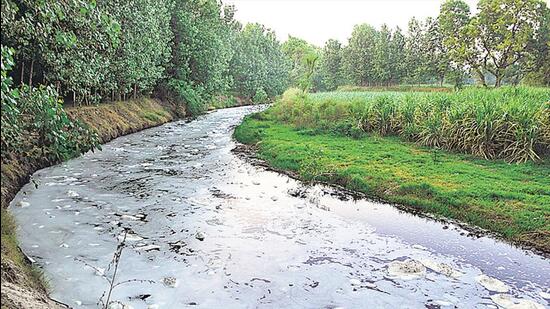
Maharashtra generates 9,758 megalitres of sewage a day (MLD; one mega litre is one million litres). Of that, 5,420 MLD – or 55% of the total liquid waste generated – goes untreated


Mumbai: The state’s inability to treat more than 55% of the sewage it generates daily attracted the ire of the National Green Tribunal (NGT), which has levied a whopping ₹12,000 crore environmental compensation (EC) on the Maharashtra government to be paid before November.
“We round off the compensation amount @ ₹12,000/- crores which may be deposited by the State of Maharashtra in a separate ring-fenced account within two months, to be operated as per directions of the Chief Secretary and utilised for restoration measures. […],” the NGT order dated September 8, read.
“It is disappointing to see from the data presented by the Chief Secretary [of Maharashtra] that... there is no meaningful progress. There are huge gaps in management of solid as well as liquid waste,” the NGT order stated.
Maharashtra generates 9,758 megalitres of sewage a day (MLD; one mega litre is one million litres). Of that, 5,420 MLD – or 55% of the total liquid waste generated – goes untreated.
It doesn’t fare much better when it comes to solid waste, either.
Information placed on record by the Chief Secretary showed that 403 urban local bodies (ULBs) in the state generates 24,951 tonnes of solid waste a day, of which 4,657 tonnes go untreated, with a majority ending up in the 273 dumpsites located across Maharashtra. What’s more, these landfills already contain 3.94 crore tonnes of waste – referred to as legacy waste – that has piled up over the decades and remained unprocessed.
“In respect of gap in treatment of liquid waste/sewage i.e. 5420.33 MLD, compensation works out to ₹10840.66 crores and compensation for un-remediated legacy waste to the extent of 3,94,19,287 works out roughly to about ₹1,200 crores,” the order read.
“We will take a decision on the further steps to be taken in the coming week. We will approach the Tribunal through an affidavit mentioning the schemes and programmes being implemented in the state. We will also apprise the NGT about the utilization of the central funds and the outlay earmarked for the schemes related to waste management. Though the reversal of the order seems to be difficult, we expect some respite from it,” a Mantralaya official said on the condition of anonymity.
The NGT, on September 1, fined West Bengal ₹3,500 crore for similar violations. The fine was calculated at the rate of ₹2 crore per MLD of untreated sewage and ₹300 per tonne of legacy waste. The same math has been applied to Maharashtra.
“The amount is the highest environmental compensation to be levied on any party in the state, if not in the country. This is not surprising in the context of solid waste and sewage because Maharashtra, being India’s largest state, generates the most amount of waste. The method for calculating compensation in such matters has been fixed by the Central Pollution Control Board, and is based directly on quantum of untreated waste,” said Zaman Ali, a Mumbai-based environmental lawyer.
In 2017, the Supreme Court had given all states a deadline of April 2020 to establish requisite wastewater and solid waste treatment systems to ensure that no waste goes untreated or unprocessed.
In its order, the NGT noted that there has been a delay of more than two years.
According to the Central Pollution Control Board’s National Inventory of Sewage Treatment Plants (2021), Maharashtra has the capacity to treat only around 76% of the sewage its generates – roughly, 6,900 MLD – however, only 4,242 MLD, or 47% of the daily generation, gets treated.
A senior official working in the water pollution department of the Maharashtra Pollution Control Board (MPCB) explained that this was due to “operational deficiencies”.
“In some places the technology of the STP is outdated and can no longer meet the latest discharge standards of the CPCB, or there are not enough sewer lines to transport the wastewater to the plant. Tendering for new plants and upgrades is a slow process,” the official said requesting anonymity.
“The BMC, being the richest and largest ULB, should be setting an example for others. But despite producing around 747 MLD of sewage per day, it has the capacity to treat only 37 MLD,” said Stalin D, director of city-based NGO Vanashakti, who filed a Public Interest Litigation in the Supreme Court seeking to end the entry of untreated sewage into Mumbai’s creeks and rivers.
“We have implemented centrally sponsored schemes, Swachh Bharat Abhiyan and Amrut-2 that deal with these issues effectively. It is true that in some areas like management of slums, legacy waste management, and effective utilisation of the Sewage Treatment Plants (STPs), some of the municipal corporations have failed. Though they have erected STPs, they have not been able to put a system in place to ensure that waste reaches the STPs,” an official from the urban development department said on condition of anonymity.
With inputs from Surendra P Gangan
Stay updated with all the Breaking News and Latest News from Mumbai. Click here for comprehensive coverage of top Cities including Bengaluru, Delhi, Hyderabad, and more across India along with Stay informed on the latest happenings in World News.


