
 E-Paper



State to introduce medical studies in Marathi from next academic year
Medical education minister Girish Mahajan said that the decision of availing the syllabus in Marathi will help the students from rural parts of the state


Mumbai: With the Madhya Pradesh and Uttar Pradesh governments introducing medical education curriculum in Hindi, the Maharashtra government said it will introduce medical education in Marathi from the next academic year.
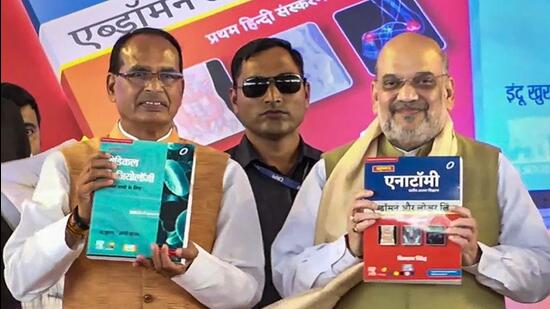
Medical education minister Girish Mahajan said that the decision of availing the syllabus in Marathi will help the students from rural parts of the state.
“Though Madhya Pradesh was the first state to introduce a syllabus in regional language, they have introduced it only for MBBS, whereas we are planning to give the option of Marathi for all the streams, including ayurvedic, homoeopathy, dental and even for nursing. Maharashtra would be the first state to offer a Marathi syllabus for all these streams. We have appointed committees to study the plan and the steps to be taken. The Marathi syllabus will help the students who have studied in Marathi mediums to tide over their complex for English,” he said.
According to the officials from the chief minister’s office, they also plan to have all the professional courses available in Marathi.
“This syllabus is being made available in the regional languages as per the central government policy. The state cabinet has discussed it last month and the decision of constituting a board for the conversion of all these syllabi has been taken. The board will consider all the possible difficulties and issues in the conversion of the syllabus into Marathi and suggest ways to overcome them. There would be experts from various fields on the board,” said the officer.
The medical fraternity, however, remains divided by the state government’s decision. Dr Pravin Shingare, former director, of the directorate of medical education and research (DMER) Maharashtra, said that medical education should either be in Hindi or continue to be in English.
“A medical student learning in Marathi may not be able to professionally practice outside Maharashtra/India. Even within Maharashtra, most of the cities are metropolitan. Maharashtra doctors are stated to be the best doctors as far as the skills are concerned,” he shared.
Dr Shingare said a scientific subject like medicine should be taught in a language understood by the majority of the country. He also questioned the feasibility of departing medical education in the Marathi language. “Translating medical books in Marathi is half done. We need to train the faculty too to teach in Marathi. I am a Maharashtrian and have taught medical students for 21 years. I still cannot teach them in Marathi unless I get trained for the same,” said Dr Shingare.
Dr Avinash Supe, ex-director of major civic hospitals and director of Hinduja Hospitals said in medicine, one has to be locally relevant and globally competent.
“Medicine is a continuous learning process. Imparting medical education in the local language won’t work much. Globally, things keep developing and most of them are in English. A doctor has to stay abreast with these medical developments,” he said.
Citing Late Dr RD Lele’s example, who got his medical education in Urdu, Dr Suhas Pingle, president of the Indian Medical Association (Maharashtra) said this is not the first time that medical education will be given in the local language.
“Dr Lele wrote his MBBS in the Urdu language. He belonged to Hyderabad, a Nizam state then. All over the world, in Japan, and China, it is taught in their language. We still have a colonial mentality and are not able to get over it,” he said.
Expressing his personal opinion on the subject, Dr Pingle said medical education in Marathi will help understand the symptomatology of the local patients. “One of the reasons behind the doctor-patient conflict happening in Maharashtra’s government hospital is doctors unable to understand the language of the patient.
Marathi medical books printed in British India
Coincidentally, the first medical education books in Marathi were written and printed in the 1830s for the medical school, forming the basis of the 177-year-old Grant Medical College and Sir JJ Group of Hospitals.
Dr Sunil Pandya, who has also written a book on the history of GMC and Sir JJ Hospital said, “During 1830, East India Company had sanctioned certain money for the uplighting of education of natives. Calcutta (now Kolkata), where the East India Company had headquarters, started a medical school intended to create assistants who can be British doctors to look after the British Army and Indian Sepoy.”
He said Mountstuart Elphinstone, then governor of the Bombay Presidency wanted a similar medical school in Bombay (now Mumbai) to treat Indians, which was shot down.
“He was, however, allowed to have a medical school with one medical teacher in the lines of Kolkata medical school and was asked to impart knowledge in Marathi, Gujarati, and the local languages. The appointed doctor then got medical books from London and got them translated into Marathi. It had a lot of illustrations with text. The books on surgery, fractures etc are now lying in Marathi Granth Sangrahalaya in Dadar,” said Dr Pandya.
Stay updated with all the Breaking News and Latest News from Mumbai. Click here for comprehensive coverage of top Cities including Bengaluru, Delhi, Hyderabad, and more across India along with Stay informed on the latest happenings in World News.


