
 E-Paper



The sur from Gwalior gharana defined by rigour and warmth
Neela Bhagwat’s music bore the mark of a searching, scholarly mind. As Shubha Mudgal observes, her art never existed in isolation. It absorbed and reflected the socio-political currents of its time, often through a distinctly feminist lens

 Prefer HTon Google


Neela Bhagwat: 1943-2026
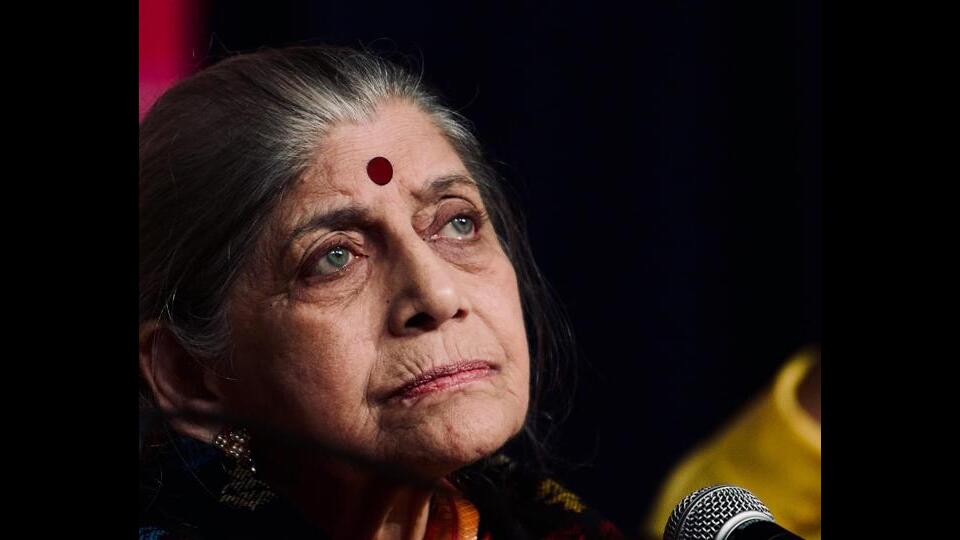
MUMBAI: The passing of Neela Bhagwat, 83, at her Matunga home, after a quiet battle with Idiopathic Pulmonary Fibrosis, has left the music fraternity reeling—not merely with grief, but with a deep sense of dislocation. Some departures close a chapter; others, like hers, seem to loosen the very spine of a tradition, leaving behind a silence that hums with memory.
It is a poignant coincidence that the same illness had, just over a year ago, claimed Ustad Zakir Hussain. For Bhagwat too, breath—her lifelong medium—had turned adversary. In her final months, as her partner Amarendra Dhaneshwar recalls, she remained largely homebound, sustained by oxygen and medication, yet inwardly tethered to her music, listening, reflecting, and holding on to the sur that had defined her life.
Her last public appearance on January 17, this year, was characteristic of her resolve. Travelling to Pune with oxygen support, she received the Lifetime Achievement Award instituted in memory of Vasantrao Deshpande at the Vasantotsav Festival earlier this year—a quiet but resolute final bow that now feels like a parting gesture to a community she had nurtured for decades.
For Rahul Deshpande, who organises the festival, the loss is deeply unsettling. “It feels like we are losing our guru-tulya anchors,” he said, voicing a sentiment shared by many. Bhagwat’s presence was not merely that of an accomplished artiste, but of a generous guide—one musicians turned to when nuance blurred or certainty faltered, when a phrase needed to be understood rather than merely rendered.
Tabla exponent Aneesh Pradhan recalls an early meeting that altered his journey. Invited to her home, he expected to accompany her; instead, she took to the harmonium and encouraged him to play, offering affirmation that would shape his confidence. It was she who later opened professional doors for him, leading to years of collaboration across the country, including significant concert journeys. “I had promised to visit her last week,” he says, the sentence trailing into an unfinished ache.
Bhagwat’s music bore the mark of a searching, scholarly mind. As Shubha Mudgal observes, her art never existed in isolation. It absorbed and reflected the socio-political currents of its time, often through a distinctly feminist lens. In a tradition known for guarding its repertoire, Bhagwat made a radical gesture—placing her carefully documented diary of rare compositions from her guru Sharatchandra Arolkar in the public domain. It was an act of faith in transmission over possession, privileging continuity over control.
For filmmaker and former dean of School of Media and Cultural Studies, TISS Anjali Monteiro, a close friend since 1979, the loss is intimate and enduring. Their collaborations—across films, scripts and feminist media—were anchored in shared curiosity and trust. “She taught me to listen, to sing, to understand,” Monteiro recalls. “From khayal to folk, she opened doors I didn’t know existed.” Beneath the intellectual force of her work lay a rare groundedness that made her influence both profound and personal, extending far beyond the concert stage.
Others like Meeta Pandit—vocalist and a descendant of Krishnarao Shankar Pandit, who stands in the same lineage as Bhagwat’s guru Sharatchandra Arolkar—told this writer, “To speak of the Gwalior gharana is to invoke rigour and lineage. Bhagwat honoured that inheritance, even as she gently unsettled it—allowing it to converse with the urgencies of the present, to engage with questions of identity, gender and justice without ever losing its aesthetic core.”
What remains, then, is not silence, but resonance. A voice that insisted music must think, share and engage. In her passing, the tradition does not merely lose a singer; it loses a conscience—and leaves behind a question on how we will carry it forward.

Stay updated with all the Breaking News and Latest News from Mumbai. Click here for comprehensive coverage of top Cities including Bengaluru, Delhi, Hyderabad, and more across India along with Stay informed on the latest happenings in World News.


