
 E-Paper



Why permanent transit camps have become big business for developers
Once viewed primarily as a regulatory requirement in slum rehabilitation projects, PTCs are increasingly becoming an important tool for developers seeking to unlock development potential and make redevelopment projects commercially viable

 Prefer HTon Google


Mumbai: The Slum Rehabilitation Authority’s (SRA) notice to the developer of a luxury tower built on the site of yesteryear actor Mala Sinha’s bungalow in Bandra West, over alleged deviations from approved plans for permanent transit camp (PTC) tenements, has brought attention to one of the latest businesses quietly unfolding in Mumbai’s real estate market.
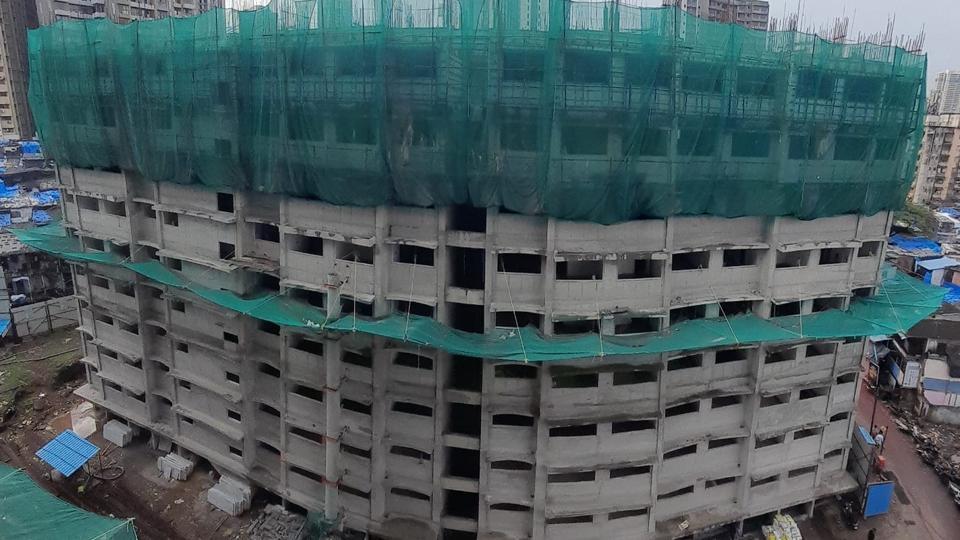
Once viewed primarily as a regulatory requirement in slum rehabilitation projects, PTCs are increasingly becoming an important tool for developers seeking to unlock development potential and make redevelopment projects commercially viable.
PTCs are buildings constructed by private developers to accommodate project-affected persons (PAPs). Developers hand over these units free of cost to government agencies such as the SRA in exchange for additional development rights to construct a large luxury building or commercial project.
There are currently 412 PTCs across Mumbai at various stages of construction, involving 25,733 housing units, a senior SRA official revealed.
“With the government pushing cluster slum redevelopment alongside major infrastructure projects, Mumbai needs substantial accommodation for families affected by these developments. Finding suitable space to relocate them is a significant challenge, and PTC housing can help address that requirement,” said Kaivalya C Shah, director of Marathon Group, a Mumbai-based developer.
The incentive comes from Regulation 33(11) of Mumbai’s Development Control and Promotion Regulations (DCPR) 2034. It allows developers to build larger buildings than originally permitted, with the floor space index (FSI) on a PTC plot going up to 4. It also allows the clubbing and interchange of sale components across eligible plots within the same civic ward, an adjoining ward or within a 5 km radius.
“In practice, that (the regulation) converts PTC from a welfare obligation into a development rights mechanism with direct consequences for project viability, free sale timing and capital deployment,” said Keval Valambhia, managing partner and group CEO at H Rishabraj Landmarks LLP.
Vishal Ratanghayra, founder and CEO of Platinum Corp, said the incentives also encourage development of slum-occupied land reserved for public amenities such as roads, hospitals and recreation grounds, which might otherwise be commercially unattractive.
“This is why the developers have been incentivised by saying, if we provide 30 square metres constructed, then we will get equivalent FSI that can be utilised either on the same plot or can be clubbed elsewhere,” he said.
However, developers must still comply with planning requirements, including provisions for amenities and facilities.
“Instead of my sale building, I am constructing a PTC building and all the provisions of DCPR, like gardens, schools,... everything has to be provided,” said Gurminder Singh, co-founder and COO, Platinum Corp, which is developing a PTC project in Malad.
However, developers say the PTC scheme is a potential win-win: the government can secure housing for project-affected families, while builders gain access to development rights that can support their commercial projects.
Marathon Group is among the developers tapping into these benefits. The company is constructing over 1,200 homes in Bhandup and Kanjurmarg, where it has several ongoing projects. “Over the next few years, this inventory will serve eligible redevelopment requirements within the S ward and neighbouring wards,” said Shah.
While the policy offers opportunities for developers, the success of an individual project depends on how effectively its costs, construction requirements and development potential are balanced.
According to Parthh Mehta, chairman and managing director, Paradigm Realty, a PTC project’s success will depend on the right land acquisition cost, efficient construction and a commercially attractive location.
“The selection of land is particularly important. For the sale component to remain financially sustainable, a project must have sufficient development potential so that it can absorb construction costs and hand over the transit component. The relatively standardised nature of transit housing is another advantage as it can support efficient planning, construction and execution. Compared to a conventional occupied building redevelopment, a PTC project on suitable unoccupied land will also deal with fewer resident consent and relocation complexities,” Mehta said.
Paradigm Realty is developing a PTC project in Oshiwara involving over 200 housing units. The FSI is planned to be utilised by K Raheja Group for its project at Bandra West, illustrating how transit housing and development rights can be linked across projects involving different developers.
Such arrangements have also created a market in which developers can acquire completed or nearly completed transit housing from other builders instead of constructing it themselves.
Valambhia said PTC transactions generally follow three models: developers buy ready transit units to meet their obligations, construct the units themselves on eligible plots, or complete the transit housing requirement and commercially exploit the additional development rights generated.
A prominent example of a transaction involving two developers is the Lodha Developers-Arihant Superstructures deal in Mankhurd. Lodha Developers reportedly acquired 945 units in Mankhurd for about ₹567 crore to fulfil SRA-mandated PTC obligations linked to its Vikhroli project.
The deal works out to an average of roughly ₹60 lakh per PTC apartment, demonstrating the substantial sums developers are prepared to spend on transit housing to secure development rights for projects elsewhere.
As Mumbai pursues large-scale slum rehabilitation alongside infrastructure expansion, PTCs are taking on a larger role in the city’s real estate ecosystem, albeit silently. What began as a mechanism to house families displaced by redevelopment is increasingly functioning as a link between public rehabilitation needs and private development economics. The scale of the current pipeline suggests that this relatively low-profile segment could become an increasingly significant part of the city’s redevelopment business.

Stay updated with all the Breaking News and Latest News from Mumbai. Click here for comprehensive coverage of top Cities including Bengaluru, Delhi, Hyderabad, and more across India along with Stay informed on the latest happenings in World News.


