
 E-Paper



Ban on construction activities as air quality turns ‘severe’ in Ghaziabad
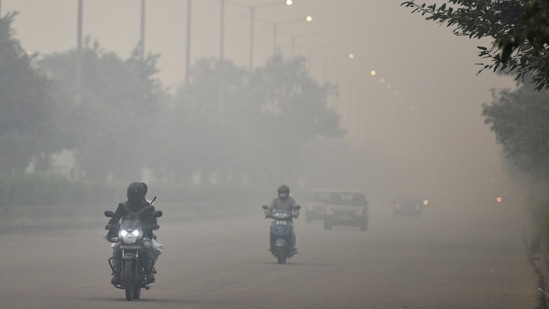
The city on Thursday recorded its first “severe” air quality day this year with an air quality index (AQI) reading of 416, as per the data by the Central Pollution Control Board (CPCB), with the primary pollutant being particulate matter (PM) 2.5.


As the air quality turned "severe" in Uttar Pradesh's Ghaziabad, the local administration has banned private construction activities with fines up to Rs.15 lakh levied on offenders.
Also Read| No school closure in Ghaziabad despite city seeing a second ‘severe’ air day
“Post implementation of GRAP (Graded Response Action Plan)-3 in NCR (National Capital Region), private construction activities are banned. Industries are being regulated and ₹15 lakh fine to be levied for disobeying rules. Notices being issued to rule-breakers," a senior government official was quoted as saying by news agency ANI.
The city on Thursday recorded its first “severe” air quality day this year with an air quality index (AQI) reading of 416, as per the data by the Central Pollution Control Board (CPCB), with the primary pollutant being particulate matter (PM) 2.5. The officials of the Uttar Pradesh Pollution Control Board (UPPCB) said the last time the AQI entered the severe zone in Ghaziabad was on December 26, 2021, when the AQI touched 429.
What is GRAP?
Graded Response Action Plan or GRAP is a set of emergency measures, approved by the Supreme Court in 2016, to be implemented when the air quality of the Delhi-NCR region deteriorates beyond a threshold.
GRAP-1 comes into place when the AQI is in the “poor” category.
GRAP-2 is implemented when the air turns “very poor”.
Stage 3 of GRAP is activated as the AQI enters the “severe” category.
Measures of Stage 4 of the plan come into action once the AQI turns “severe+”.
Air Quality Index (AQI)
An AQI reading between 0 and 50 is considered “good”, 51 and 100 “satisfactory”, 101 and 200 “moderate”, 201 and 300 "poor”, 301 and 400 ”very poor”, and 401 and 500 ”severe”.

Stay updated with all the Breaking News and Latest News from Mumbai. Click here for comprehensive coverage of top Cities including Bengaluru, Delhi, Hyderabad, and more across India along with Stay informed on the latest happenings in World News.


