
 E-Paper



Ghaziabad suicides: Last note reveals threads of obsession, isolation
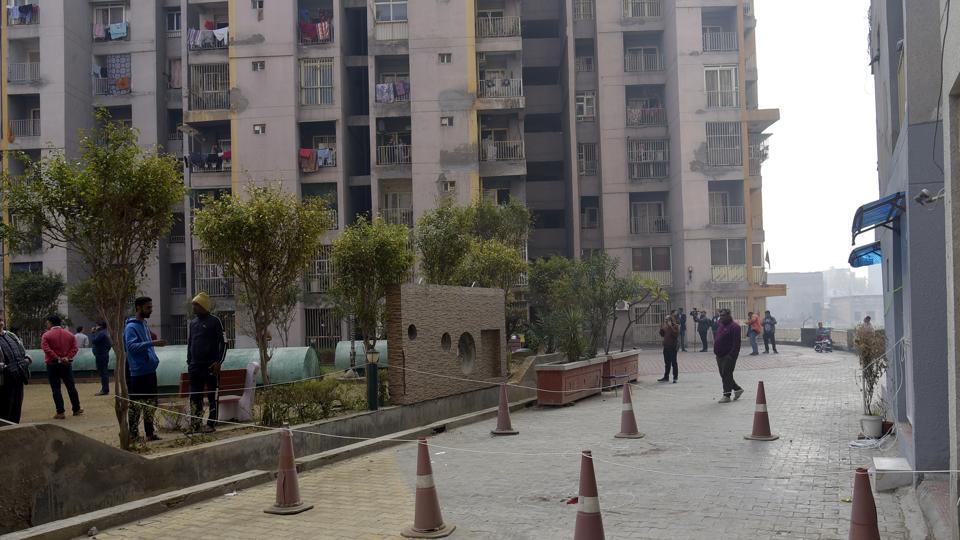
The three girls – aged 16, 14 and 11 – died after falling nine floors from their flat in Ghaziabad’s Bharat City at 2am on Wednesday

 Prefer HTon Google


In the hours after three half-sisters jumped to their deaths from the ninth floor of their apartment in Ghaziabad, investigators began piecing together a portrait of a family that lived together but rarely connected – and of three girls who, police said, had slowly withdrawn not only from the world outside but even from their own family.
An eight-page suicide note recovered from the apartment has revealed that the girls did not “like” their half-brother or other family members, investigators aware of the case details said, because they felt no one around them understood their deep fascination with Korean culture.
Investigators said the sisters were so immersed in K-dramas and K-pop. They had abandoned their given names and took on monikers of Aliza, Cindy, and Maria, which investigators said they used consistently within their self-contained world.
The three girls – aged 16, 14 and 11 – died after falling nine floors from their flat in Ghaziabad’s Bharat City at 2am on Wednesday.
“The girls had completely internalised this alternate identity,” said a senior police officer familiar with the investigation. “In the note, they repeatedly mention how no one – not their brother, not other family members – understood their love for Korea.”
The officer said the note explicitly stated that the girls did not like their half-brother, referring to him only as “bhai”, and complained that he and other family members failed to respect their interests. “They had a single phone which they used to watch shows. They also had a TV which they used to watch K-drama and movies. They wrote in the note that they liked Korea, China, Japan and Thailand, and that they liked people from those places. They were upset that they could not go and live there,” the officer said.
Police said the family structure itself was very complicated. The father, a stock market trader who also runs a small shop in a sabzi mandi, has children from two marriages. The eldest girl, 16, and a 13-year-old son are children from his first marriage. The girls aged 14 and 11 were born to his second wife, who is also the younger sister of his first wife, officers said.
A four-year-old girl also lives in the house. Investigators aware of the case details said she is allegedly the child of a third wife, who is another sister of the first two women. While police confirmed that the man has multiple marital relationships and that the entire family lived under one roof, senior officers said this aspect of the case is still being verified.
“The dynamics in the household were complex,” said Alok Priyadarshi, additional commissioner of police. “All the family members lived together in a 3BHK flat. We are examining how these relationships functioned and whether they contributed to the events.”
Investigators said the three sisters were inseparable to an unusual degree. “They bathed together, ate together, slept together, and even went to the washroom together,” the father told police during questioning.
Ravi Balyan, station house officer of Tila Morh police station, said the 14-year-old appeared to be the dominant figure. “She was the ‘leader’. If she skipped a meal, the other two also wouldn’t eat. They spent entire days together in one room,” he said, adding that she wrote the suicide note found in a diary recovered from the puja room.
The girls had little interaction with others, including their half-brother. They did not attend school, rarely stepped out, and had no known friends in the neighbourhood. “They did not have a social life at all,” a senior officer said.
Police said the sisters had stopped going to school around 2020. The eldest had studied till Class 7, the middle one till Class 5, and the youngest till Class 3. Before that, the eldest had briefly attended a private school in Nainital.
Investigators believe tensions escalated in the days leading up to the incident after their father restricted their access to phones and the internet. The girls shared a single mobile phone, which they used extensively to watch K-dramas. Police said the father sold the phone for ₹3,500 –possibly due to mounting financial stress -- and had also forced them to delete a social media account with around 2,000 followers about 10 days earlier.
“This angered them deeply,” an officer said. “Their online world was everything to them.”
On the night of the incident, police said the girls were last seen in their mothers’ room before stepping into the puja room. One of the women realised the door had been locked from inside and began knocking. The father joined her moments later. “They kept calling out, but there was no response,” an officer said. “Before they could break open the door, the girls jumped.”



Stay updated with all the Breaking News and Latest News from Mumbai. Click here for comprehensive coverage of top Cities including Bengaluru, Delhi, Hyderabad, and more across India along with Stay informed on the latest happenings in World News.


