
 E-Paper



Noida, Ghaziabad most polluted cities
IMD officials said that the foggy conditions, which are also leading to smog as a result of slow wind speed, will continue to prevail during the morning hours in the three cities for the next two days.


The air quality of Noida, Greater Noida and Ghaziabad worsened on Sunday due to unfavourable weather conditions, officials of the India Meteorological Department (IMD) said. The air quality index (AQI) bulletin released by the Central Pollution Control Board (CPCB) stated that the twin cities of Ghaziabad and Noida stood as the most polluted across the country with an AQI of 416 (‘severe’) each.
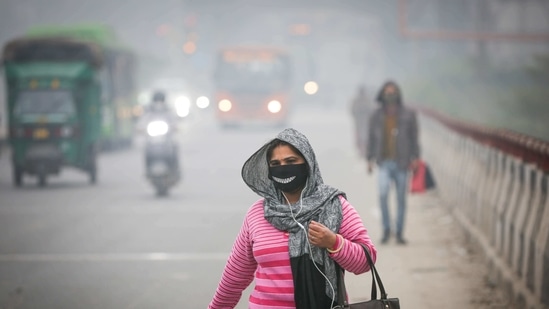
Greater Noida, which was also among the three top polluted cities, registered an AQI of 402 (‘severe’). The three cities on Sunday were the only ones among the 126 cities on the CPCB bulletin to record AQI under ‘severe’ category, CPCB said.
IMD officials said that the foggy conditions, which are also leading to smog as a result of slow wind speed, will continue to prevail during the morning hours in the three cities for the next two days.
“The wind speed pattern, which is anti-clockwise at present and ranging from Punjab to eastern UP, is having centred around Ghaziabad and Noida. So, the slow wind speed, coupled with smog, is affecting dispersal of pollutants,” said Kuldeep Srivastava, head of regional weather forecasting centre at IMD.
An AQI between zero and 50 is considered ‘good’, 51 and 100 ‘satisfactory’, 101 and 200 ‘moderate’, 201 and 300 ‘poor’, 301 and 400 ‘very poor’, and above 400 is ‘severe’.
Utsav Sharma, regional officer of UP pollution control board, said, “The meteorological conditions due to slow wind speed is causing pollution in both Ghaziabad and Noida. Besides, major congestion at border areas has resulted in high levels of pollution. In Ghaziabad, both Indirapuram and Vasundhara monitoring stations are highly impacted by pollution resulting out of traffic congestions.”
The traffic congestions in trans-Hindon areas of Ghaziabad have resulted due to blockade of the Delhi-Meerut Expressway (DME) since December 3 last year by protesting farmers.
IMD’s Srivastava also said that the foggy conditions will prevail for two more days in parts of Delhi-NCR. “In Delhi, fog will be moderate to dense while in areas like Ghaziabad and Gautam Budh Nagar, it will be dense to very dense with visibility likely to fall below 100 metres. The conditions will prevail more during the earlier part of the day from 6am to 10am. The conditions are likely to improve Tuesday onwards,” he added.
The IMD officials said that the normal maximum temperature range during this time of the year is about 24 degrees Celsius but it is hovering at about 28-29 degrees Celsius at present. The minimum temperature is normal at about 10-11 degrees Celsius at present, they added.

Stay updated with all the Breaking News and Latest News from Mumbai. Click here for comprehensive coverage of top Cities including Bengaluru, Delhi, Hyderabad, and more across India along with Stay informed on the latest happenings in World News.


