
 E-Paper



Pollution woes: UPSRTC may get more CNG buses for Ghaziabad’s Kaushambi ISBT
The Uttar Pradesh State Road Transport Corporation (UPSRTC) is working on a proposal to purchase 130 new CNG buses, and officials said anything between 50 and 100 are likely to be given to the interstate bus terminal (ISBT) in Kaushambi, Ghaziabad.


The Uttar Pradesh State Road Transport Corporation (UPSRTC) is working on a proposal to purchase 130 new CNG buses and officials said anything between 50 and 100 are likely to be given to the interstate bus terminal (ISBT) in Kaushambi, Ghaziabad.
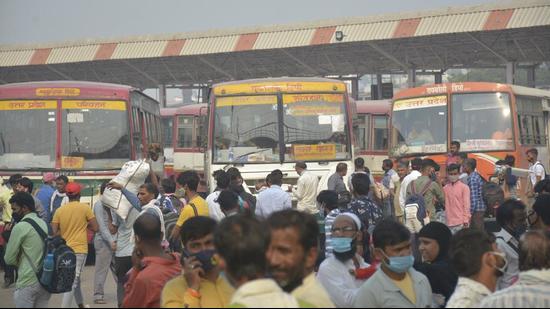
The Kaushambi township has already been identified as a pollution hot spot by the UPPCB and residents are pursuing court cases against agencies for their failure to tackle different local sources of pollution affecting their area. Of the 500-odd buses operating from the ISBT, only 125 are CNG-based currently, while the others are running on diesel.
Officials of UPSRTC said a proposal to purchase 130 new CNG buses is under consideration at the headquarters and it is likely that the ISBT may get a major share of these buses.
“Earlier (in October), we demanded 200 CNG buses, but there is already a proposal to purchase 130 CNG buses which is being considered by the UPSRTC headquarters. So, we will try to procure anything between 50 to 100 of these buses for our ISBT. They will help reduce pollution in Kaushambi. There is another proposal for purchase of 1,000 diesel buses which will be BSVI compliant (more fuel efficient and less polluting) — at present, we are operating BSIV compliant buses,” said AK Singh, regional manager, UPSRTC.
“Of these diesel buses, it is likely that the ISBT may get about 100-150 buses. They will be compliant to standards and have much better technology. We are focussing on reducing pollution and congestion in the area and we have also scaled down operations of buses to about 500 at present as against 750 earlier. During the Covid period we operated 1,700 buses on a daily basis,” Singh said.
The Kaushambi township is located opposite the ISBT with barely a distance of about 50 metres between them. The presence of the ISBT and the resultant congestion lead to frequent pollution spikes in the locality. The Kaushambi Apartments RWA (Karwa) had challenged the operations of diesel buses in a petition filed in 2015 before the National Green Tribunal.
“There have been directions from the tribunal to deploy CNG buses in Kaushambi as diesel buses emanate pollutants which affect our township. We also moved the Supreme Court last year against the different pollution sources affecting our township. We want diesel buses operating from the ISBT removed and we will continue our fight against pollution,” said VK Mittal, president, Karwa.
The township comprises 22 high-rises and is also surrounded by Delhi’s Anand Vihar ISBT, the Ghazipur landfill site and the Sahibabad Site IV Industrial Area — all these entities together making Kaushambi a pollution hot spot.
In their winter action plan chalked out in October, the UP Pollution Control Board had identified Kaushambi as one of the ten hot spots in Ghaziabad city while the other nine were Sahibabad, Raj Nagar Extension, Delhi-Meerut Road, Loni, Bhopra-Delhi border, south side of GT Road, Sanjay Nagar, Vasundhara, and Siddharth Vihar.


Stay updated with all the Breaking News and Latest News from Mumbai. Click here for comprehensive coverage of top Cities including Bengaluru, Delhi, Hyderabad, and more across India along with Stay informed on the latest happenings in World News.


