
 E-Paper



RRTS:Blue and beige stations sport multiple add-on features for passengers
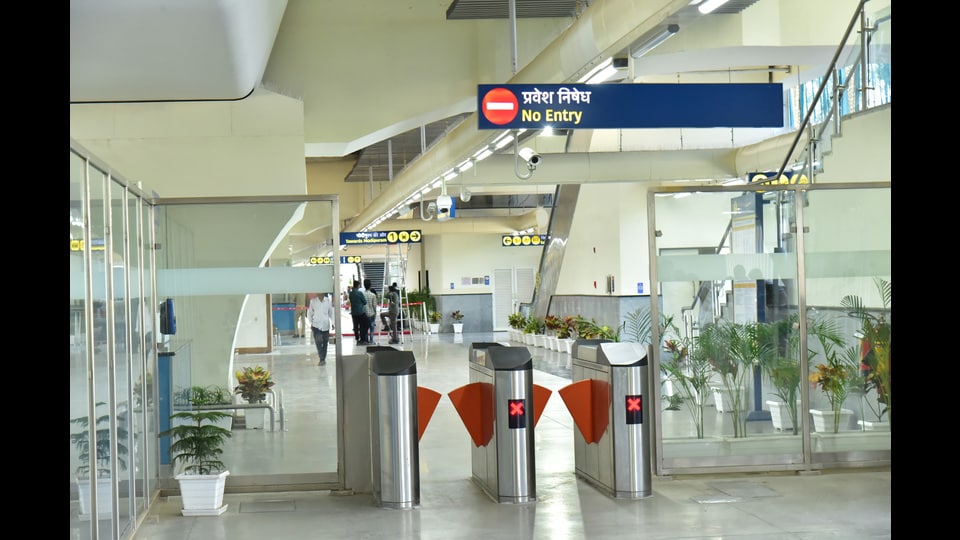
The National Capital Region Transport Corporation (NCRTC) has colored each station on the RRTS 17km priority section in Ghaziabad in shades of blue and beige, drawing inspiration from the hues of peacock feathers. The stations are spacious and equipped with amenities such as vehicle parking, restrooms, and ticket vending machines that allow passengers to bypass long queues. The stations are also being developed to meet the highest rating of the Indian Green Building Council and are solar powered.


Even in the rush and crush of Ghaziabad city, one cannot fail to spot the five stations on the RRTS 17km priority section in Ghaziabad thanks to its distinct colour theme.
The National Capital Region Transport Corporation (NCRTC), the agency executing the RRTS project, has coloured each station’s exterior facade in shades of blue and beige, drawing inspiration from the hues of peacock feathers.
The 17km priority section has five stations at Sahibabad, Ghaziabad, Guldhar, Duhai and Duhai Depot. All stations are spacious with adequate vehicle parking facilities available at nominal rates. NCRTC officials also said the first 10 minutes, for pick and drop runs, are free of cost for all vehicles.
Ghaziabad will connect three more stations -- Muradnagar, Modinagar (North) and Modinagar (South) -- in the next phase, said officials.
The stations are wider than those on the Delhi Metro network and have ample natural light and ventilation. A total of 25 such stations are proposed on the entire 82km corridor connecting Delhi, Ghaziabad and Meerut, said NCRTC.
“We have provided free drinking water facility at all stations. There is also provisions for separate washrooms for women and men and the women’s washrooms have been equipped with diaper changing facility. Further, the major interchange stations such as Sahibabad and Ghaziabad will also have restrooms or waiting rooms exclusively for women. All stations are spacious and equipped with stairs, lifts and escalators. The platforms also have seats for passengers,” said a spokesperson from NCRTC.
The NCRTC said it has done away with the token system for ticketing, which is available at Metro stations.
“No tokens will be available at RRTS stations. Instead, passengers can purchase QR coded tickets from the ticket vending machines or through the NCRTC app. With the help of the app, passengers can even generate tickets well in advance of the intended journey, thereby allowing passengers to bypass long queues at stations,” the spokesperson said.
Ahead of the inauguration, the NCRTC has made provisions for e-autos at the RRTS stations in Ghaziabad, while passengers may alternatively choose regular autos and e-rickshaws, besides using their own vehicles for last mile connectivity. The feeder buses are yet to come in, said NCRTC officials.
Officials said that RRTS stations are being developed to meet the highest rating of the Indian Green Building Council (IGBC) and are solar powered, besides provisions for rainwater harvesting, and scientific waste management.
The stations also have been provided with foot-over-bridges (FOBs) for passengers to cross over to the other side across the road and these can be used by local population as well, said NCRTC.


Stay updated with all the Breaking News and Latest News from Mumbai. Click here for comprehensive coverage of top Cities including Bengaluru, Delhi, Hyderabad, and more across India along with Stay informed on the latest happenings in World News.


